Guru Shikhar Trekking: A Guide to Rajasthan’s Highest Peak
1. Above the Desert Clouds: My Journey of Guru Shikhar Trekking
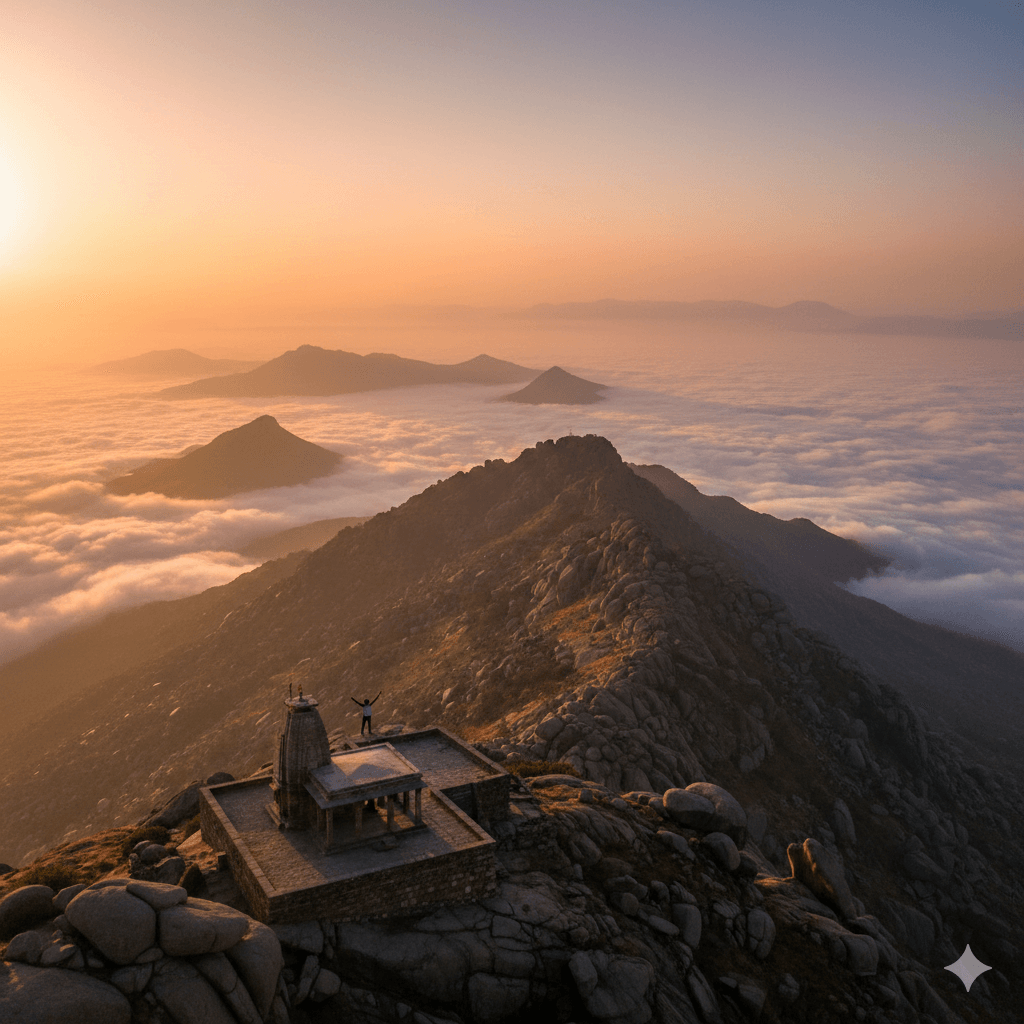
Guru Shikhar Trekking: If you think Rajasthan is all about shimmering sand dunes and sweating through your linen shirt, let me introduce you to my little “altitude adjustment.” Standing at 1,722 meters above sea level, I wasn’t just looking at a view; I was looking down on the clouds. Welcome to Guru Shikhar, the crown jewel of the Arbuda Mountains and the ultimate peak of the Aravalli Range.
When I started my Guru Shikhar trekking adventure, I expected a dry, rocky climb. Instead, I found myself in a sub-tropical sanctuary where the air actually smells like mountain mist and wild orchids rather than street food and history. It is the only place in the state where you can trade your camel for a pair of hiking boots and actually feel a “chill” that isn’t just coming from a hotel air conditioner.
The “Peak” Reality Check
Before we lace up, let’s look at the stats of this climb. It’s not Everest, but for a desert state, it’s our version of the “Top of the World.”
| Feature | The High-Altitude Details |
| Maximum Elevation | 1,722 Meters (5,650 Feet) |
| Difficulty Level | Moderate (The “300-Step” Burn) |
| Best Time to Climb | October to March (Unless you like being a human popsicle) |
| Vibe | Spiritual, Windy, and Exceptionally High |
Why I Think You’ll Love This Climb
There’s something surreal about being at the highest point between the Himalayas and the Nilgiris. Here’s why I’m obsessed with this trek:
- The 360-Degree Flex: From the summit, the world looks like a green-and-grey crumpled map. You can see the entire Mount Abu wildlife sanctuary sprawling beneath you.
- The Cave Factor: The Dattatreya Temple at the top isn’t just a building; it’s a sanctuary carved into a rock cave.
- The Giant Bell: There’s a massive brass bell at the summit. I may or may not have rung it three times just to hear it echo across the Aravallis (sorry, fellow hikers!).
- The “Secret” 17 Trails: Most tourists stop at the temple. But for us, the Guru Shikhar trekking experience is just the gateway to 17 approved nature trails that dive deep into the sanctuary’s heart.
Pro Tip: Don’t let the “300 steps” fool you. At this altitude, your lungs will remind you that you haven’t been to the gym in months. Take it slow, grab some local rabri at the base, and enjoy the climb!
2. The Big Five: Why Guru Shikhar is Different
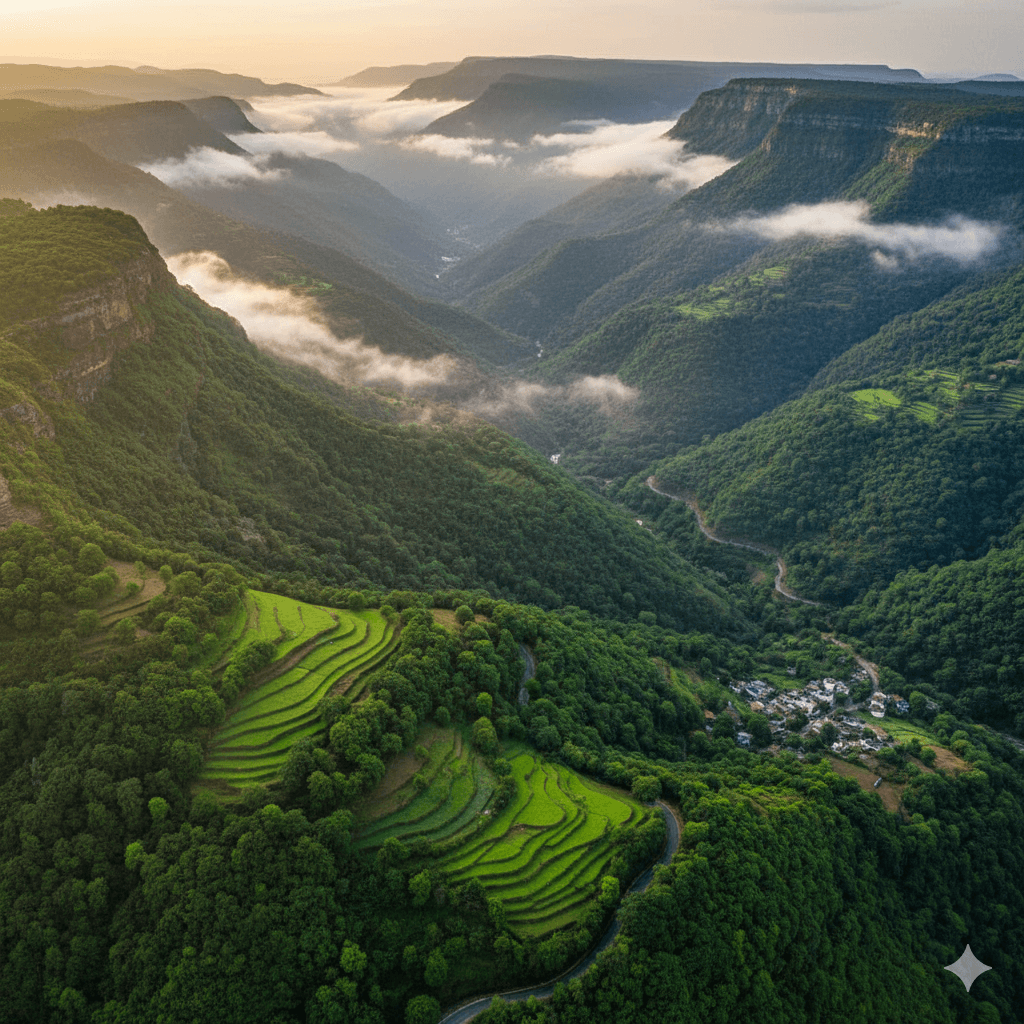
If you think all mountain peaks are created equal, you haven’t stood on the edge of the Arbuda Mountains. As a strategist, I look for “Unique Selling Points,” and boy, does this place have them. This isn’t just another rocky hill; it’s a geographical anomaly in a state famous for sand.
When you start your Guru Shikhar trekking journey, you’re not just hiking; you’re entering a micro-climate that shouldn’t exist in the middle of a desert state. It’s where the “Great Indian Desert” takes a deep breath and turns into a lush, evergreen sanctuary.
The “Big Five” Unfair Advantages
Here is why Guru Shikhar dominates every other trekking trail in Rajasthan:
| Feature | The “Guru” Difference |
| Topography | The highest point in the Aravalli Range (1,722m)—nothing else comes close. |
| Biodiversity | Home to the rare Green Munia and wild orchids that you won’t find in Jaipur or Jodhpur. |
| Heritage | Historical footprints that date back centuries, involving legends like Prithviraj Chauhan. |
| Science | Host to the Mount Abu Infrared Observatory (because the air here is that clear!). |
| Vibe | A mix of spiritual silence and high-altitude wind that literally blows your city stress away. |
Why This Peak Stands Alone
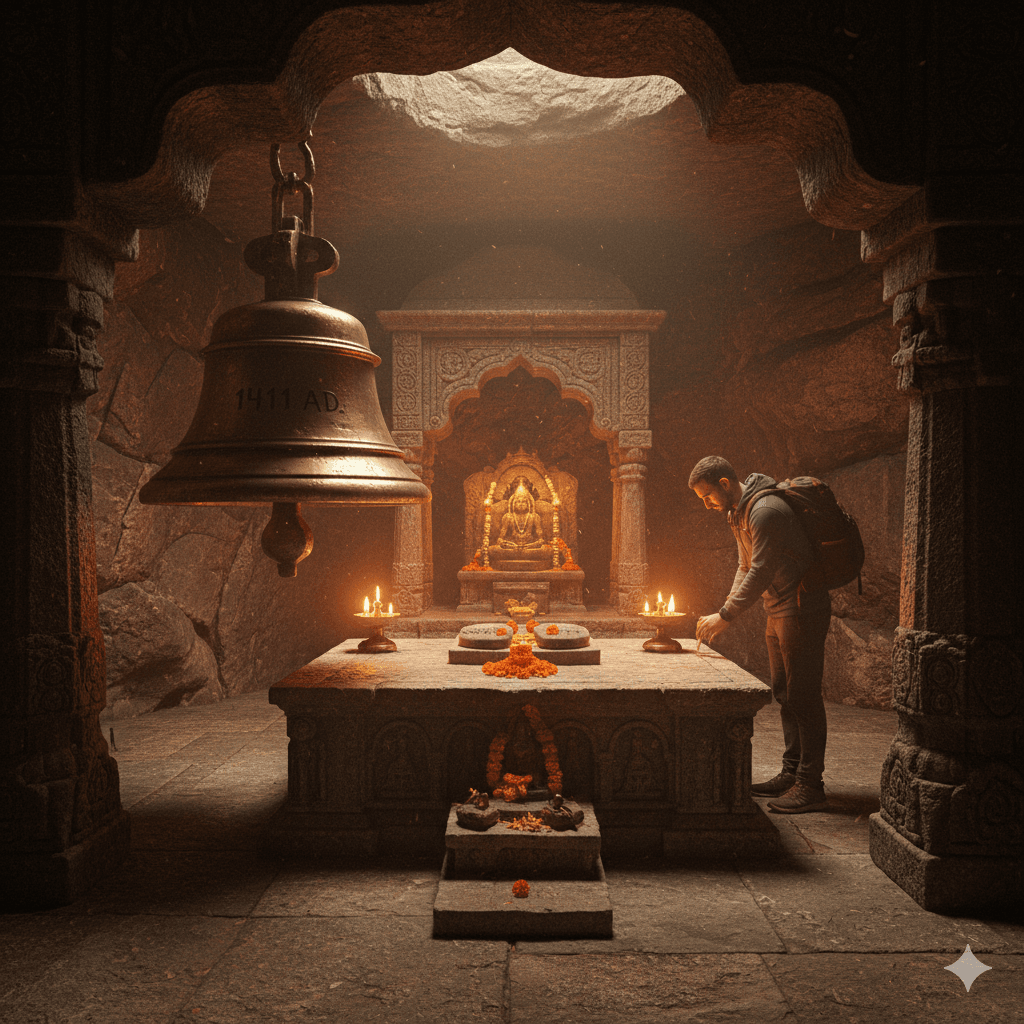
- The Spiritual Summit: Most peaks give you a view; this one gives you a legend. The Guru Dattatreya Temple is tucked into a natural cave. Standing there, ringing the massive brass bell (dated 1411 AD!), makes you feel like you’ve stepped into a time machine.
- The Rare Bird Alert: If you’re a birdwatcher, keep your eyes peeled for the Green Munia. It’s the celebrity of the Arbuda Mountains. Most Guru Shikhar trekking enthusiasts miss them because they’re too busy staring at their feet—look up!
- The Infrared Edge: Did you know ISRO and PRL chose this spot for a massive infrared telescope? Why? Because the water vapor here is incredibly low, making it one of the best windows into space from India.
- Prithviraj Chauhan’s Path: Legend says the last Hindu Emperor of India climbed this very peak to meet his bride. Talk about an epic wedding destination!
- The “Hanging Temple” Proximity: You’re just a stone’s throw from Arbuda Devi, a temple reached by 365 steps carved into a solid rock face.
Business Insider Tip: From a travel branding perspective, Guru Shikhar is the “Premium Tier” of Rajasthan adventure. It’s the only place where you can experience “Himalayan vibes” without leaving the borders of the royal state.
3. The Summit Spectacle: Sightseeing at Rajasthan’s Highest Point
So, you’ve survived the drive and the initial climb—congratulations! Now comes the part where your camera roll starts begging for mercy. Reaching the peak during your Guru Shikhar trekking expedition isn’t just about ticking a box; it’s a full-on sensory experience.
The summit feels less like a typical tourist spot and more like a high-altitude sanctuary where science meets spirituality. One minute you’re ringing a medieval bell, and the next, you’re squinting at a massive space observatory. It’s basically the “multiverse” of Rajasthan sightseeing.
The “Don’t Miss” List at the Peak
I’ve mapped out the must-see spots so you don’t wander around like a lost langur.
| Attraction | Why You Need to Go | Effort Level |
| Guru Dattatreya Temple | The spiritual heart; see the footprints of the Divine Trinity. | 300 Steps |
| The Historic Bell (1411 AD) | Ring it once for luck (and to wake up the valley). | Easy |
| The 360° Viewpoint | The best “cloud-level” selfie you’ll ever take. | Easy |
| Infrared Observatory | Look at the ISRO facility that probes the deep cosmos. | Exterior Only |
| Ahilya Temple | Dedicated to Dattatreya’s mother; a quiet, serene spot. | Short Walk |
My Personal Highlights (and a Few Laughs)
- The Cave Experience: The Guru Dattatreya Temple is actually a natural cave. To enter, you have to bow your head—partly out of respect and partly so you don’t get a “rocky” souvenir on your forehead. Seeing the padukas (footprints) sanctified in stone is a humbling moment after the burn of the Guru Shikhar trekking steps.
- Bell-Ringing Etiquette: There’s a massive brass bell near the shrine. Pro tip: It’s louder than you think. I saw a teenager ring it with such gusto that the pigeons three valleys over probably needed therapy.
- The Science Flex: Right next to the ancient temple is the Mount Abu Infrared Observatory. It feels like a Bond villain’s lair, but it’s actually home to a 1.2m telescope. While you can’t usually go inside to play with the lasers, seeing this high-tech dome next to a 15th-century temple is the peak “India” aesthetic.
- Monsters in the Mist: If you go during the monsoon or early winter, you’ll be walking through actual clouds. It’s romantic until you realize that “mysterious shadow” in the mist is just a goat looking for your biscuits.
The Photography Game Plan
If you didn’t post it, did you even hike? To get the best shots, head to the Watching Platforms on the western edge.
- Morning Light: Soft, golden, and perfect for showing off the layers of the Aravalli hills.
- The “Ocean of Clouds”: On misty days, the valleys fill with white fog, making the peaks look like islands in a milk sea.
- The Summit Selfie: Frame yourself with the red flag of the temple fluttering in the high-altitude wind. It’s the ultimate “I conquered the Aravallis” proof.
4. Famous Historical Places: Ruins in the Clouds
After conquering the peak, don’t just rush back to the lake for an ice cream. About 8 km down from your Guru Shikhar trekking starting point lies a place where history feels like it’s still breathing through the granite: Achalgarh Fort.
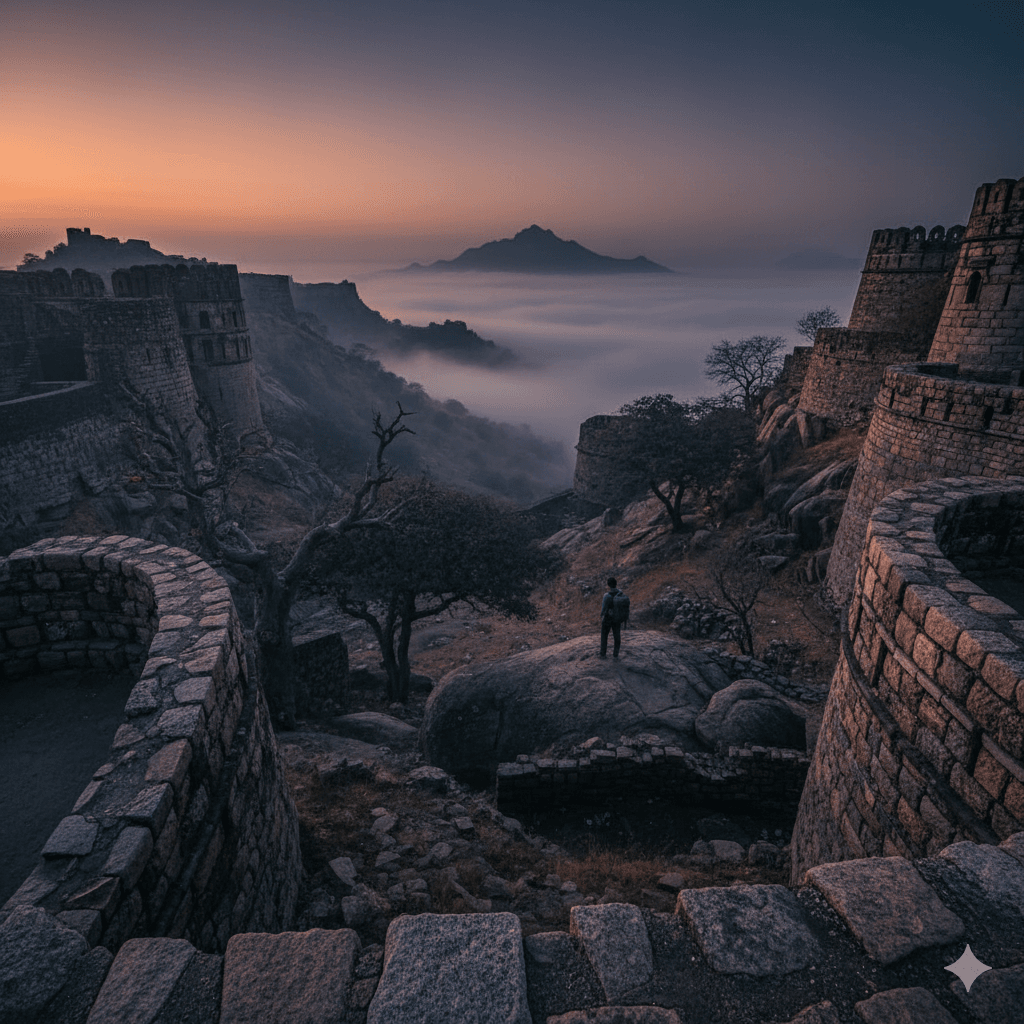
If Guru Shikhar is the crown of the Aravallis, Achalgarh is the weathered, battle-scarred shield. Built in the 9th century by the Paramara dynasty and later beefed up by the legendary Maharana Kumbha in 1452, these ruins offer a moody, cinematic contrast to the bright summit of the peak. It’s the kind of place where you half-expect a Rajput warrior to walk around a corner and ask why you’re wearing neon spandex.
The Historical Heavyweights of Achalgarh
I’ve broken down the “must-see” spots within this sprawling complex. Be prepared—this is a bit of a trek in itself!
| Spot | What’s the Deal? | Fun Fact / Legend |
| Hanumanpol | The massive grey granite entrance gate. | Guarded by two imposing towers to keep out uninvited guests. |
| Achaleshwar Mahadev | A 9th-century temple dedicated to Lord Shiva. | The only place where Shiva’s toe is worshipped instead of a lingam. |
| The 5-Metal Nandi | A massive 4-tonne bull statue made of Panchadhatu. | Legend says it once released a swarm of bees to fend off invaders! |
| Mandakini Lake | A scenic pond surrounded by rocky hills. | Look for the statues of three stone buffaloes—demons turned to stone! |
| Kantinath Jain Temple | A beautifully preserved 15th-century temple. | The gold-plated interior looks spectacular in the afternoon sun. |
My “Ruins & Rituals” Experience
- The Bee-Defense Legend: Walking into the Achaleshwar Mahadev Temple, you can’t miss the giant Nandi bull. As a strategist, I appreciate a good defense plan, but “Combat Bees”? That’s genius. Local lore says when invaders tried to loot the temple, the Nandi statue unleashed thousands of bumblebees to chase them away. Note to self: Do not annoy the bull.
- The Toe of the Mountain: This temple is unique because devotees worship a natural depression in the rock—believed to be Lord Shiva’s toe impression. The story goes that Shiva pressed his toe here to keep the entire mountain from tipping over. Considering how steep the Guru Shikhar trekking path felt, I’m glad he did!
- The Demon Buffaloes: Near the Mandakini Lake, you’ll see three stone buffaloes. Legend says three demons used to disguise themselves as buffaloes to drink the sacred ghee from the sages’ vats at night. A king eventually took them out with a single arrow. You can still see the “wounds” on the statues if you look closely (or if you’ve had enough mountain air to imagine them).
- The Climb to the Upper Fort: If your legs aren’t like jelly yet, hike up past the Jain temples to the upper fortifications. The view of the Arbuda Mountains from the crumbling ramparts is actually more intimate and “wild” than the view from Guru Shikhar itself.
Traveler’s Insight: Achalgarh is technically “dilapidated,” which is a fancy way of saying “bring sturdy shoes.” The paths are uneven, and the history is raw. It’s not a manicured museum; it’s an adventure.
5. Tailored for You: The Best of Mount Abu for Every Explorer
As a business strategist, I know that one size never fits all. Whether you’re here to find your Zen, spark some romance, or burn off enough calories to justify an extra plate of Malpua, Mount Abu has a specific “zone” for you.
When planning your Guru Shikhar trekking itinerary, it’s vital to match the rest of your trip to your personal travel “brand.” Are you the “Luxury & Sunset” traveler or the “I-sleep-in-a-tent” adventurer? Let’s break it down.
The Interest Group Match-Maker
| Traveler Type | Your “Must-Visit” Destination | Why it fits |
| Couples | Honeymoon Point & Sunset Point | For those “Instagram-perfect” golden hour views and quiet walks. |
| Families | Peace Park & Nakki Lake | Safe, manicured gardens and the sheer joy of paddle boating. |
| Adrenaline Junkies | Thrill Zone Adventure Park & Rock Climbing | Ziplining, ATV rides, and bouldering on ancient granite. |
| Spiritual Seekers | Dilwara Temples & Brahma Kumaris | World-class marble architecture and deep meditation sessions. |
| Wildlife Lovers | Trevor’s Tank & Wildlife Sanctuary | Crocodile spotting and birdwatching (keep an eye out for the Green Munia!). |
Where You Belong (Based on Your Vibe)
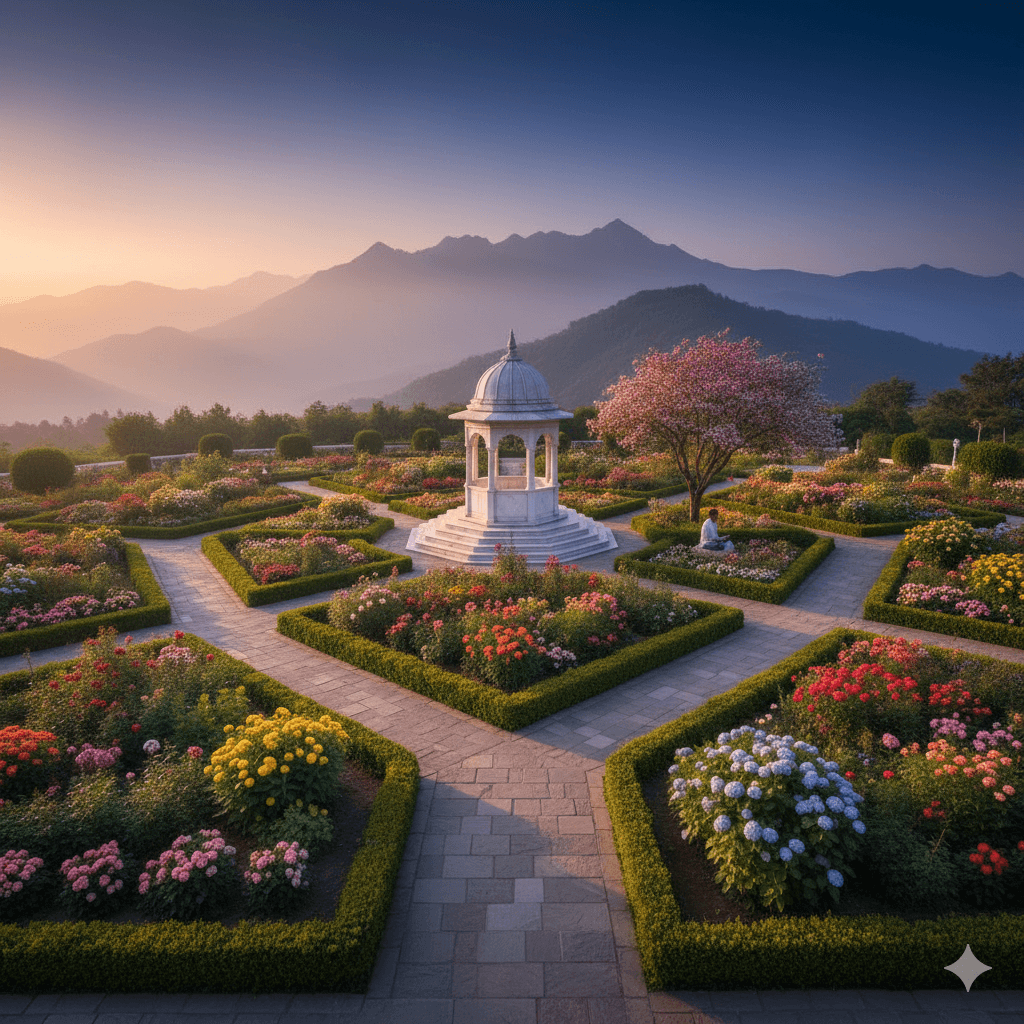
- For the “Peace & Quiet” Crowd: If the 300 steps of Guru Shikhar trekking left you craving stillness, head straight to Peace Park. Managed by the Brahma Kumaris, this isn’t just a garden; it’s a masterclass in silence. You can walk through rose gardens or sit in a meditation hut. It’s so quiet you can actually hear your own thoughts (which might be scary, so bring a book).
- For the “I Live for the View” Photographers: Toad Rock is the mascot of Mount Abu for a reason. It looks exactly like a giant toad about to leap into Nakki Lake. It’s a short climb, but the payoff for your portfolio is massive.
- For the Romantic Souls: Honeymoon Point (also known as Anadara Point) offers a dizzying view of the verdant valleys. Pro tip: Arrive 45 minutes before sunset. It gets crowded with other “romantics” (and people selling corn on the cob), so stake your claim on a rock early.
- For the Animal Enthusiasts: Trevor’s Tank is a artificial crocodile breeding sanctuary. It sounds like a movie plot, but it’s actually a serene spot for birdwatching. Just… maybe don’t go for a swim.
Strategist’s Advice: If you are traveling with seniors, prioritize Peace Park and Dilwara Temples. If you’re with kids, Nakki Lake and the Thrill Zone are your best bets to ensure they actually sleep at night!
6. Mount Abu After Dark: Best Nightlife Activities in the Aravallis
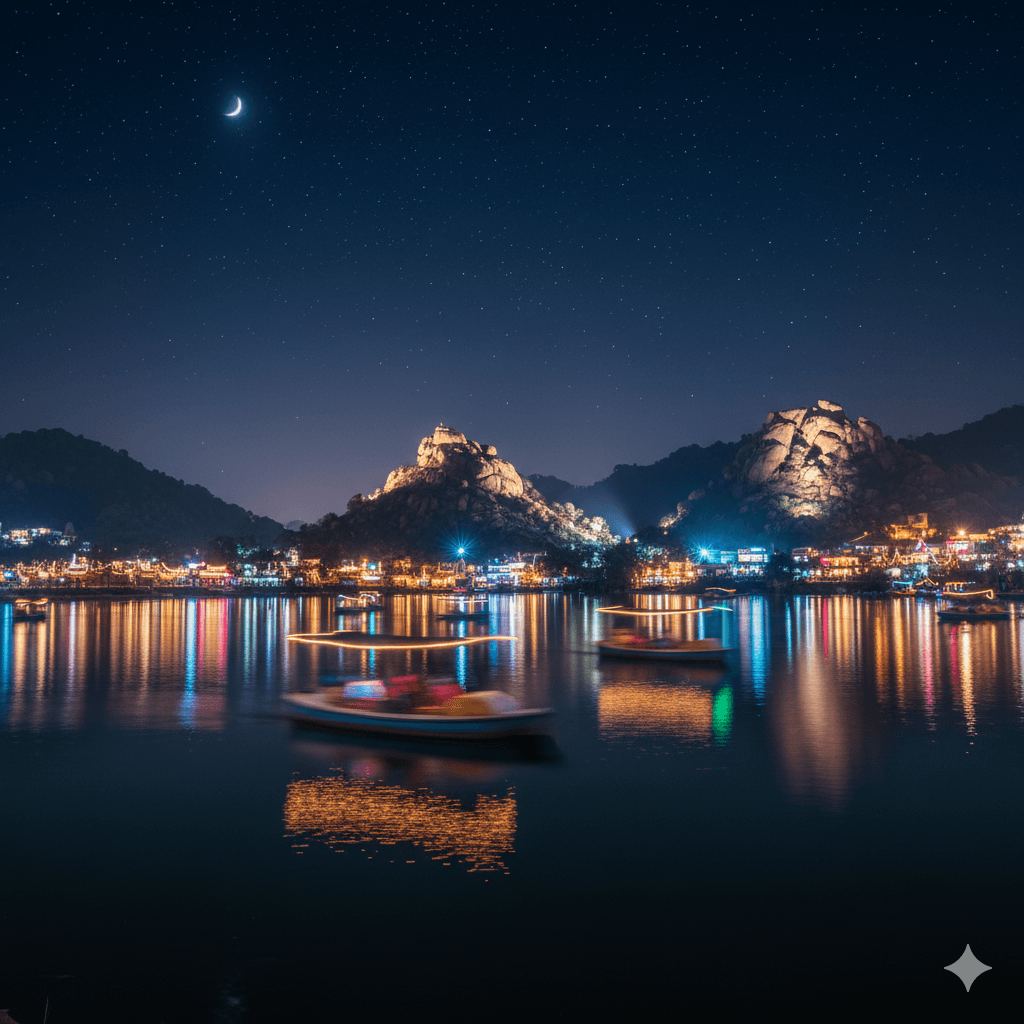
After a day spent dominated by Guru Shikhar trekking, your legs might be asking for a lounge chair, but your spirit is probably humming with that “summit high.” Now, let’s be real: Mount Abu isn’t Las Vegas or even South Bombay. You won’t find underground techno raves here. Instead, the nightlife is a charming mix of mountain chill, neon-lit lakeside promenades, and some of the best stargazing in India.
As your strategist, I’d call Mount Abu’s nightlife “Low-Key Luxury.” It’s about winding down, not winding up. Whether you want to sip a cold drink at a hilltop bar or watch the moon reflect off Nakki Lake, the mountain has a way of turning the volume down just right.
The “After-Hours” Breakdown
Here is how to spend your evening depending on how much energy you have left after your Guru Shikhar trekking workout:
| Activity | Location | Vibe |
| Lakeside Promenade | Nakki Lake | Festive, social, and full of street food. |
| High-Altitude Drinks | Surahi Bar / On the Rocks | Sophisticated chill with mountain views. |
| Late Night Shopping | Main Market | Bustling, colorful, and great for people-watching. |
| Stargazing | Guru Shikhar Base | Quiet, cosmic, and mind-blowing. |
| Cultural Evenings | Local Resorts | Traditional folk dance and bonfires. |
My Top Picks for a Mountain Night Out
- The Nakki Lake Carnival: Every night near Nakki Lake feels like a mini-festival. The promenade is lit up, people are rowing boats under the moonlight, and the air is thick with the smell of roasted corn and spicy kachoris. It’s the perfect place to grab a cone of local ice cream and realize that “nightlife” can simply mean a really good walk.
- Stargazing at the Peak: If you have a vehicle, head back toward the base of the peak. Because the Guru Shikhar trekking area is far from city lights and sits above the desert haze, the sky looks like someone spilled a bucket of glitter on black velvet. It’s a premier “dark sky” spot—perfect for seeing the Milky Way if the moon is thin.
- The “Surahi” Experience: For those who want a bit of “Business Class” treatment, there are several bars like Surahi or the garden bar at Hotel Hillock. There’s nothing quite like sitting in a garden, wrapped in a light sweater, sipping a cocktail while the mountain wind rustles the trees.
- The Midnight Market Crawl: The Main Market stays lively quite late. It’s the best time to hunt for those leather bags or silver trinkets without the midday heat. Plus, the shopkeepers are usually more relaxed and up for a bit of witty banter.
A Strategic Note on “Cold” Weather: Don’t be fooled by the desert location. Once the sun dips behind the Arbuda Mountains, the temperature drops faster than a lead weight. If you’re heading out for nightlife, layer up! A stylish jacket is your best wingman here.
7. Beyond the Peak: Adventure Activities and Secret Nature Trails
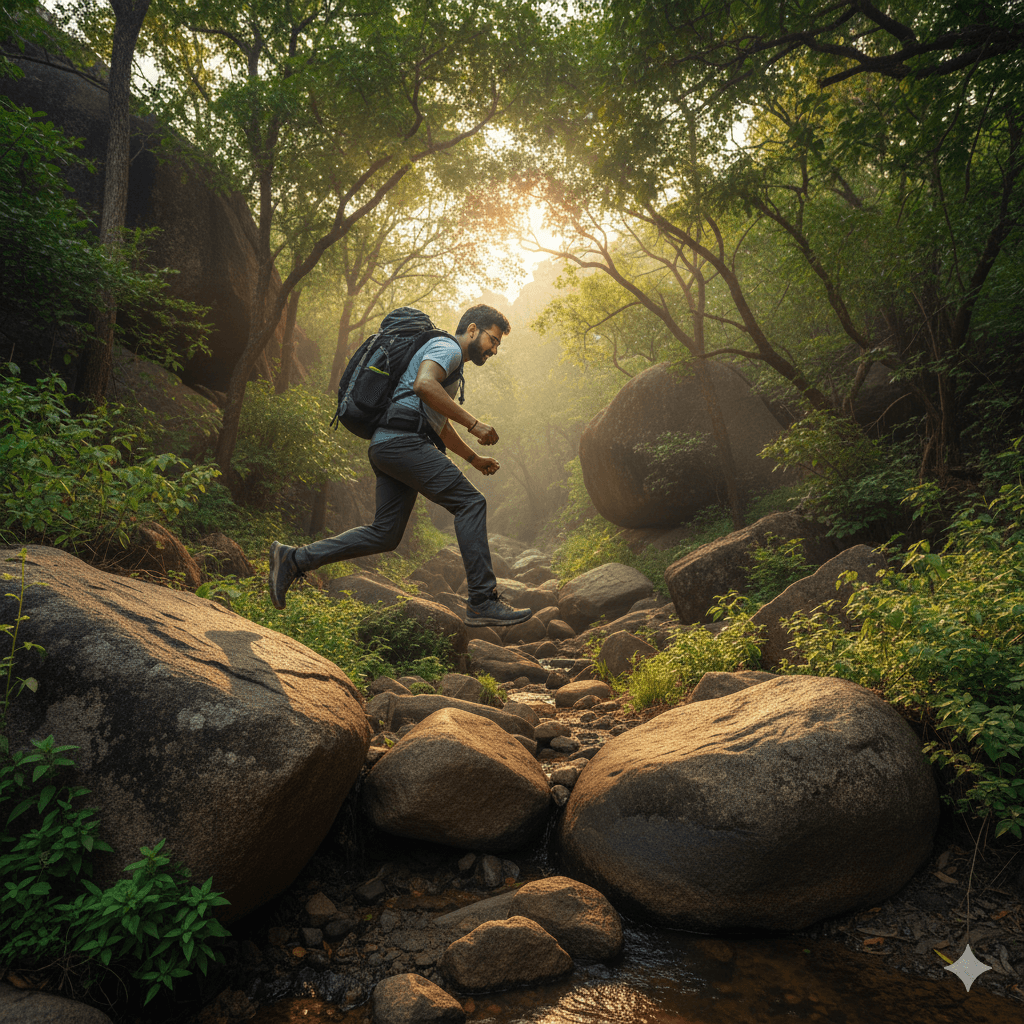
If you thought the “adventure” ended once you climbed those 300 steps at the summit, think again. From a business strategist’s perspective, the Guru Shikhar trekking experience is just the “Anchor Product.” The real depth—the “Value-Added Services,” if you will—lies in the 17 approved nature trails zigzagging through the Mount Abu Wildlife Sanctuary.
Mount Abu is the only place in Rajasthan where the landscape looks like a giant decided to play marbles with massive granite boulders. For an adrenaline junkie like me, this means the entire plateau is essentially one big, natural playground for rock climbing, caving, and getting lost (intentionally, of course) in the woods.
The Adventure Portfolio: My Top Picks
| Activity | Best Spot | Thrill Level |
| Trail Hiking | Tiger Path / Craig’s Path | High (Leg-day approved) |
| Rock Climbing | Near Toad Rock | Moderate (Bouldering bliss) |
| Wildlife Spying | Trevor’s Tank | Low (Unless the crocs are hungry) |
| Spelunking (Caving) | Near Achalgarh | Moderate (Keep your head down!) |
The “Secret 17” and Other Wild Feats
- The Legend of Tiger Path: This is the heavyweight champion of the 17 approved trails. It starts near the town and winds up toward the sanctuary. It’s rugged, it’s steep, and it’s the perfect follow-up to your Guru Shikhar trekking warmup. I call it “Tiger Path” not because you’ll definitely see a tiger (they are rare here), but because you’ll need the heart of one to finish it without panting.
- Bailey’s Walk: If Tiger Path is a marathon, Bailey’s Walk is a scenic jog. It’s a zigzagging trail through strange rock formations. It’s perfect for those who want the “wilderness” vibe without having to call a rescue helicopter.
- Rock Climbing & Bouldering: Mount Abu’s igneous rocks are a climber’s dream. The granite is “grippy,” and the unique shapes—like the famous Toad Rock—offer natural handholds. I tried bouldering here once; I looked less like a graceful mountain goat and more like a confused spider, but the view from the top of the rock was worth the bruised ego.
- Caving Near the Ruins: Around the Achalgarh area, there are several hermit caves tucked into the cliffs. Exploring these feels like being an Indiana Jones extra. Just remember: if a cave looks too dark and smells like “wild animal,” maybe just admire it from the entrance.
Survival Tips for the Wild Side
- Hire a Guide: Seriously. The Bhil Tribal guides know these 17 trails like the back of their hand. They can spot a Green Munia bird or a sloth bear footprint from fifty paces.
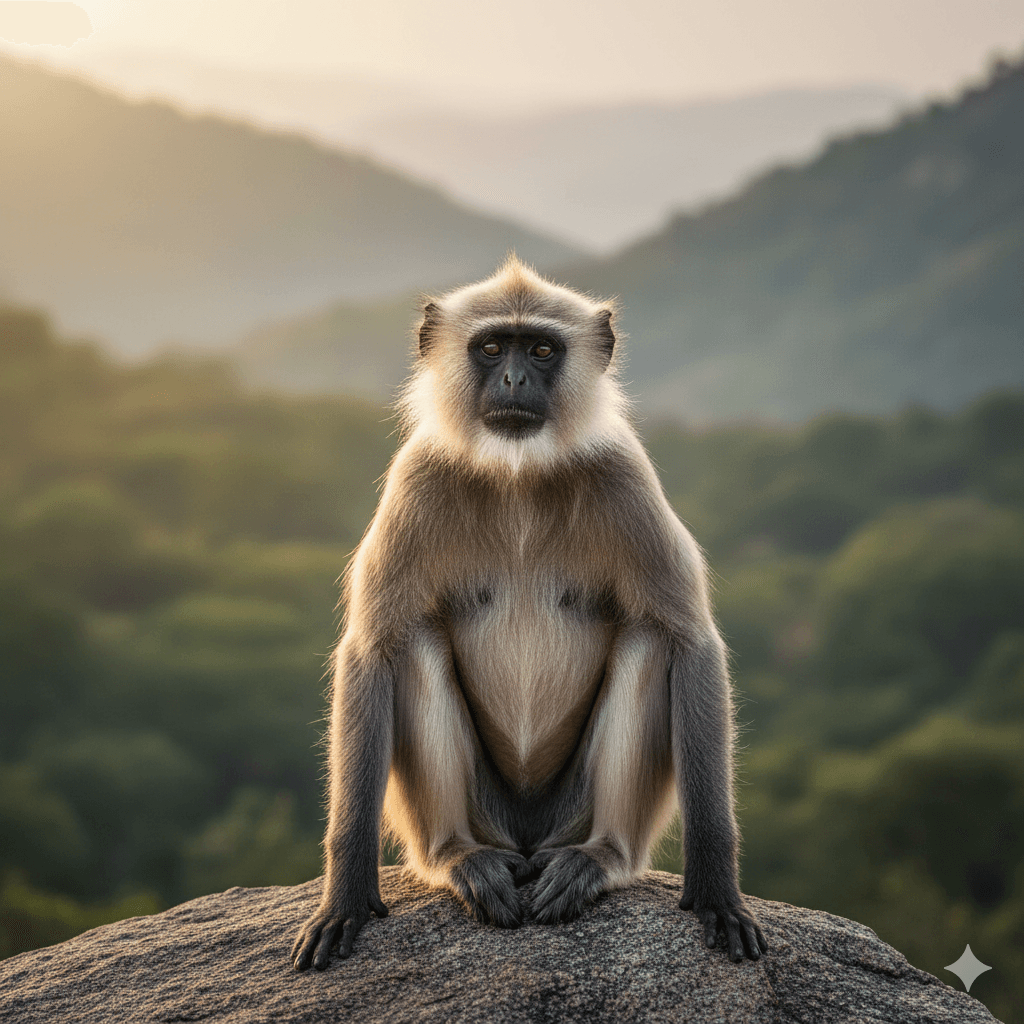
- The “Monkey Tax”: Langurs rule these trails. They aren’t interested in your fitness goals; they are interested in your granola bars. Keep your bags zipped and your snacks hidden.
- Hydration is Key: The mountain air is dry. Even if you aren’t sweating like you’re in Jaisalmer, you’re losing water. Carry a bladder or a sturdy bottle.
Strategist’s Insight: The 17 nature trails are Mount Abu’s “hidden gems.” While 90% of tourists stay on the paved roads, the real “ROI” (Return on Investment) for your soul is found on the dirt paths where the only sound is the wind in the Champa trees.
8. Expanding the Map: Top Attractions Near Mount Abu & Surrounding Gems
As a business strategist, I always advocate for “diversifying your portfolio.” While the Guru Shikhar trekking experience is undoubtedly the blue-chip asset of your trip, the surrounding region offers some incredible “subsidiaries” that you’d be wild to skip.
Once you’ve descended from the highest point in the Aravallis, the landscape shifts from misty peaks to intricate marble marvels and rugged leopard country. If you have an extra day or two, these nearby spots provide the perfect ROI for your travel time.
The “Beyond the Border” Bucket List
Here’s a quick guide to the best spots within a short radius of the mountain:
| Destination | Distance from Mount Abu | Why It’s Worth the Drive |
| Dilwara Jain Temples | 3 km (Local) | Arguably the most beautiful marble carvings on Earth. |
| Ambaji Temple | 50 km | A major Shakti Peeth shrine just across the Gujarat border. |
| Jawai (Leopard Hills) | 110 km | The “Leopard Capital of India”—wild cats and granite hills. |
| Patan & Modhera | 150 km | UNESCO Stepwells and the stunning Sun Temple. |
My “Don’t-Miss” Extensions
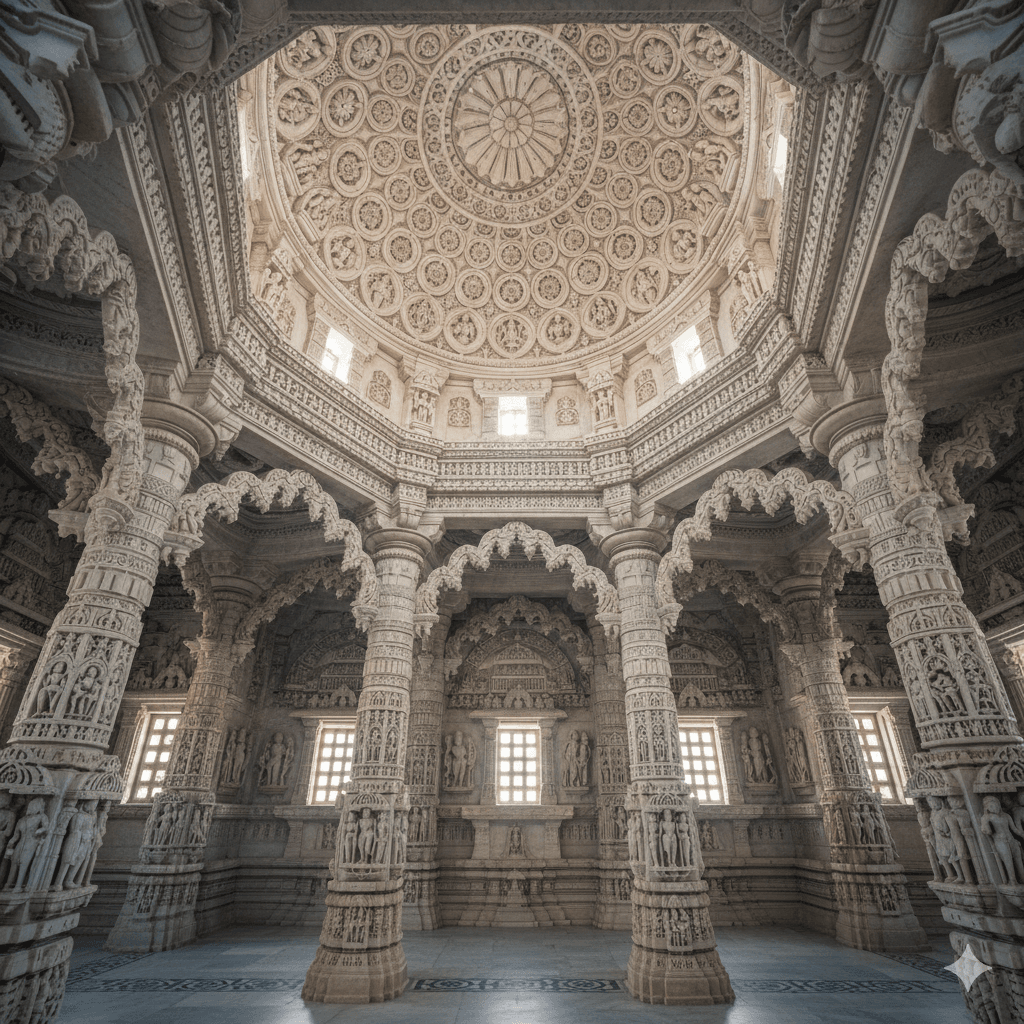
- The Marble Magic of Dilwara: I know, I know—it’s technically in Mount Abu, but it feels like another planet. After the rugged, earthy vibes of Guru Shikhar trekking, walking into Dilwara is like entering a giant, hand-carved ivory box. The marble is carved so thin it’s translucent. Pro Tip: No cameras are allowed inside, so leave the “influencer” gear in the locker and actually use your eyes!
- Ambaji (The Gujarat Detour): Just about an hour’s drive away is Ambaji. It’s one of the 51 Shakti Peeths. The energy here is electric. If you thought the steps at Guru Shikhar were a workout, wait until you see the crowds here during a festival! It’s a great cultural contrast to the quiet mountain trails.
- The Wild Cats of Jawai: If you want to keep the “high-altitude rock” theme going, head to Jawai. It’s a land of prehistoric granite formations where leopards live in perfect harmony with the local Rabari herdsmen. It’s essentially a real-life Lion King set, minus the singing warthogs.
- The Sun Temple at Modhera: If you’re heading back via Gujarat, stop at Modhera. The Sun Temple there is a geometric masterpiece. The massive stepwell (Kund) in front of it is a photographer’s dream—just try not to get dizzy looking at the symmetrical stairs.
Strategic Travel Advice: The “Hub & Spoke” Model
- Stay Central: Use Mount Abu as your “Hub.” Spend your mornings on the 17 nature trails and your afternoons exploring these “Spokes.”
- Transport: Hire a local taxi for the Ambaji or Jawai trips. The mountain roads are winding, and unless you’re used to navigating hairpin turns while a cow casually occupies the fast lane, let a pro handle the wheel.
- Timing: Visit Dilwara between 12:00 PM and 5:00 PM (the specific timing for non-Jains).
A Little Humor for the Road: Remember, crossing into Gujarat means entering a “dry” state. If you’re planning to toast to your successful hike, do it on the Rajasthan side of the border. Strategic planning at its finest!
9. The Ultimate Cheat Sheet: A Quick-Scan Guide to the Best of Mount Abu
As a business strategist, I’m a huge fan of the “Executive Summary.” You’ve got limited time, and you want the maximum ROI (Return on Inclusion) for your itinerary. Whether you’re deep into your Guru Shikhar trekking prep or just looking for the best place to eat a grilled sandwich, you need the facts fast.
Think of this section as the “TL;DR” (Too Long; Didn’t Read) for your mountain getaway. I’ve crunched the data, climbed the steps, and tested the street food so you don’t have to wing it.
The Mount Abu Power List
Here is my definitive ranking of the spots that deserve a slot on your schedule.
| Destination | Category | Vibe | Why Go? |
| Guru Shikhar | Adventure | Epic | It’s the highest peak! (Duh.) |
| Dilwara Temples | Culture | Mind-Blowing | Marble carvings that defy logic. |
| Nakki Lake | Leisure | Social | Boating and people-watching. |
| Tiger Path | Trekking | Hardcore | For when your legs haven’t suffered enough. |
| Trevor’s Tank | Nature | Serene | Crocodiles and quiet contemplation. |
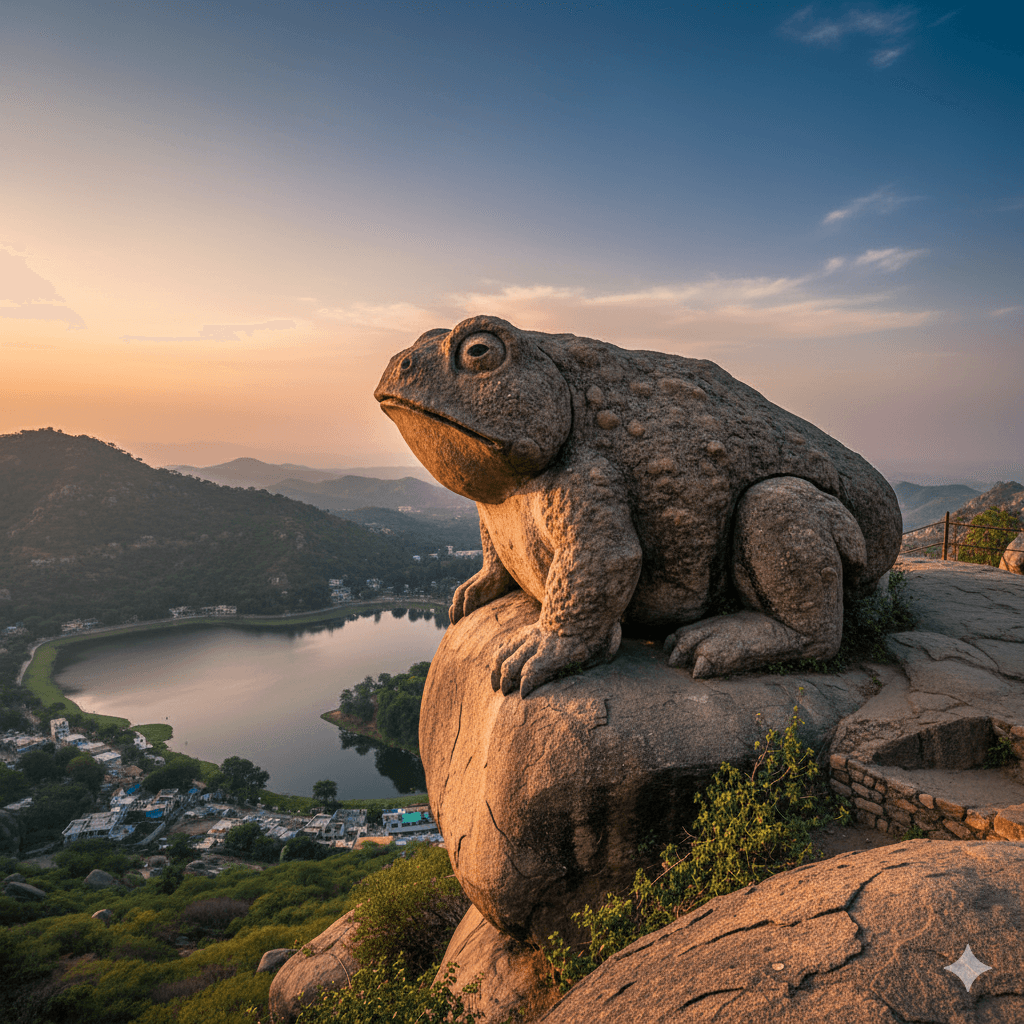
| Toad Rock | Photography | Quirky | It’s a rock. That looks like a toad. Peak nature. |
Quick Highlights for Your Strategy Meeting
- The Summit Scorecard: If you only do one thing, let it be Guru Shikhar trekking. It is the “Anchor Product” of the region. If you don’t stand at 1,722 meters, did you even visit Mount Abu?
- The “Secret” Win: Most people skip the 17 Nature Trails. Don’t be “most people.” Walking Bailey’s Walk is like getting a backstage pass to the Aravallis.
- The Foodie’s Choice: Do not leave without trying the Rabri at the base of the peak. It’s the high-calorie reward your body deserves after all those stairs.
- The Time Saver: If you’re short on time, combine your Guru Shikhar trekking trip with a stop at Achalgarh Fort on the way down. They are on the same road, and it’s a total “Two Birds, One Stone” scenario.
Pro-Tips for the High-Efficiency Traveler
- Avoid the Crowd: Reach the Guru Shikhar parking lot by 8:00 AM. By 11:00 AM, the “tourist wave” hits, and your peaceful mountain moment will be replaced by the sound of 50 different ringtones.
- Dress Code: Dilwara Temples are strict. No shorts, no sleeveless tops, and definitely no leather (belts/wallets). Plan your outfit like a pro to avoid being “that person” waiting outside in a borrowed wrap.
- The Monkey Protocol: I’ve said it before, and I’ll say it again: The monkeys here have better scouting skills than a corporate headhunter. Zip your bags!
Business Strategy Note: In travel, as in business, the best experiences are often found just 10% further than where the average person stops. Go the extra mile (or the extra 300 steps) and the view is exponentially better.
10. Fuel & Finery: What to Eat and Shop for in Mount Abu
As a strategist, I know that every high-performance mission—like Guru Shikhar trekking—requires a solid “fueling strategy.” You can’t conquer the highest peak in Rajasthan on an empty stomach, and you certainly can’t leave without some “tangible assets” (a.k.a. souvenirs) to prove you were there.
The food scene in Mount Abu is a delightful collision of Rajasthani spice and Gujarati sweetness. It’s the kind of place where you can find a spicy Laal Maas for dinner and a cooling Rabri for dessert. My advice? Burn the calories on the trail, then eat them all back at the market. That’s what I call a “balanced budget.”
The Hiker’s Menu: What to Eat
| Dish | The “Vibe” | Where to Find It |
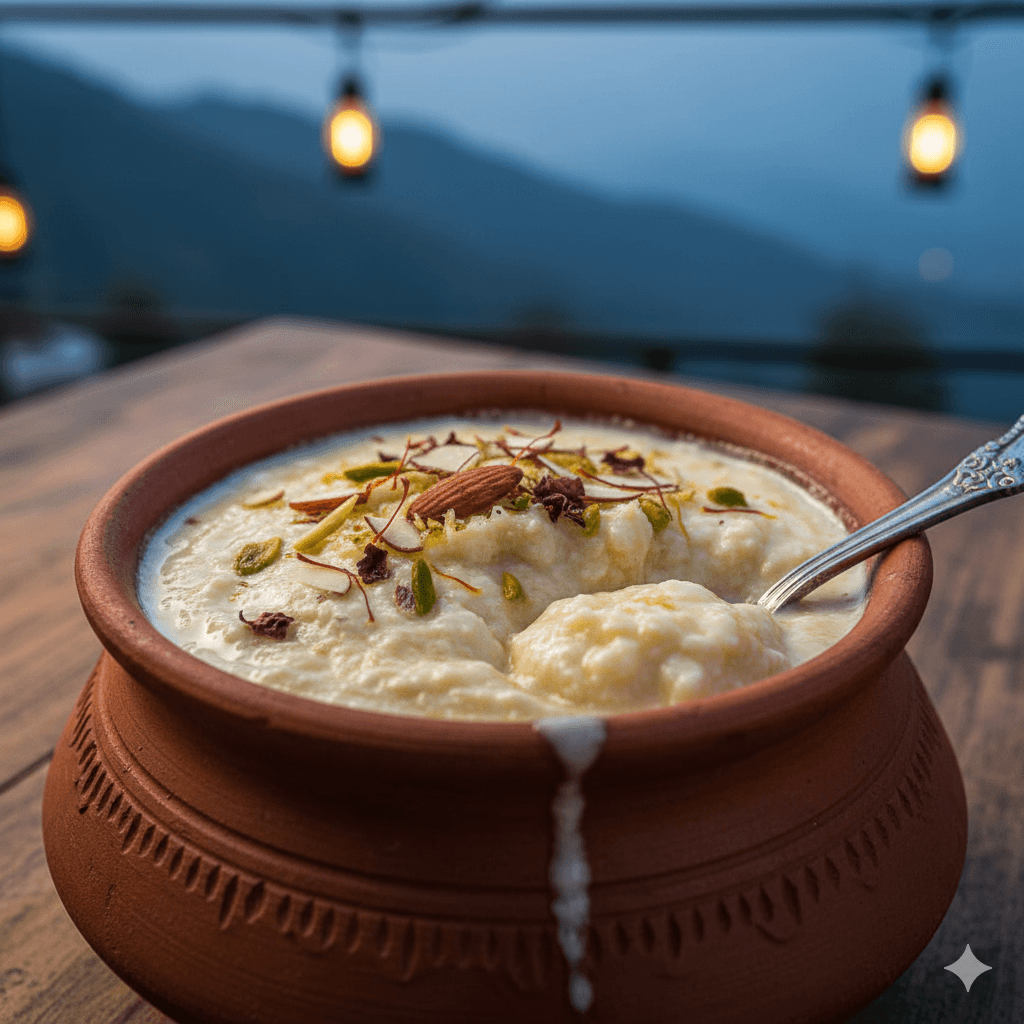
| Creamy Rabri | Sweet, thickened milk heaven. | Base of Guru Shikhar (The best reward!). |
| Dal Bati Churma | The ultimate Rajasthani power meal. | Local dhabas near the Main Market. |
| Mulberry (Shahtoot) Shake | Fresh, seasonal, and purple. | Nakki Lake stalls (Seasonal). |
| Pyaaz ki Kachori | Spicy onion pastry—hiker’s fuel. | Jodhpur Sweets, Main Market. |
| Gujarati Thali | A bit of everything; sweet and savory. | Near the Bus Stand area. |
My Top Culinary Picks (and One Warning)
- The Post-Trek Rabri: After completing your Guru Shikhar trekking steps, you’ll see vendors stirring giant iron vats of milk. This is Rabri. It’s thick, laced with cardamom, and served in clay pots. It’s basically a hug in a cup.
- The Mulberry Craze: Mount Abu is famous for its mulberries. If you’re there in season, get the mulberry cream. It’s messy, it’ll stain your shirt, and it’s worth every drop.
- Spicy Street Eats: Look for “Masala Maggi” or “Cheese Toasts” near the viewpoints. There is something about eating spicy noodles while looking at a 1,000-meter drop that just makes them taste better.
- The Warning: The monkeys are professional food critics. If you’re eating a corn-on-the-cob (Bhutta) at Sunset Point, hold on tight. I once saw a langur pull a “snatch and grab” so smooth it would make a pickpocket jealous.
Retail Therapy: Things to Buy
You’ve conquered the altitude; now conquer the market. Here’s what’s worth the space in your suitcase:
- Kota Doria & Sanganeri Prints: Beautiful, lightweight fabrics that are perfect for the Rajasthan heat.
- Rajasthani Bangles: The lacquer bangles here are vibrant and inlaid with glass. Great for gifts (or for treating yourself).
- Leather Goods: From Jutis (traditional shoes) to sturdy bags. Look for the camel leather—it lasts forever.
- Marble Miniatures: If you fell in love with Dilwara, you can buy tiny, intricately carved marble elephants or plates. Just pack them carefully!
- Ayurvedic Products: The surrounding Arbuda Mountains are a literal pharmacy of medicinal plants. Look for local honey and herbal oils.
Business Strategy Tip: When shopping at the Nakki Lake market, the “First Offer” is usually a conversation starter, not the final price. Use your negotiation skills! Aim for about 30-40% off the initial quote, but keep it friendly. A smile gets you a better “ROI” than an argument.
11. The Perfect 48-Hour Plan: A Strategic Guru Shikhar Itinerary
In the world of business, we talk about “resource optimization.” In the world of travel, we call that a “tight itinerary.” You only have 48 hours to soak in the misty peaks of the Aravallis, so you can’t afford to spend half the morning deciding where to find a clean bathroom.
When planning your Guru Shikhar trekking journey, timing is everything. If you hit the peak at noon, you’re hiking with a thousand of your “closest friends” (other tourists). If you hit it at sunrise, you’re hiking with the gods. I know which one I’m choosing.
The “Peak Performance” 2-Day Schedule
| Time | Day 1: The High Altitude Ascent | Day 2: Culture, Crocs, and Chilling |
| 07:00 AM | Guru Shikhar Trekking (Beat the crowd!) | Morning Hike: Bailey’s Walk Nature Trail |
| 10:00 AM | Summit Temple Visit & Rabri Tasting | Dilwara Jain Temples (Marble Magic) |
| 01:00 PM | Achalgarh Fort & Ruins Exploration | Traditional Rajasthani Thali Lunch |
| 04:00 PM | Peace Park (Meditation & Roses) | Trevor’s Tank (Crocodile Spotting) |
| 06:00 PM | Sunset Point (The Golden Hour) | Boating & Shopping at Nakki Lake |
| 08:00 PM | Dinner at a Hilltop Bar | Midnight Market Walk & Departure Prep |
Day 1: Conquering the Crown
- Early Bird Gets the View: Start your Guru Shikhar trekking adventure as early as possible. Driving up the winding road at 6:30 AM is a vibe—misty, quiet, and cool. Once you conquer the 300 steps, spend time at the Dattatreya Temple before the “tourist bus wave” arrives.
- The Descent to History: On your way back down the mountain, pull over at Achalgarh. It’s the perfect mid-morning stop to see the “Toe of Shiva” and the 5-metal Nandi bull.
- The Sunset Strategy: Wrap up your first day at Sunset Point. Warning: This is the most popular spot in town. If you don’t like crowds, head to Honeymoon Point instead—same golden sun, 50% fewer selfie sticks.
Day 2: The Deep Dive
- The Secret Trails: Start your second morning on one of the 17 approved nature trails. Bailey’s Walk is my favorite for a brisk, scenic morning. It’s the best way to see the “wild” side of the Arbuda Mountains without needing a search party to find you.
- The Marble Masterclass: Head to Dilwara around noon. Since non-Jains can only enter after 12:00 PM, use the morning for your nature fix. This is where you’ll see the most intricate stone carvings known to man. It makes my modern office architecture look like it was built with Lego blocks.
- Crocs and Creams: Spend your afternoon at Trevor’s Tank. It’s peaceful, green, and the crocodiles are surprisingly photogenic. Finish your trip at Nakki Lake—get a mulberry shake, buy that leather bag you’ve been eyeing, and enjoy a slow boat ride.
Business Strategist’s Note: This itinerary follows a “Logistics Loop.” Day 1 focuses on the high-altitude sights (the Guru Shikhar axis), while Day 2 focuses on the town-center and low-altitude attractions. This saves you from driving back and forth like a confused GPS!
12. Peak Festivities: Mount Abu Events & Festivals in 2026
As your strategist, I’m here to tell you that timing your market entry—err, I mean your trip—is the difference between a good vacation and a legendary one. If you think the views during your Guru Shikhar trekking are breathtaking, wait until you see the Aravallis come alive with folk dancers, boat races, and fireworks.
In 2026, Mount Abu is leaning hard into its “Cultural Capital of the Hills” brand. You can check the official Rajasthan Tourism festival calendar to verify exact dates for the Winter and Summer festivals. We aren’t just looking at religious dates; we’re looking at full-blown festivals that turn the town into a vibrant, neon-lit celebration of Rajasthani life.

The 2026 Festival Calendar: Don’t Miss These Dates
| Festival | Expected Dates (2026) | The “Big Draw” | Vibe |
| Summer Festival | May 17 – 19, 2026 | Boat races on Nakki Lake & CRPF Band. | High Energy & Festive |
| International Half Marathon | Mid-August 2026 | Running through the 17 nature trails. | Athletic & Gritty |
| Winter Festival | December 29 – 31, 2026 | Fire dancers and New Year’s fireworks. | Traditional & Magical |
| Buddha Purnima | May 31, 2026 | Deeply spiritual processions at the peak. | Serene & Soulful |
The Heavy Hitters: My Personal “Insider” View
- The Summer Festival (May 17-19): This is the crown jewel. It starts with a massive parade from the RTDC Hotel Shikhar and ends at the lake. Imagine sitting by the water, watching a boat race, while a bagpipe band plays in the background. It’s glorious, it’s loud, and it’s the perfect way to cool off during the Rajasthan summer.
- The Winter Festival (Dec 29-31): This is the “Cooler Cousin.” It’s held when the mist is thick and the temperature is crisp. The highlight? The Ghoomar and Dhap folk dances performed under the stars. Plus, it essentially transitions into one of the best New Year’s Eve parties in India—without the soul-crushing traffic of Mumbai or Delhi.
- The High-Altitude Run (August): For the true “Conquerors,” the Dadi Prakashmani International Half Marathon takes the Guru Shikhar trekking experience to a whole new level. You’re literally racing through the wildlife sanctuary trails. Even if you don’t run, the energy in town is electric.
- The New Year Bash: Mount Abu is the “it” destination for New Year 2026. Many heritage resorts host exclusive “Royal Rajput” themed nights. Pro tip: Book your room by September, or you’ll be sleeping in your car (which is less “royal” and more “emergency”).
Strategic Timing Advice
- The Crowd Factor: During these festivals, the town population essentially triples. If you want a peaceful hike, hit the summit at the crack of dawn and retreat to the sanctuary trails while the main town celebrates.
- Logistics: Hotels near Nakki Lake and the Polo Ground will charge a premium during festival weeks. If you’re a budget-conscious strategist, stay a few kilometers away near the base of the peak and commute in.
- Weather Alert: May is warm but manageable; December is cold enough to freeze your ginger tea. Pack accordingly!
Business Strategist’s Note: Festivals are Mount Abu’s “Peak Season” for a reason. The ROI on your memories is highest here, but your monetary investment (hotel costs) will also be at a premium. Plan 4-6 months in advance to secure the best “dividend” (a.k.a. a room with a view).
13. Expert Strategy: Pro-Tips and Advice for Your Mount Abu Adventure
As a strategist, I know that even the best-laid plans can fail without proper execution (and the right pair of socks). You’ve got the itinerary, you’ve got the hunger, but do you have the “boots-on-the-ground” intel to make your Guru Shikhar trekking experience seamless?
Think of this section as your “Risk Management” plan. I’m here to make sure you don’t make the classic rookie mistakes—like trying to out-negotiate a langur or wearing flip-flops on a granite slope. Let’s optimize your trip with some hard-earned mountain wisdom.
The “Know Before You Go” Strategic Matrix
| Category | The “Pro” Move | Why It Matters |
| Footwear | Broken-in trekking shoes with grip. | Granite is slippery; your ego is fragile. |
| Timing | 06:30 AM Departure. | Beat the heat and the “Selfie-Stick” brigade. |
| Connectivity | Download offline maps. | The Aravallis are great at eating your 5G signal. |
| Wildlife | Keep a 10-meter distance. | Sloth bears and leopards aren’t looking for hugs. |
| Hydration | Carry a 2L reusable bottle. | The mountain air is drier than a corporate tax audit. |
My “Insider” Secrets for the Summit
- The Monkey Protocol: I cannot stress this enough—the monkeys at the start of the Guru Shikhar trekking path are basically elite ninjas. If you have a plastic bag, they will find you. If you have a banana, it is already theirs. Carry your belongings in a zipped backpack and avoid making prolonged eye contact unless you want to debate the ownership of your sunglasses.
- The “Two-Layer” Rule: Because we’re in Rajasthan, people assume it’s always “surface-of-the-sun” hot. Wrong. At 1,722 meters, the wind chill is real. Wear a breathable base layer and bring a windbreaker. You’ll thank me when you’re at the summit and everyone else is shivering in their “I Love Mount Abu” cotton t-shirts.
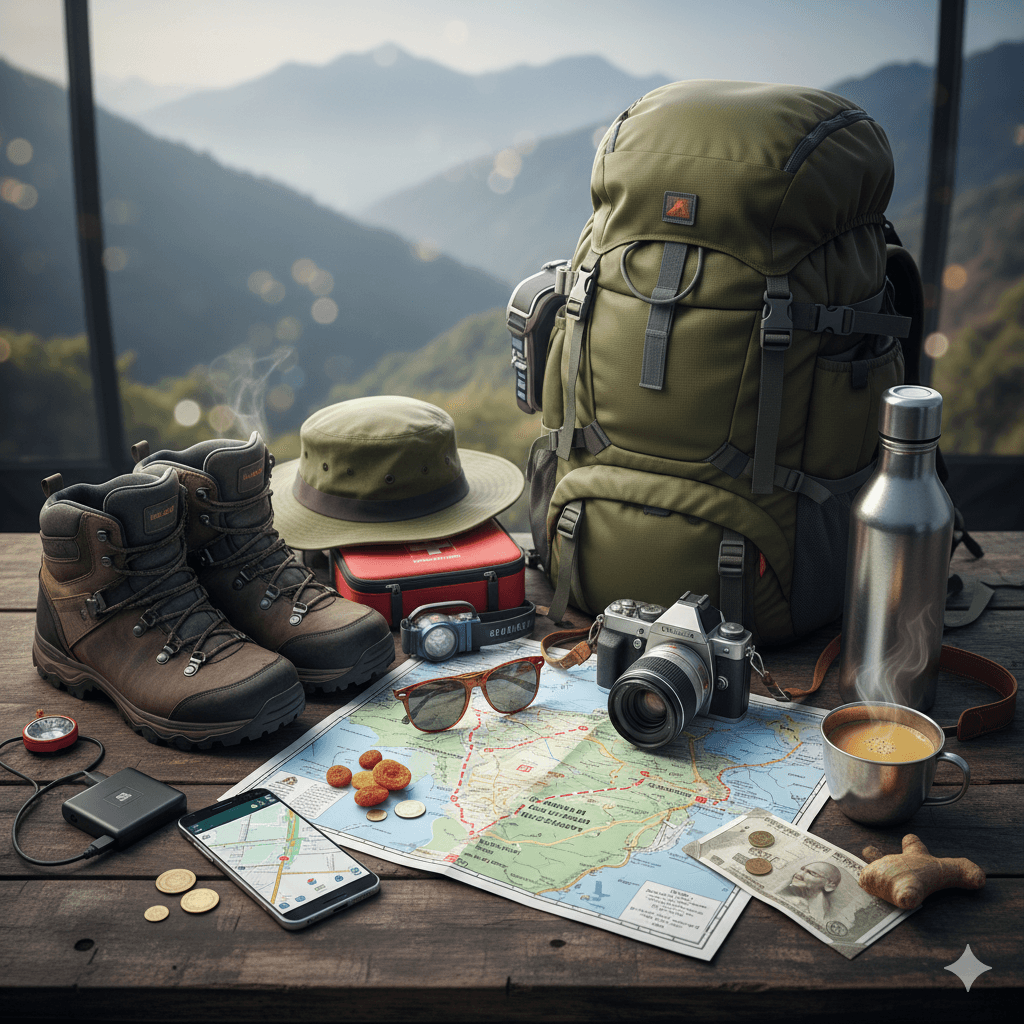
- Cash is Still King: While UPI is everywhere in India now, signal strength at the high-altitude temples and remote nature trails can be… let’s say, “unreliable.” Carry enough cash for your entry fees, guide tips, and that life-saving bowl of Rabri.
- The Guide Advantage: For the 17 approved nature trails, hire a local guide. It’s not just about not getting lost; it’s about the “Information ROI.” They can point out medicinal plants, hidden caves, and bird species you’d blink and miss. Plus, it supports the local mountain economy—a total win-win.
Survival Gear: The Essentials List
- Sunscreen: The sun is stronger at high altitudes. Don’t come home looking like a Tandoori chicken.
- Power Bank: Between the GPS and the 400 photos of the view, your phone battery will die faster than a startup with no funding.
- First-Aid Mini-Kit: Band-aids for blisters are a must. Your feet are your most valuable assets on this trip.
- Eco-Check: Mount Abu is a “Plastic-Free” zone. Don’t be the person who leaves a trail of wrappers. Pack it in, pack it out.
Business Strategist’s Note: Success in travel is about “Buffer Time.” Always add 30 minutes to whatever Google Maps tells you. The roads are winding, the cows are slow, and the views are too good to rush.
14. Logistics & Logistics: The Essential Guide to Mount Abu Travel
As we move toward the final phase of our mission, it’s time to talk about the “Infrastructure.” Every successful business strategist knows that a vision without logistics is just a hallucination. You can dream of the perfect Guru Shikhar trekking experience all you want, but if you don’t know how to get to the base or when the gates close, you’re just a person with a nice pair of boots and nowhere to go.
Mount Abu is unique because it’s an island of green in a sea of desert. This means the way you get here and the way you move around requires a bit of “insider intel.” Let’s get your travel operations optimized.
The Mount Abu Travel Fact-Sheet
| Metric | Details for the Strategic Traveler |
| Nearest Airport | Maharana Pratap Airport, Udaipur (UDR) – ~165 km |
| Nearest Railway Station | Abu Road (ABR) – ~28 km from the main town |
| Peak Visiting Hours | 08:00 AM to 05:00 PM (Temple timings) |
| Local Transport | Activas, Royal Enfields, and unmetered Taxis |
| Best Connectivity | Jio and Airtel (though the peaks are “Dead Zones”) |
Getting Your “Operations” in Order
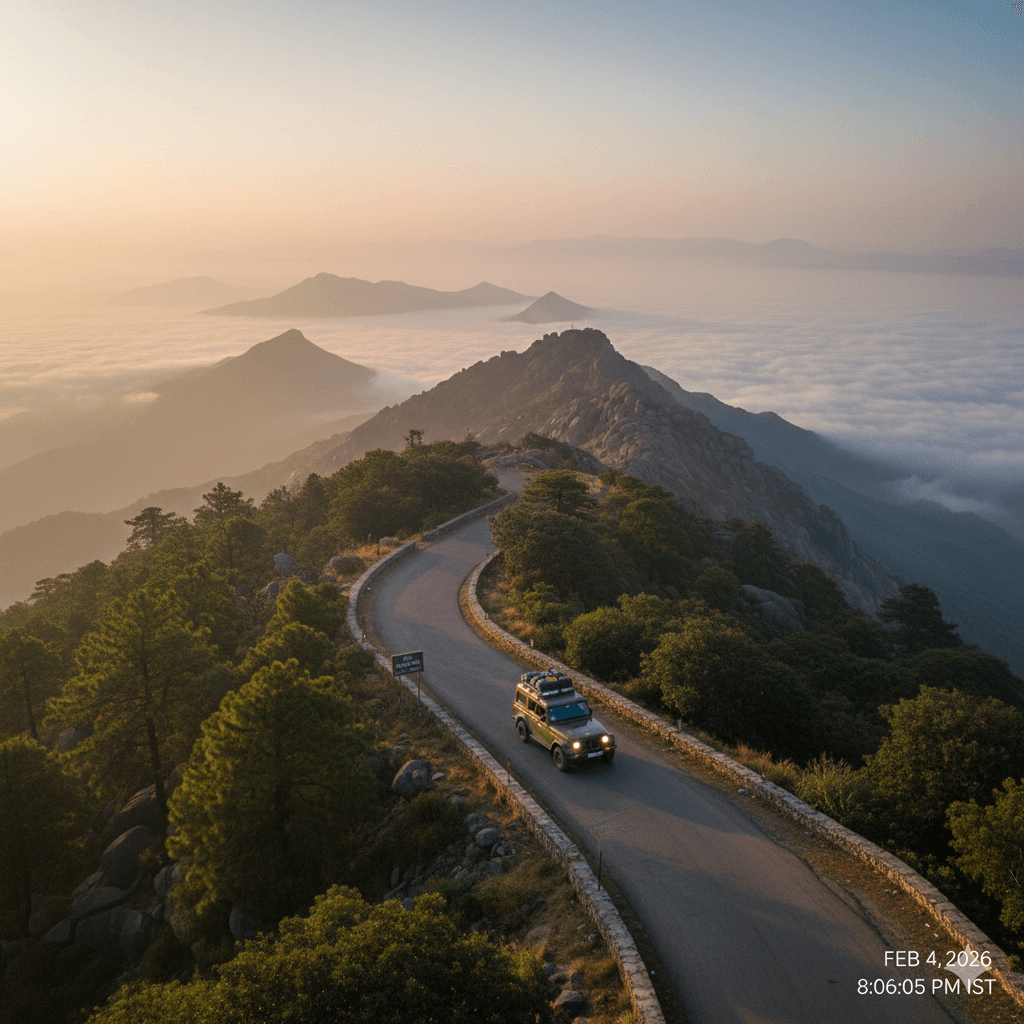
- The Arrival Strategy: Most people take the train to Abu Road. From there, you have a 45-minute mountain climb by road. If you’re prone to motion sickness, maybe don’t eat a heavy breakfast before the taxi starts hitting those hairpin turns. It’s a beautiful drive, but it’s basically a 28 km rollercoaster.
- Mastering the Mountain Commute: Once you’re in the main town, the best way to get to your Guru Shikhar trekking start point is to rent a scooter (Activa). It gives you the “Agility” to stop at every scenic lookout without worrying about taxi meters. Just check the brakes before you head downhill!
- Permits and Fees: While the peak itself is free to access, entering certain parts of the Mount Abu Wildlife Sanctuary for the 17 nature trails requires a small permit fee (usually around ₹300-₹500 for foreigners and less for locals). Think of it as a “Subscription Fee” for the planet’s best views.
- The “Dry State” Border: Remember, Mount Abu is in Rajasthan, but it’s right on the border of Gujarat (a dry state). This makes the town a “weekend oasis” for many. If you want to avoid the massive influx of “festive” weekenders, try to schedule your hike for a Tuesday or Wednesday. Better ROI on your peace of mind!
Important Safety Information
- Wildlife Warning: This isn’t a city park. Sloth bears are native to the Arbuda Mountains. They are generally shy, but they don’t like surprises. If you’re hiking the remote trails, make a bit of noise (whistle or talk) so they know you’re coming.
- Temperature Drops: I’ve said it before, but I’ll say it again: The desert climate is deceptive. Night temperatures can drop to 0°C – 5°C in winter. Pack a heavy jacket, even if you left Udaipur in a t-shirt.
- Sustainable Operations: Mount Abu is an Eco-Sensitive Zone. This means the government is very strict about plastic. Don’t be “that traveler” who drops a wrapper. It’s bad for the bears, and it’s bad for your travel karma.
Strategist’s Advice: If you are booking a taxi for the day, negotiate the “Full Day” rate upfront rather than point-to-point. It usually works out 20% cheaper and gives you the flexibility to linger at the peak if the clouds are looking particularly cinematic.
15. The Final Summit: Why Guru Shikhar Trekking is a Must-Do
Standing at the edge of the world—or at least the edge of Rajasthan—makes you realize that life is a lot like a mountain. It’s 10% the view and 90% the sheer stubbornness to keep walking when your calves start screaming. As a strategist, I’m always looking for the “Big Picture,” and nothing offers a more literal big picture than the summit of the Arbuda Mountains.
My Guru Shikhar trekking journey wasn’t just about checking a box on a “Highest Peaks” list. it was about the contrast. It’s the silence of the high-altitude temples vs. the chaos of the city; the ancient granite vs. the modern observatory; and the spicy kachoris vs. the sweet, mountain air. In a state defined by its history, this peak is a reminder that nature was the first architect.
The Final “Post-Game” Analysis
| The Investment | The Return (ROI) |
| Physical Effort | 300 steps + 17 nature trails of pure adrenaline. |
| Mental Space | Absolute clarity above the desert haze. |
| Cultural Capital | Legends of Shiva, Dattatreya, and Rajput Kings. |
| The Cost | A few hundred rupees and a bit of sweat. |
Closing Thoughts from the Trail
- Perspective Shift: Looking down from 1,722 meters, your “urgent” emails and “pressing” business problems suddenly look very small. There is something about the Aravallis—one of the oldest mountain ranges in the world—that puts your timeline into perspective.
- The “Hidden” Rajasthan: Most people visit this state for the palaces. And while I love a good chandelier as much as the next person, the Guru Shikhar trekking experience proves that Rajasthan’s rugged, wild side is just as “Royal” as its marble halls.
- A Lesson in Persistence: Whether you’re navigating the 17 nature trails or just the 300 steps to the bell tower, the mountain teaches you to focus on the next step, not the whole peak. That’s a business lesson I’m happy to take home.
- The “High” Factor: Let’s be honest—ringing that giant brass bell at the top and hearing it echo across the clouds is a better dopamine hit than any “like” on Instagram.
My Parting Advice
Don’t just visit Mount Abu; experience it. Don’t just see the lake; climb the peak. Mount Abu is often called the “Oasis in the Desert,” but after spending time in the sanctuary, I think of it more as a “Sanctuary for the Soul.”
Business Strategist’s Final Word: In every venture, there is a “Summit Moment”—that point where all the planning, logistics, and hard work finally pay off with a clear view of the future. Guru Shikhar is that moment in physical form.
16. Important Information and FAQ Section
Q: Is Guru Shikhar trekking difficult for beginners?
A: Not at all! The “trek” is mostly a paved climb of about 300 steps. If you can handle a flight of stairs at the mall, you can handle the peak. The 17 nature trails, however, vary from “casual stroll” to “where are my hiking poles?”
Q: Can I drive my car all the way to the top?
A: You can drive to the parking lot near the summit, but the final ascent to the Dattatreya Temple must be done on foot. (Think of it as the mountain’s way of making you earn the view).
Q: Is it safe to hike alone on the 17 nature trails?
A: As your strategist, I’d say “No.” While the trails are beautiful, the sanctuary is home to sloth bears and leopards. Always hire a local guide—they are affordable, knowledgeable, and significantly better at bear-negotiation than you are.
Q: What is the best month for the hike?
A: October to March is the sweet spot. If you go in January, bring a heavy jacket—it gets surprisingly “Himalayan” up there!