
Kota Rajasthan Travel Guide: A 2026 Strategic Evaluation
I. Introduction: The Chambal Sentinel
Welcome to the ultimate Kota Rajasthan Travel Guide. If your only association with Kota is a stack of physics textbooks and the sound of students memorizing periodic tables, it’s time for a strategic update to your travel software.
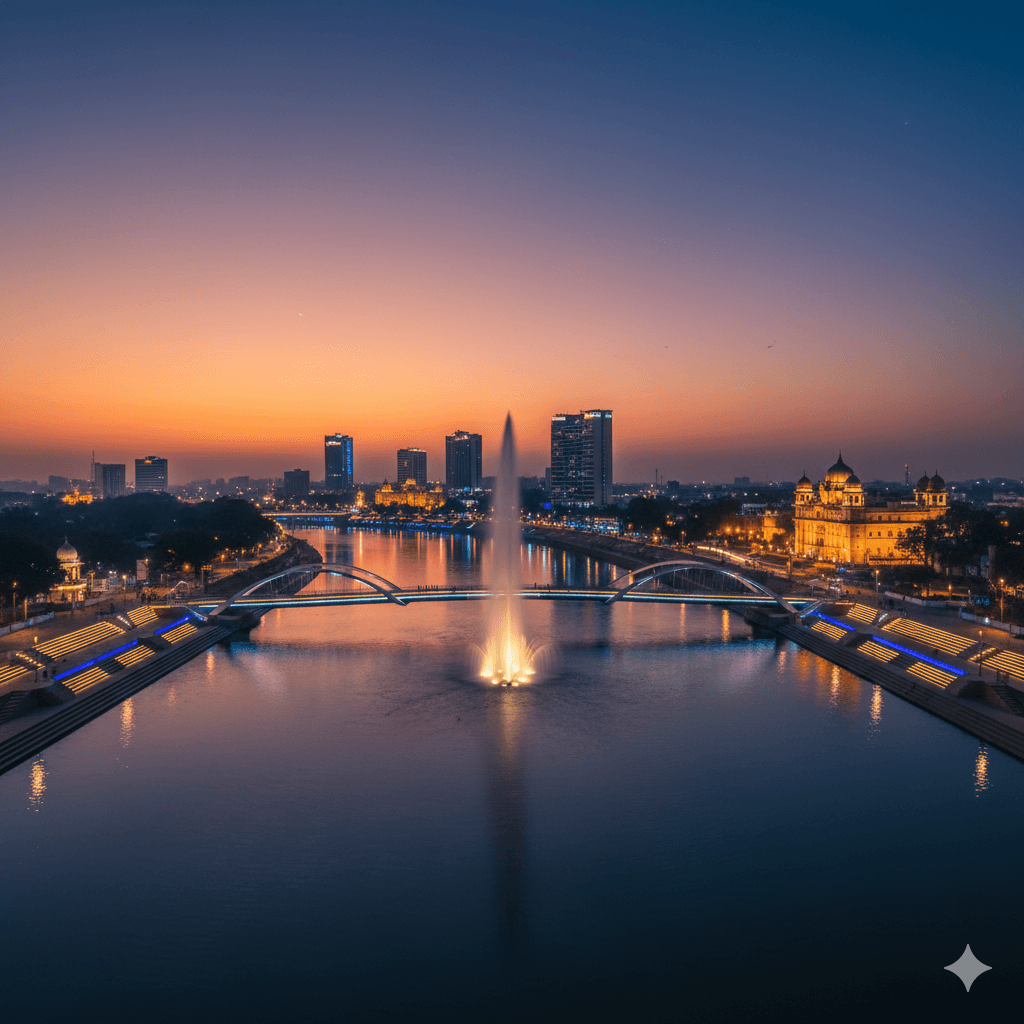
For years, Kota has been the “Coaching Capital of India,” a city defined by academic rigor. But in 2026, the narrative has shifted. Kota is stepping out from behind the whiteboard and revealing itself as a majestic Chambal Sentinel—a city where history flows as deeply as the river that sustains it.
The 2026 Pivot: From Classrooms to Canyons
While other Rajasthani cities are famous for deserts, Kota is defined by water. As the only perennial river city in the state, it offers a lush, rugged frontier that feels worlds apart from the dunes of Jaisalmer.
Tip: Think of Kota as the “understated CEO” of Rajasthan tourism. It doesn’t shout for attention like Jaipur, but its assets—the deep gorges of the Chambal and the brand-new, multi-billion rupee Riverfront—provide an ROI (Return on Interest) that is frankly staggering.
Kota: The Strategic Snapshot
Before we dive into the specific “Evaluation Framework” of the city’s sites, let’s look at the quick metrics of the destination:
| Metric | Details | Strategist’s Note |
| Primary Identity | Hadoti Heritage Anchor | Shifting from “Student Hub” to “Riverfront Wonder.” |
| Geographic USP | The Chambal River | The only place in Rajasthan to see deep river canyons. |
| Vibe Check | Industrial-Meets-Imperial | Gritty urban energy paired with serene royal palaces. |
| Crowd Factor | Moderate | Still “offbeat” enough to avoid the tourist traps. |
Why Kota Belongs on Your 2026 Radar
In this Kota Rajasthan Travel Guide, we aren’t just listing monuments; we are evaluating a destination that has undergone a massive facelift. Here is why you need to visit:
- The Riverfront Revolution: The new Chambal Riverfront isn’t just a walkway; it’s a world-class architectural statement with themed ghats that rival international standards.
- The “Grand Canyon” Experience: Garadia Mahadev offers a view of the river so dramatic you’ll forget you’re in India, let alone Rajasthan.
- Saree Sophistication: If you enjoy the “Artisan Economy,” the delicate Kota Doria weaves are a masterclass in textile engineering.
- A “Seven Wonders” Speedrun: Where else can you see the Eiffel Tower and the Pyramids in 30 minutes without a passport? (Even if they are miniatures, the sunset photos are 10/10).
Kota is no longer just a transit point or a study destination. It is a strategic frontier waiting to be explored. Let’s stop talking about exams and start talking about the echoes of the Hadoti kings.
II. Famous Historical Places: The Hadoti Legacy
If you thought Kota was all about modern concrete and competitive exams, prepare to have your historical compass recalibrated. As your strategist and guide, I’m here to tell you that the “Hadoti Legacy” is the secret sauce of this Kota Rajasthan Travel Guide.
The rulers of Kota (the Maharaos) weren’t just warriors; they were aesthetic connoisseurs who built palaces that seem to float on water and forts that feel carved by the gods themselves. Let’s evaluate the heavy hitters of Kota’s history.
The “Royal Portfolio”: Primary Heritage Assets
To understand the historical ROI of this city, we have to look at the structures that defined the power of the Hara Chauhan clan.
| Heritage Asset | Strategic Significance | Vibe Check |
| Kota Garh (City Palace) | The administrative & cultural nerve center. | “Game of Thrones” meets Rajasthani royalty. |
| Jagmandir Palace | The premier “Leisure Asset” of the 1740s. | Surreal, floating, and very “Instagrammable.” |
| Abheda Mahal | The medieval summer retreat. | Peaceful, green, and crocodile-adjacent. |
| Brijraj Bhawan | Colonial-era fusion architecture. | Stately, elegant, and supposedly haunted. |
1. Kota Garh (The City Palace)
This isn’t just a building; it’s a sprawling complex of courtyards, balconies, and towers. Built over centuries, it’s a living museum of Rajput and Mughal design.
- The Durbar Hall: Imagine a room so opulent that even the walls seem to be showing off. It’s famous for its mirror-work and gold leaf.
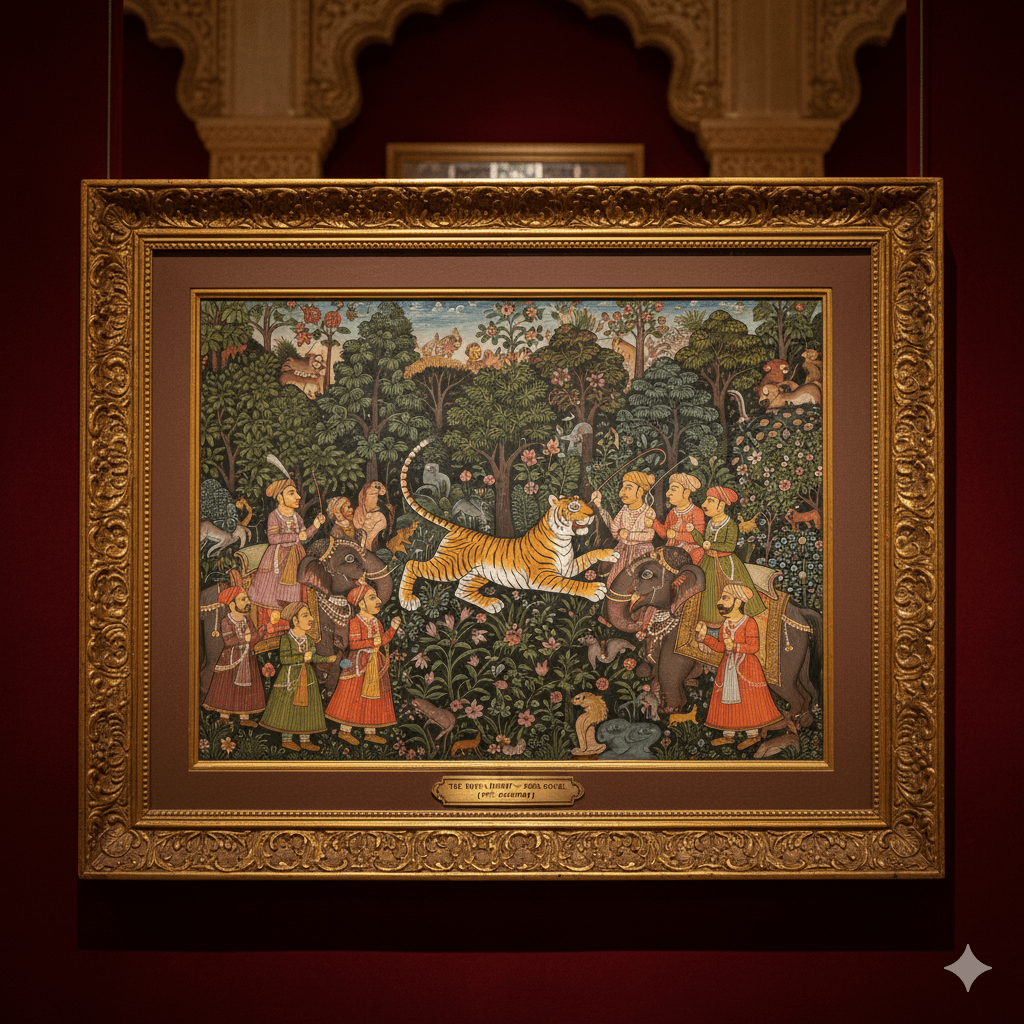
- The Miniature Gallery: The “Kota School” of painting is world-renowned. Keep an eye out for the hunting scenes—the Hadoti kings clearly had a very active “outdoor hobby” life.
- Teacher’s Note: Wear comfortable shoes. This place is a labyrinth, and getting lost in a 17th-century palace is only romantic for the first twenty minutes.
2. Jagmandir Palace: The Red Sandstone Island
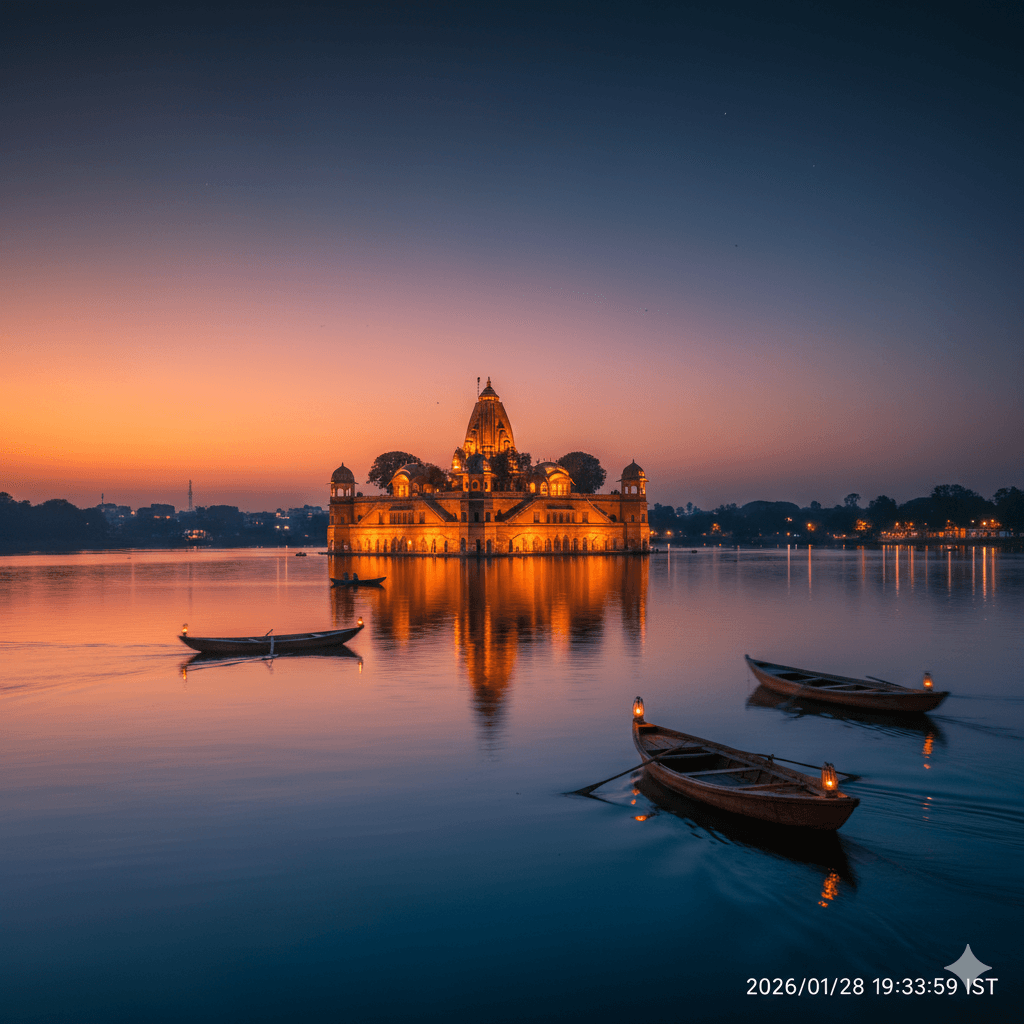
Located in the middle of Kishore Sagar Lake, this is arguably the most beautiful spot in the city. Built by one of the Queens of Kota in 1740, it serves as the ultimate visual anchor for the city.
- The Sight: At night, when the palace is illuminated and reflected in the lake, it looks like a floating lantern.
- Strategic Tip: You can’t usually go inside the palace itself (it’s an island, after all), but a boat ride around it at sunset is the #1 “low effort, high reward” activity in any Kota Rajasthan Travel Guide.
3. Abheda Mahal & Tank
This was the royal family’s summer getaway. It’s located near the river and was designed to keep the royals cool during the legendary Hadoti summers.
- The Wildlife Twist: The pond at Abheda was traditionally home to many crocodiles. It was basically the 18th-century version of having a “dangerous pet” to impress the neighbors.
- Why Visit: It has recently been integrated into the Biological Park area, making it a great “two-for-one” historical and nature stop.
4. Brijraj Bhawan Palace
Now a heritage hotel, this palace offers a glimpse into the British-Raj era of Kota’s history.
- The “Spooky” Factor: Legend has it that the ghost of Major Burton (a British officer) still patrols the halls. Strategically speaking, he’s a very polite ghost—he reportedly only slaps guards who fall asleep on duty. Talk about an effective management style!
My Verdict: Kota’s history isn’t just a list of dates; it’s a collection of architectural assets that prove this city has always been a “Power Player” in Rajasthan.
III. Things to Do & Top Sightseeing Destinations
Alright, team, let’s get into the “Action Items.” If Section II was about the dusty (but glorious) past, Section III is where Kota shows off its shiny, multi-billion rupee 2026 glow-up. As your lead strategist, I’ve evaluated the landscape, and I can tell you: this isn’t the same city it was five years ago.
In this Kota Rajasthan Travel Guide, we’re moving beyond the classroom. We’re talking about “Grand Canyon” views, world-class riverfronts, and a park where you can “travel the world” faster than a high-speed broadband connection.
The “Must-Experience” Matrix: 2026 Edition
To keep your itinerary optimized for maximum ROI (Return on Investment—of your time!), use this quick-reference table:
| Activity / Destination | Strategic Value | Best Time to Visit | Expert Vibe Check |
| Chambal Riverfront | Global-standard urban design. | 5:00 PM – 9:00 PM | “Is this India or Singapore?” |
| Garadia Mahadev | Nature’s finest “wow” factor. | 7:00 AM or 4:00 PM | Majestic, spiritual, and slightly dizzying. |
| Seven Wonders Park | Efficient global sightseeing. | 6:30 PM (Sunset/Lights) | Fun, kitschy, and great for the ‘Gram. |
| Kishore Sagar Boating | Pure relaxation and aesthetics. | Evening | Romantic, calm, and breezy. |
1. The Chambal Riverfront: Kota’s Crown Jewel
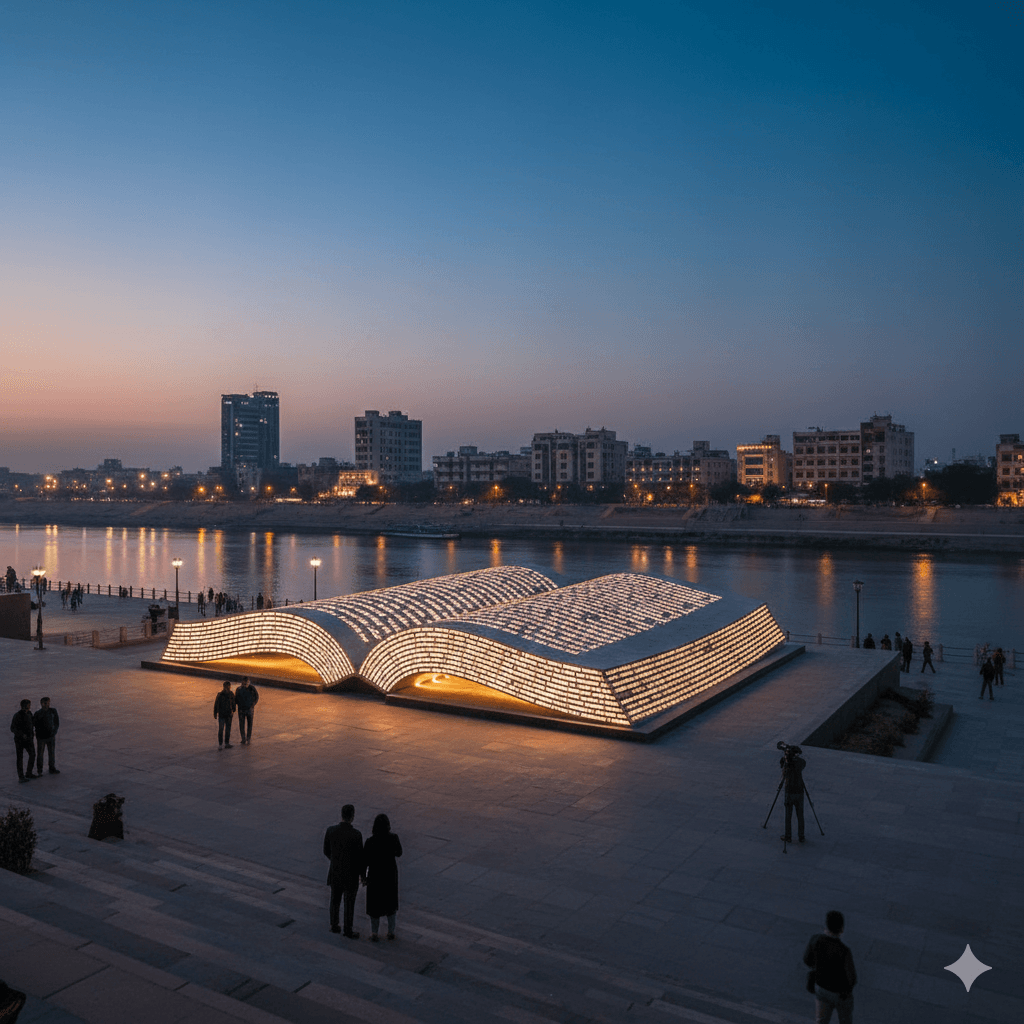
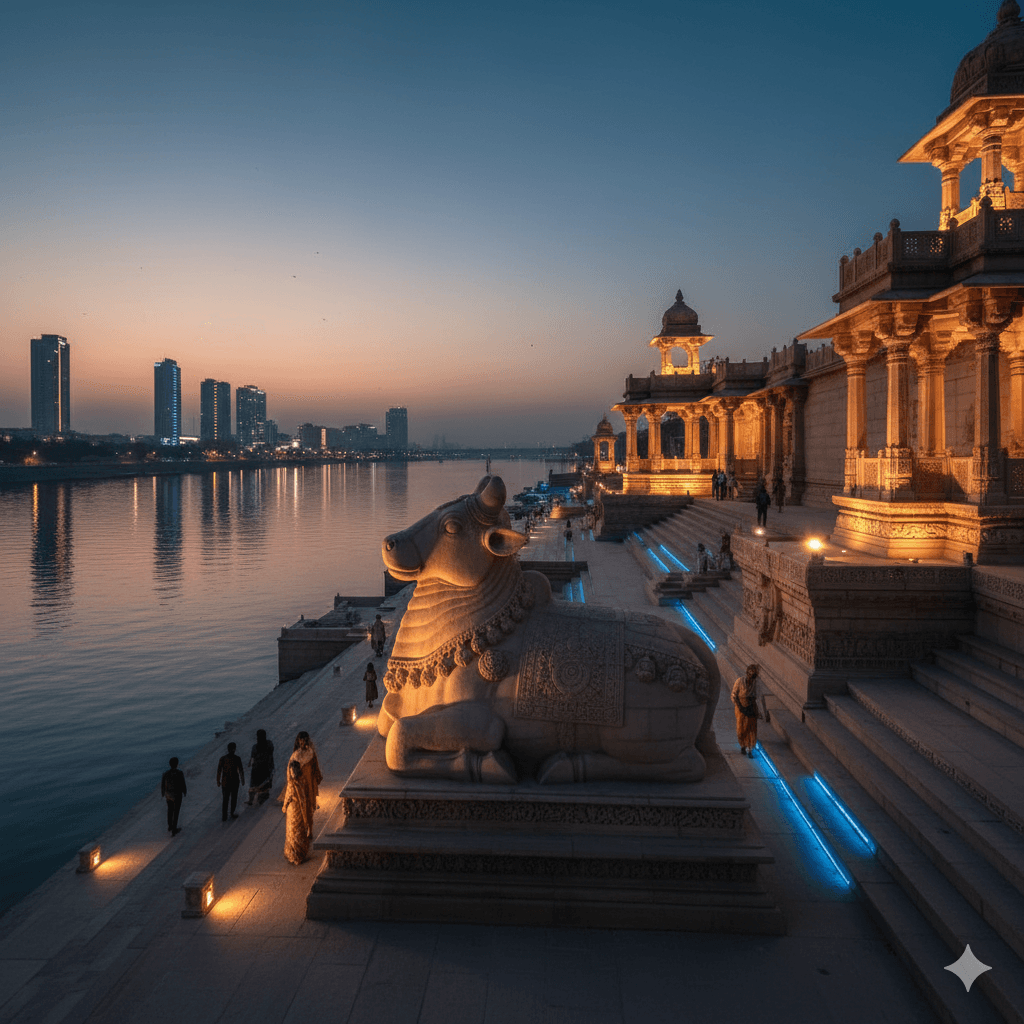
This is the big one. Imagine 6 kilometers of themed ghats that blend ancient history with futuristic architecture. It is, quite simply, the best riverfront in India.
- The Big Bell: Check out the world’s largest bell—it’s so massive that its “Om” sound can be heard for miles.
- The Themed Ghats: From the literature-themed Sahitya Ghat (shaped like an open book) to the Rajputana Ghat showcasing all of Rajasthan’s regions, it’s a marathon of culture.
- Teacher’s Tip: Don’t try to walk the whole 6km unless you’re training for a triathlon. Use the battery-operated shuttles; they are the strategic choice for the smart traveler.
2. Garadia Mahadev: The “Grand Canyon” of India
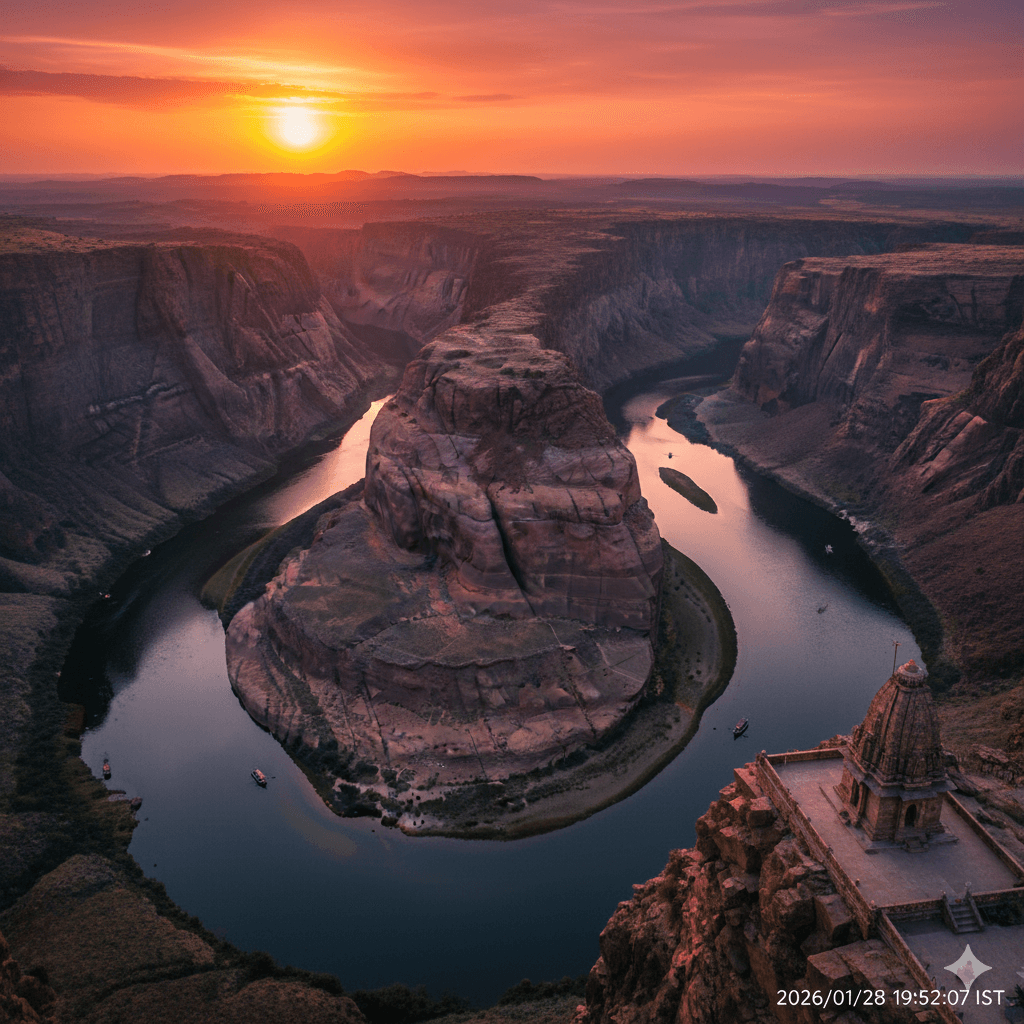
If you don’t post a photo of this horse-shoe bend, did you even visit Kota? Located about 25km from the city, this spot offers a 500-foot drop view of the Chambal River winding through rocky cliffs.
- The Vibe: It’s a Shiva temple at its core, so it’s peaceful—until you see the view, at which point it becomes breathtaking.
- Strategist’s Warning: It’s a forest area. Monkeys here are “senior managers”—they are in charge, they are observant, and they will take your snacks if you leave them unattended.
3. Seven Wonders Park: The Global Speedrun
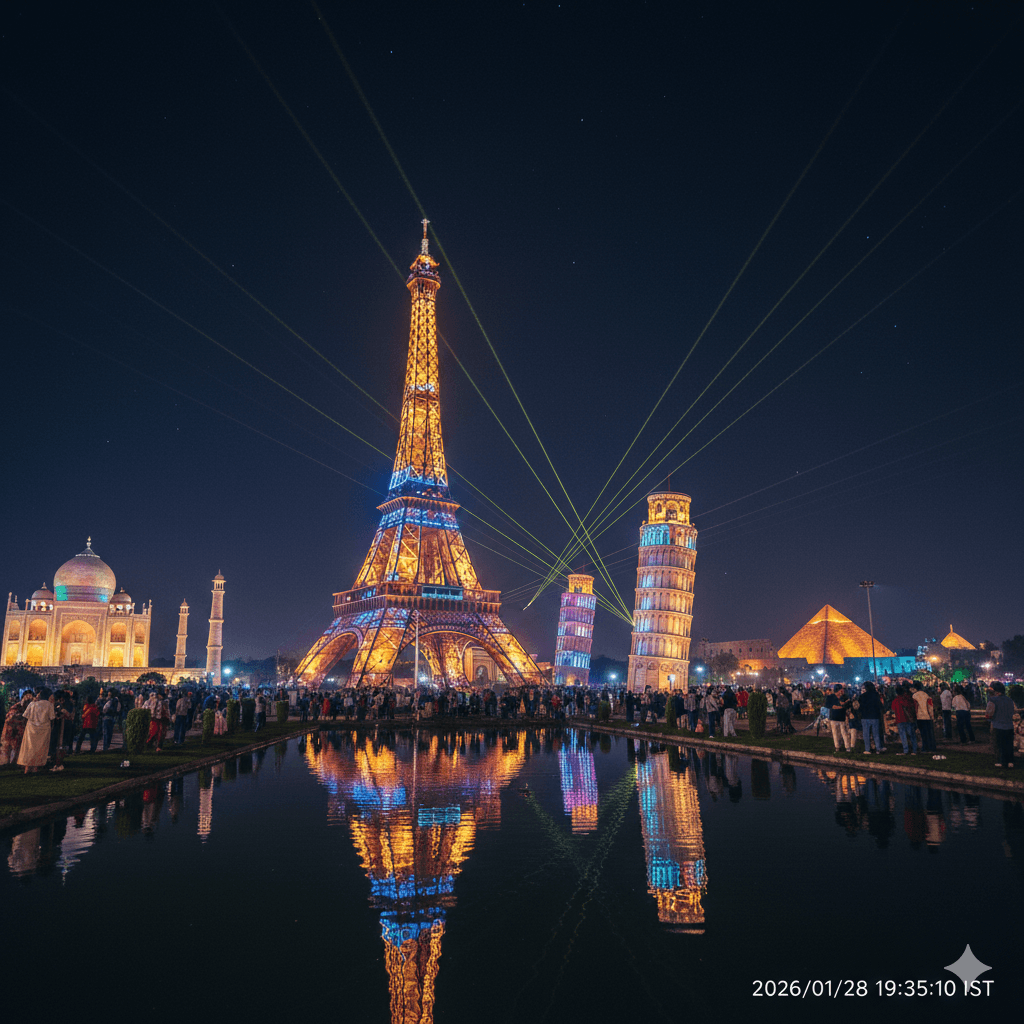
Why spend thousands on international flights when you can see the Eiffel Tower, the Leaning Tower of Pisa, and the Pyramids of Giza all in one park?
- The 2026 Lighting: The park looks “fine” in the day, but it looks spectacular at night when the floodlights hit the replicas.
- Humor Note: The Statue of Liberty here is a bit shorter than the original, but hey, she didn’t have to deal with a 20-hour flight to get here.
4. Kishore Sagar Lake & Boat Rides
The lake is the heart of the city’s social life. Taking a boat ride here gives you the best angle to see Jagmandir Palace (the floating red sandstone beauty).
- Top Sightseeing Tip: Look for the white marble chhatris (cenotaphs) along the banks. They catch the evening light perfectly.
IV. Best Places for Every Interest Group
One of the biggest mistakes travelers make is assuming Kota is a “one-size-fits-all” destination. As your strategist, I’ve broken down the city into specialized “sectors.” Whether you’re a history buff, a nature enthusiast, or just someone looking for a quiet corner to avoid your responsibilities, this Kota Rajasthan Travel Guide has a dedicated plan for you.
Interest Group Strategic Alignment
| Interest Group | Primary Objective | Top Recommended Asset |
| The Historian | Architectural ROI & Art | Rao Madho Singh Museum |
| The Eco-Traveler | Biodiversity & Landscapes | Darrah Wildlife Sanctuary |
| The Spiritual Seeker | Divine Connection & Peace | Khade Ganesh Temple |
| The Family Unit | Recreation & Entertainment | “OxyZone” City Park |
| The Adrenaline Junkie | Physical Engagement | Gaipernath Waterfall Trek |
1. For the Historian: The Rao Madho Singh Museum
If you like your history served with a side of exquisite detail, this museum (located inside the City Palace) is your headquarters.
- The Highlight: The miniature paintings. They don’t just show “kings standing around”—they depict intense tiger hunts and royal life with such precision you’ll wonder if the 17th-century artists had 4K vision.
- Teacher’s Tip: Don’t miss the arms and ammunition section. It’s a great reminder that the royals of Kota were as much about “strategic defense” as they were about high art.
2. For the Eco-Traveler: Darrah Wildlife Sanctuary
Located about 50km from the city, this isn’t your average city park. It’s a rugged, hilly terrain that was once the private hunting ground of the Maharajas.
- What to Spot: Keep your binoculars ready for leopards, sloth bears, and wolves.
- The “Dang” Experience: The landscape is dominated by the Dang (deep ravines), which offer a dramatic, raw look at the Rajasthani wilderness.
3. For the Spiritual Seeker: Khade Ganesh & Godavari Dham
Kota offers a unique “Spiritual Portfolio.”
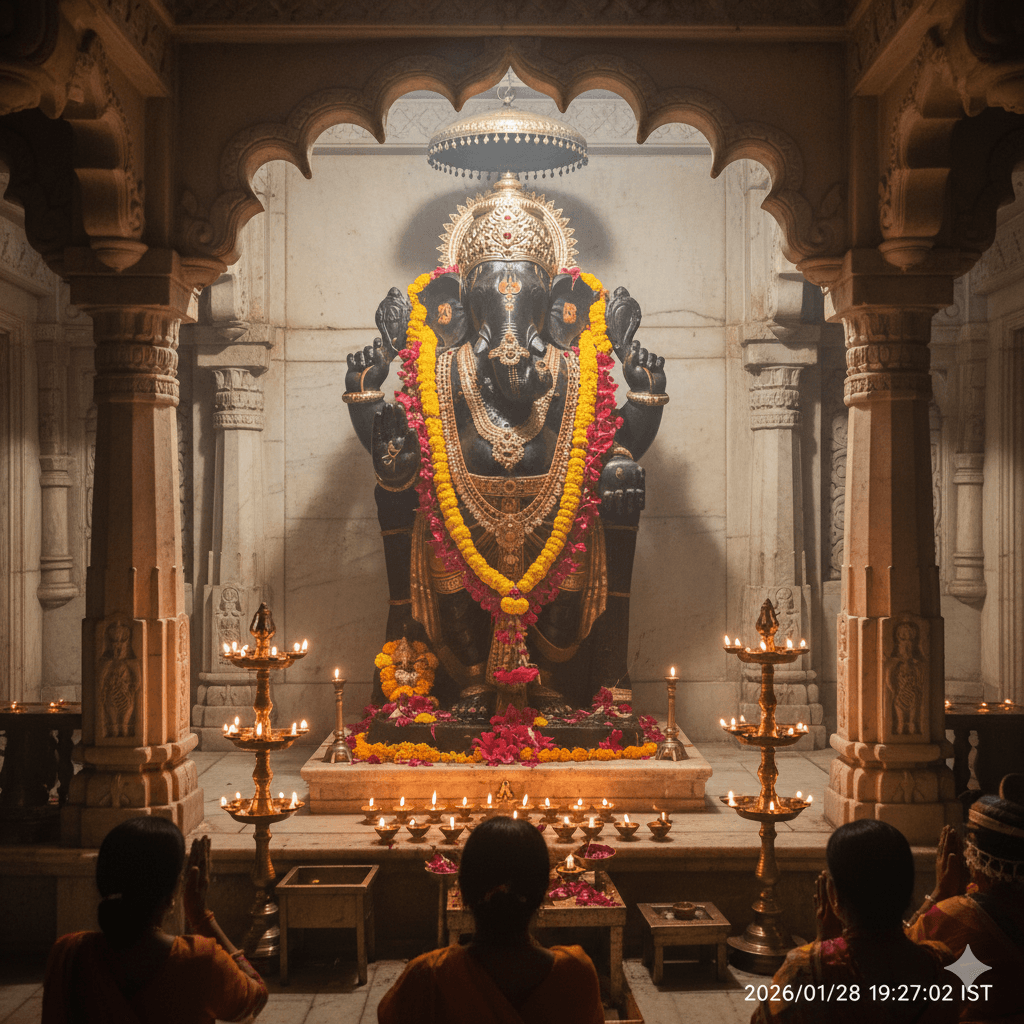
- Khade Ganesh Temple: As mentioned before, this is the only temple in India where Lord Ganesha is in a standing position. From a business perspective, he’s basically the “CEO on his feet,” ready to get things done.
- Godavari Dham: This Hanuman temple on the banks of the Chambal is famous for its white marble architecture and peaceful evening aarti.
4. For the Family Unit: “OxyZone” City Park
Launched as part of the 2026 city modernization, the OxyZone is a 30-hectare marvel. It’s designed to be a “breath of fresh air” (literally).
- The Kids’ Zone: High-quality play areas and an open-air gym.
- The Botanical Garden: A peaceful walk through diverse flora that makes for a great science lesson without the classroom boredom.
5. For the Adrenaline Junkie: Gaipernath Waterfall
Tucked away in a deep gorge, Gaipernath is where nature and adventure meet.
- The Challenge: You have to descend several hundred steps to reach the base where a Shiva temple sits next to a plunging waterfall.
- Humor Note: The climb back up is the “Audit” of your fitness levels. If you can make it without stopping three times, you’ve passed the test!
V. Nightlife & Evening Activities: The Illuminated Frontier
If you think the sun setting over the Chambal means it’s time to retire to your hotel and refresh your LinkedIn feed, think again. As your business strategist, I’m happy to report that Kota’s “After-Hours Portfolio” has seen a massive upgrade. In 2026, the city transforms into what I call the Illuminated Frontier—a vibrant mix of world-class riverfront walks, neon-lit parks, and a burgeoning lounge scene that actually stays open past your bedtime.
In this Kota Rajasthan Travel Guide, we’re evaluating how to spend your evening hours for maximum relaxation and cultural ROI.
The Evening Strategy Matrix
When the temperature drops, the “Vibe Index” in Kota rises. Here is how to navigate the night:
| Activity Category | Top Recommended Asset | The “Hidden” Benefit | Vibe Check |
| Social Promenade | Chambal Riverfront | Incredible light & water shows. | “European river-walk energy.” |
| Gourmet & Chill | Splash Rooftop / Sevva | Panoramic views of the city lights. | Sophisticated & breezy. |
| Family Fun | Seven Wonders Park | Iconic photos with lit-up replicas. | Kitsch, fun, and lively. |
| Late Night Cravings | Gumanpura Chowpati | Authentic Kota Kachori & Milk Jalebi. | A sensory street-food overload. |
1. The Chambal Riverfront: A Neon Wonderland
If you visited the Riverfront during the day, you only saw half the story. At night, this 6km stretch becomes a literal light-show.
- The Musical Fountain: This isn’t just a few squirts of water; it’s a 42-meter-high synchronized dance of light and sound that is legitimately world-class.
- The LED Garden: A dedicated section where the trees, flowers, and even artificial birds glow with fiber-optic magic. It’s a photographer’s dream.
- Teacher’s Tip: The Chambal Aarti at sunset is a spiritual prerequisite before the neon lights take over. It’s the perfect transition from “Traditional Rajasthan” to “Modern Kota.”
2. Seven Wonders Park: Global Sightseeing (Night Edition)
The replicas of the Eiffel Tower and the Leaning Tower of Pisa were designed to be seen at night. The floodlighting is strategically placed to make the miniatures look like the real deal in your photos.
- Humor Note: It’s much easier to pretend you’re in Paris when you can’t see the nearby traffic of Ballabhbari in the dark.
- Accessibility: It’s located right next to Kishore Sagar Lake, making it a great “double-header” with a late-evening boat ride.
3. The Lounge & Club Scene: Kota’s New Pulse
Believe it or not, Kota now has a legitimate “Lounge Culture.” No, it’s not Mumbai, but for a heritage city, it’s impressively lively.
- Sevva By Mr. Tea Cafe: A high-end lounge that offers great fusion food and an even better atmosphere.
- Tiger NightClub & V2 Club: If you actually want to dance, these are the local favorites where the “Coaching Capital” lets off some steam.
- Strategist’s Pick: Splash Rooftop Bar at the Hotel Lilac. Nothing beats a cold drink while looking at the shimmering reflections of the city on the lake.
4. Street Food Strategy: The Gumanpura Run
Nightlife in Kota isn’t complete without a “Calorie Audit” at the local food stalls.
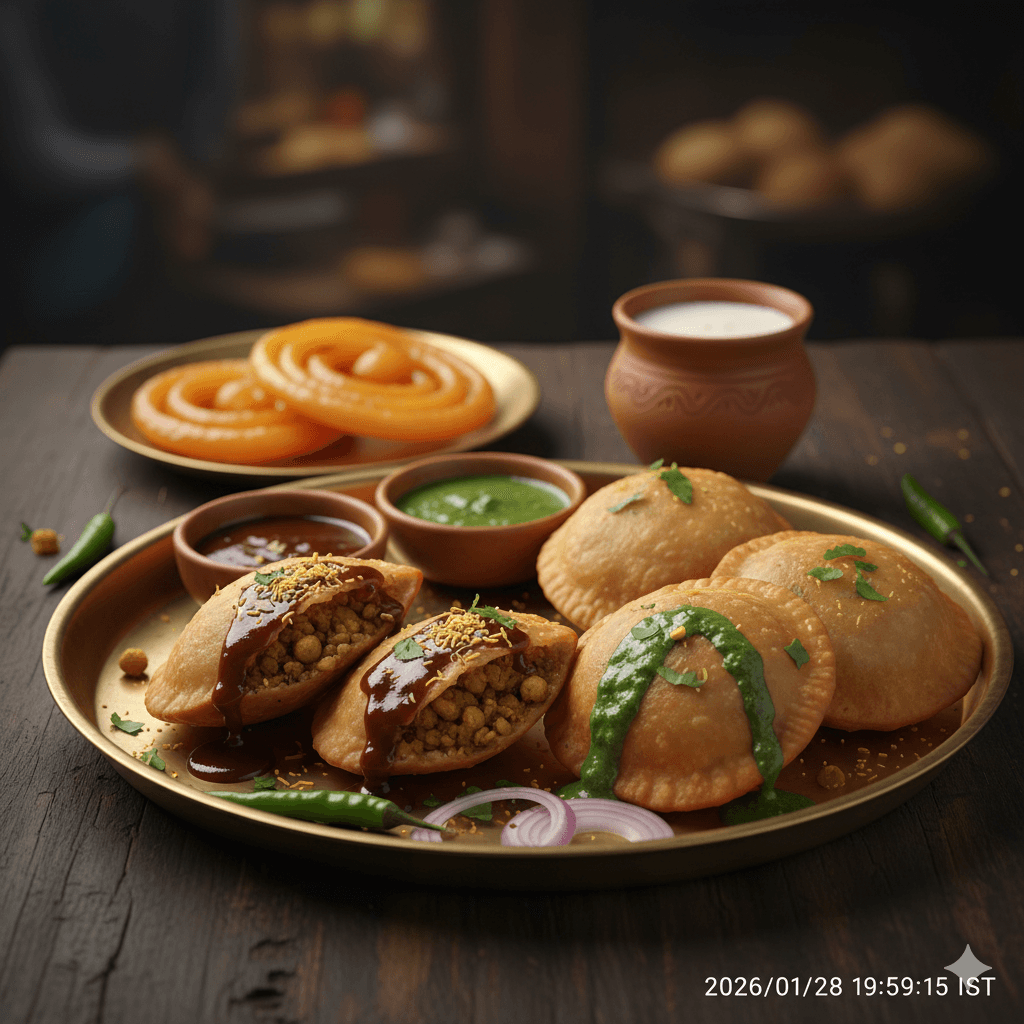
- Kota Kachori: Visit Jodhpur Namkeens in Gumanpura (open until 9 PM) for the legendary spicy kachori.
- Dhoodh Jalebi: Head to Shambhu Mishthan Bhandar for piping hot jalebis served with thick, creamy milk. It’s the local version of a “nightcap.”
VI. Adventure & Outdoor Activities: The “Dang” Expedition
Strap on your boots and double-check your camera batteries. If you thought this Kota Rajasthan Travel Guide was only about palaces and river-walks, Section VI is here to give your adrenaline levels a strategic boost.
In the local dialect, the rugged, ravine-filled landscape around Kota is known as the “Dang.” It’s a terrain of deep sandstone gorges, hidden waterfalls, and river systems that look like they were designed by a Hollywood location scout for an adventure epic.
The Adventure ROI: Activity Evaluation
Not all adventures are created equal. Use this table to decide which “Expedition” matches your risk appetite:
| Activity | Adrenaline Level | Physical Effort | Expert Vibe Check |
| Chambal Boat Safari | Medium | Low | “National Geographic Live.” |
| Gaipernath Trek | High | High | “Leg day” with a spiritual reward. |
| Garadia Mahadev Trail | Low | Low | Panoramic views with zero sweat. |
| Mukundra Hills Safari | Medium | Medium | Raw, wild, and off-the-grid. |
1. The Chambal Boat Safari: Floating with Giants
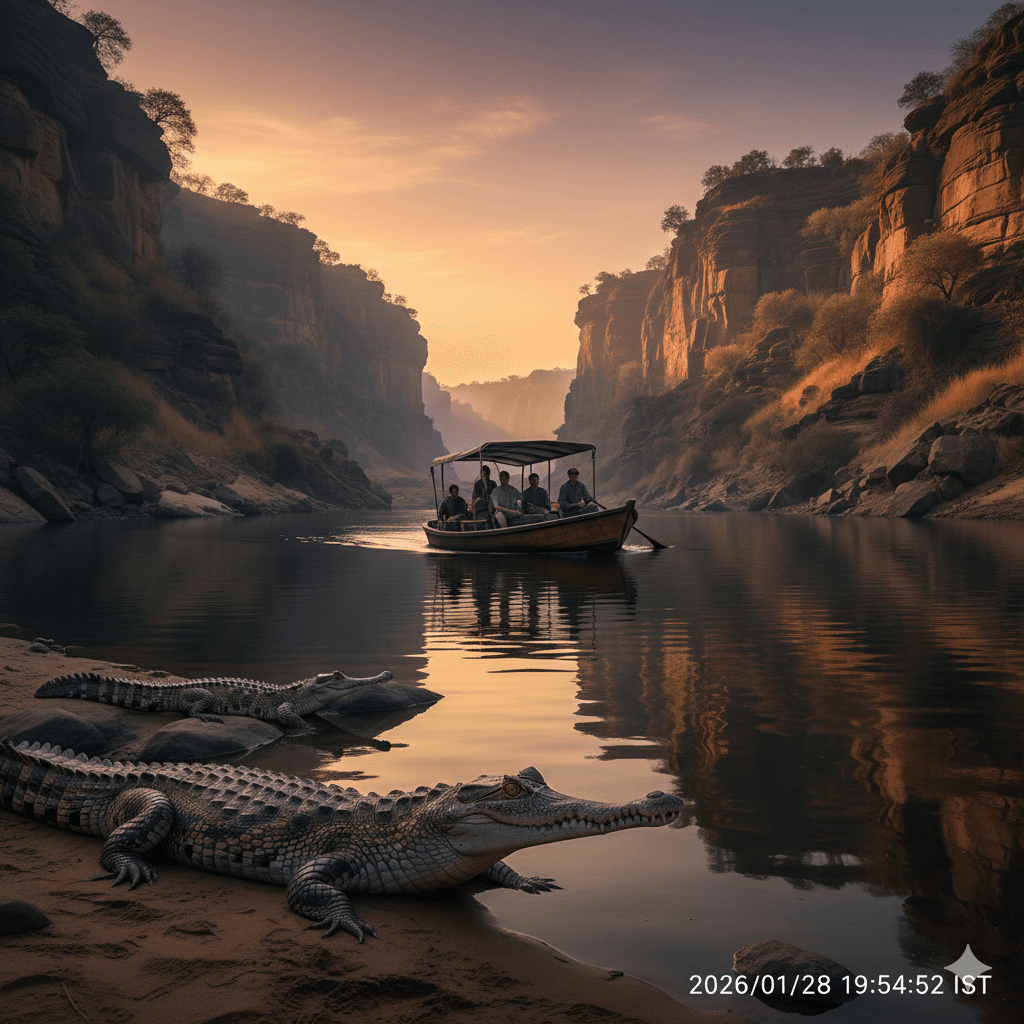
This isn’t your typical swan-shaped paddle boat ride. This is a journey into the National Chambal Gharial Wildlife Sanctuary.
- The Cast of Characters: You are here to see the Gharial (the long-snouted, fish-eating crocodile) and the Mugger (the “I’ll eat anything” crocodile). You might also spot the rare Gangetic River Dolphin if the stars align.
- Strategic Note: In late 2025, there was a viral incident of a boat getting stranded near some very large crocs. The Lesson? Always book with authorized operators who have well-maintained motors and life jackets. Safety is the best ROI.
2. The Gaipernath Waterfall Trek: The Gorge Descent
Tucked away near the city, Gaipernath is a deep chasm that features a stunning waterfall (most active from July to October) and an ancient Shiva temple at the bottom.
- The Challenge: To reach the temple and the base of the falls, you have to descend about 250–300 steep stone steps into the gorge.
- Humor Note: Going down is a breeze. Coming back up is where you realize that those extra Kota Kachoris you had for breakfast are now “dead weight.”
- Vibe: It’s humid, lush, and feels like a secret jungle kingdom.
3. Garadia Mahadev: The “No-Trek” Trek
If you want the “Grand Canyon” photos without the actual hiking, this is your strategic winner.
- The Experience: You drive right up to the cliff’s edge. The “adventure” here is purely visual—standing on the precipice and looking down at the horseshoe bend of the Chambal.
- Teacher’s Tip: The wind here can be fierce. Hold onto your hats (and your phones) unless you want them to become permanent residents of the riverbed 500 feet below.
4. Mukundra Hills (Darrah) Jungle Safari
As Rajasthan’s third Tiger Reserve, Mukundra Hills offers a much more “raw” experience than the crowded Ranthambore.
- The Landscape: It’s a densely wooded, hilly terrain. While tiger sightings are rare, the leopard and sloth bear populations are thriving.
- The “Dang” Factor: The hills create natural fortresses and ravines that are perfect for those who want to feel like true explorers.
- Booking: Safaris must be pre-booked via the Rajasthan Forest Department portal. Don’t just show up and expect a seat; that’s a “strategic fail.”
VII. Nearby & Surrounding Attractions: The Satellite Network
Welcome to the “Expansion Pack” of your Kota Rajasthan Travel Guide journey. As your business strategist, I always advise looking at the bigger picture. If Kota is your headquarters, the surrounding region of Hadoti is your network of high-value subsidiaries.
In this Kota Rajasthan Travel Guide, we’re exploring the “Satellite Network”—destinations within a 100km radius that offer a massive ROI in terms of history, architecture, and sheer “wow” factor.
The Satellite Strategy: Regional Evaluation
| Destination | Distance from Kota | Strategic USP | Vibe Check |
| Bundi | 38 km | The “Stepwell Capital” & Blue Houses. | “Jaipur’s cooler, quieter cousin.” |
| Gagron Fort | 88 km | UNESCO Water Fort (Jaladurg). | “A stone ship anchored in the river.” |
| Baroli Temples | 45 km | 10th-century Pratihara Art. | “Indiana Jones discovery vibes.” |
| Jhalrapatan | 85 km | The “City of Bells” & Sun Temple. | Ancient, melodic, and spiritual. |
1. Bundi: The Blue City of Hadoti
Just a 45-minute drive away, Bundi is a living museum. If you like the blue houses of Jodhpur but hate the tourist traps, Bundi is your strategic alternative.
- Taragarh Fort: One of the most impressive (and slightly overgrown) forts in Rajasthan. It’s famous for its giant tunnels and the “Bhim Burj” cannon.
- Raniji ki Baori: A 17th-century stepwell that looks more like a subterranean cathedral. The carvings of elephants with trunks turned inwards are a masterclass in 1699 design.
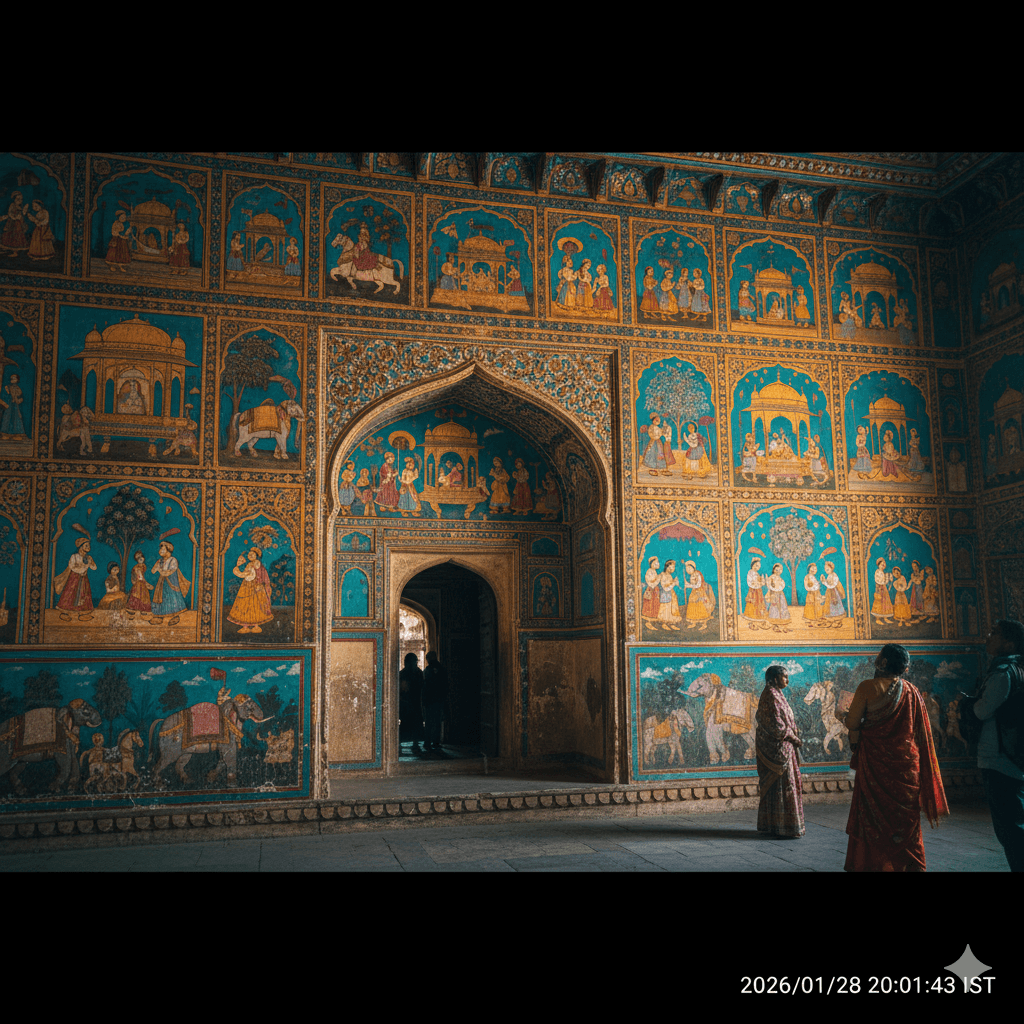
- Teacher’s Tip: Visit the Chitrashala inside the Bundi Palace. The murals are turquoise, gold, and green, and they are arguably the best-preserved wall paintings in all of India.
2. Gagron Fort: The Floating Fortress
Located near Jhalawar, Gagron is a UNESCO World Heritage site and one of the rare “Water Forts” in the world.
- The Architecture: It’s built on a massive rock at the confluence of the Ahu and Kali Sindh rivers. It has no foundation—the rock is the foundation. Talk about a solid business structure!
- Humor Note: It’s surrounded by water on three sides and a forest on the fourth. In the 14th century, this was the ultimate “Do Not Disturb” sign for invading armies.
3. Baroli Temples: The Hidden Gems
Located near Rawatbhata, these 9th-10th century temples are a dream for the “Heritage Auditor.”
- The Style: Exquisite Gurjara-Pratihara architecture. The Ghateshwara Mahadeva temple is the centerpiece, with stone carvings so delicate they look like they were 3D-printed rather than chiseled by hand 1,000 years ago.
- Strategic Note: It’s a quiet site. You’ll likely have the place to yourself, making it perfect for deep-dive photography.
4. Jhalawar & Jhalrapatan
Often called the “City of Bells” because you can hear temple bells ringing from every corner of the town.
- The Sun Temple: An 11th-century marvel with a 96-foot shikhara (spire) that dominates the skyline.
- The Orchard Economy: Jhalawar is the “Nagpur of Rajasthan”—it’s famous for oranges. If you’re here in winter, the “Orange ROI” is delicious.
VIII. Comprehensive Top List: The Globalopollis Power Rankings
Welcome to the boardroom. As your Kota Rajasthan Travel Guide strategist, I know that time is your most precious asset. You can’t see everything, so you need to invest your hours where the Aesthetic ROI is highest.
In this Kota Rajasthan Travel Guide, I’ve moved beyond the basic “top ten” lists. I’ve performed a rigorous evaluation of Kota’s assets to bring you the Globalopollis Power Rankings. These are ranked based on historical significance, 2026 infrastructure quality, and that elusive “wow” factor.
The Kota Asset Evaluation Matrix
| Rank | Destination/Asset | Primary Value Driver | Strategist’s Verdict |
| 01 | Chambal Riverfront | Modern Infrastructure | The “Blue Ocean” of Kota tourism. |
| 02 | Garadia Mahadev | Natural Landscape | Highest visual yield in Rajasthan. |
| 03 | Kota Garh (City Palace) | Heritage & Art | The cultural headquarters. |
| 04 | Seven Wonders Park | Efficient Sightseeing | High-speed global “expansion.” |
| 05 | Kishore Sagar & Jagmandir | Aesthetic Balance | The city’s core visual anchor. |
| 06 | Abheda Biological Park | Eco-Tourism | A diversified nature portfolio. |
| 07 | Khade Ganesh Temple | Niche Spirituality | Unique “Standing Ganesha” USP. |
| 08 | Kota Barrage | Engineering Marvel | Great for “calm capital” evenings. |
The “Big Three” Deep Dive
1. The Chambal Riverfront (The Market Leader)
This is our #1 for a reason. In terms of urban development, it’s the most significant project in the state.
- Why it wins: It’s a 6km masterclass in themed architecture. Whether you’re at the Sahitya Ghat (Literature) or the Vishwa Maitri Ghat (Global Friendship), the attention to detail is staggering.
- Humor Note: It’s so clean and organized you’ll start looking for the “simulation” exit. It doesn’t feel like the chaotic Rajasthan we know and love—it feels like the Rajasthan of the future.
2. Garadia Mahadev (The High-Margin Scenic)
If we were looking at “raw beauty” alone, this would be #1.
- Why it wins: The horseshoe bend of the Chambal River offers a panoramic view that rivals international canyons. It’s the ultimate spot for “Strategic Reflection” (or just a really good selfie).
- Teacher’s Tip: Go early. Beating the crowds ensures you get the “quiet luxury” experience rather than the “tourist scramble.”
3. Kota Garh / City Palace (The Legacy Asset)
You can’t evaluate Kota without honoring its roots.
- Why it wins: The Rao Madho Singh Museum inside the palace holds the “Gold Standard” of miniature paintings. It’s an authentic, high-value heritage experience that hasn’t been “over-sanitized” for tourists.
- Observation: The mirror work in the royal apartments is so bright you might need to adjust your “visual settings” (bring sunglasses).
The “Wildcard” Entry: Abheda Biological Park
Launched as a modern conservation effort, Abheda is the newcomer making waves.
- The Strategy: It’s a 2-for-1 deal. You get the medieval Abheda Mahal and a modern safari experience. It’s a diversified asset that appeals to both history buffs and families.
IX. Things to Buy or Shop: The Artisan Economy
As your teacher and business strategist, I’ve always said: “A trip without a tangible asset is just a memory; a trip with a Kota Doria is a successful acquisition.”
In this section of our Kota Rajasthan Travel Guide, we are evaluating the local Artisan Economy. Kota isn’t just a city of students and engineers; it is home to a centuries-old “handloom technology” that produces some of the most sophisticated textiles in India. If you’re looking for a high-value souvenir with a long-term aesthetic ROI, this is where you open your wallet.
The Kota Shopping Evaluation Matrix
Don’t just wander aimlessly through the bazaars. Use this strategic breakdown to target your shopping efforts:
| Product / Asset | Strategic USP | Top Sourcing Location | Vibe Check |
| Kota Doria (Masuria) | The “Square Check” (Khat) weave. | Kaithoon Village / Gumanpura | Lightweight, airy, and elite. |
| Kota Stone | Blue-green limestone durability. | Industrial Area / Local outlets | “The industrial-chic souvenir.” |
| Miniature Paintings | The “Kota School” hunting scenes. | Near City Palace / Rampura | Detailed, royal, and refined. |
| Lac Bangles | Traditional resin craftsmanship. | Main Market (Chawani) | Vibrant, colorful, and noisy. |
1. The “Investment Grade” Purchase: Kota Doria Sarees
If there is one thing you must buy, it is the Kota Doria (locally known as Masuria).
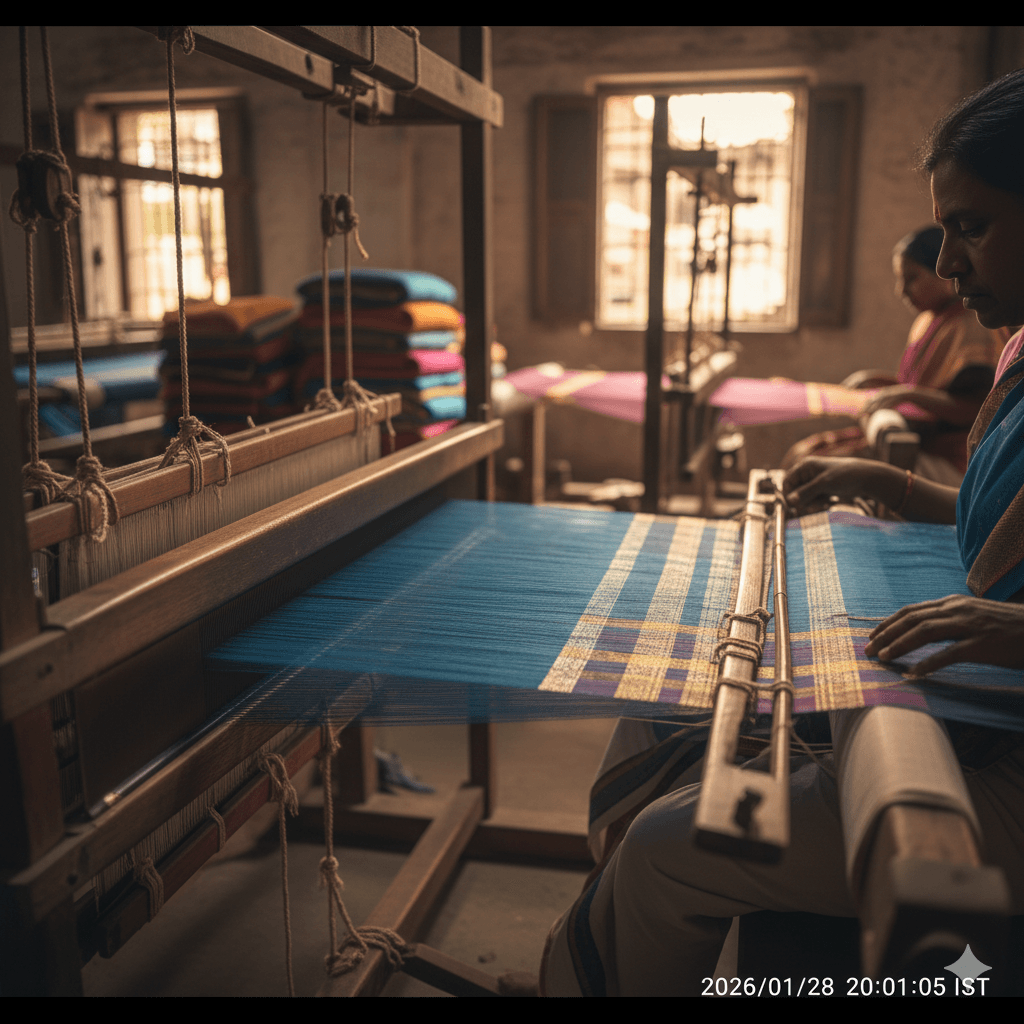
- The “Khat” Framework: The fabric is famous for its unique square-checked pattern. It’s a blend of cotton (for strength) and silk (for the “shine”).
- Expert Tip: To ensure you are buying Handloom rather than Powerloom, look for slight irregularities in the weave. Perfectly uniform checks are usually a sign of a machine-made “imitation asset.”
- Where to Buy: While the Gumanpura and Rampura bazaars are great, the real “direct-to-consumer” experience is in Kaithoon, a village 15km from Kota where the rhythmic clicking of pit-looms is the soundtrack of every street.
2. The Industrial Asset: Kota Stone
You probably won’t fit a pallet of flooring in your carry-on, but Kota Stone is a global export. It’s a fine-grained, variety of limestone that is famous for its cool temperature and durability.
- Humor Note: It’s so popular in Indian households that buying a small polished paperweight of it is essentially like taking home a piece of “National Infrastructure.”
- Modern Utility: In 2026, you can find artisans carving small home decor items (like coasters or tealight holders) out of this famous blue-green stone.
3. The Cultural Portfolio: Miniature Paintings
The Kota School of Art is a distinct “subsidiary” of the broader Rajasthani painting tradition.
- The Theme: Unlike the romantic themes of Bundi, Kota art focuses on The Hunt. Expect lions, tigers, and dense “Dang” jungle landscapes.
- Investment Advice: Look for artists near the Raitwali area who still use natural mineral pigments. These colors won’t fade over time, ensuring your “Artistic ROI” remains high for decades.
4. The Street-Level Market: Chawani & Main Market
For the generalists, the Main Market in the Chawani region is your one-stop-shop for everything else.
- Lac Bangles: Watch the artisans melt the resin over a small flame to create customized bangles. It’s “live manufacturing” at its finest.
- Mojaris: Pick up some hand-stitched leather footwear. Just remember the “Break-in Audit”: they might feel stiff on day one, but they’ll be your best friends by day ten.
X. Conclusion: The Final Verdict
So, we’ve reached the end of our strategic expedition. If you started this Kota Rajasthan Travel Guide thinking you were just looking at a place to study for the JEE, I hope your mental “operating system” has been successfully rebooted.
As your teacher and business strategist, my final evaluation is clear: Kota is currently the most undervalued asset in the Rajasthan tourism portfolio. While the “Golden Triangle” is reaching market saturation, Kota offers a fresh, high-growth alternative that balances 2026-grade infrastructure with 17th-century soul.
The Strategic “Buy vs. Hold” Decision
Should you visit Kota? Let’s look at the closing arguments:
| Traveler Profile | The Verdict | Reason |
| The Weekend Warrior | Buy Now | 48 hours is the perfect “sprint” to see the Riverfront and Garadia. |
| The Heritage Collector | Accumulate | The City Palace and nearby Bundi offer deep historical dividends. |
| The Modern Tourist | Strong Buy | The signal-free roads and world-class riverfront are a 2026 dream. |
| The Luxury Traveler | Hold | While Brijraj Bhawan is great, the luxury hotel sector is still “scaling up.” |
Final Takeaways for your 2026 Itinerary
- The Modern Pivot: The Chambal Riverfront isn’t just a “park”—it’s a global statement. It’s the single biggest reason why Kota has moved from a “maybe” to a “must-visit.”
- The Natural Advantage: Between the “Grand Canyon” of Garadia Mahadev and the wildlife of Mukundra Hills, Kota’s outdoor ROI is higher than almost anywhere else in the state.
- The Smart Choice: With the new Kota-Bundi Airport project now fully funded and the city being India’s first “Signal-Free City,” the logistics of visiting are becoming smoother than a polished Kota stone.
Humor Note: The “Coaching” Legacy
You might still see thousands of students with backpacks and determined expressions. Don’t let it stress you out. Just remember: while they are studying the laws of thermodynamics, you are strategically applying the laws of leisure and exploration. You’ve already passed the most important exam—the one that decides how to have a great vacation.
XI. Important Information: The Operational Framework
As your teacher and strategist, I know that even the most beautiful travel “assets” can fail if the logistics aren’t optimized. In this section of our Kota Rajasthan Travel Guide, we’re moving from the “Vision” to the “Execution.”
Below is the operational framework to ensure your Kota expedition is signal-free, stress-free, and high-yield.
The Strategic Logistics Matrix (2026)
| Aspect | Details | Strategist’s Tip |
| Best Time to Visit | October to March | Peak climate ROI; perfect for Riverfront walks. |
| Connectivity | Delhi-Mumbai Rail Line | Kota Junction is a high-speed transit hub. |
| Local Transport | Autos, E-Rickshaws, & Ola | Negotiation is a required “soft skill” here. |
| Entry Costs | ₹10 to ₹200 (approx) | Extremely budget-friendly for the visual value. |
| Signal Status | Signal-Free City | Smooth driving, but keep your eyes on the road! |
1. Getting There: The Transport Hub
Kota is one of the best-connected cities in Rajasthan, strategically positioned on the main railway artery of India.
- By Train: This is your best “entry strategy.” Being a major stop on the Delhi-Mumbai line, you have access to Rajdhani and Shatabdi expresses.
- By Air: While Kota has an airport, commercial flights are as rare as a quiet student on results day. Your best bet is flying into Jaipur (JAI) and taking a 4-hour scenic drive or train ride to Kota.
- By Road: The highways from Jaipur and Udaipur are in excellent 2026 condition.
2. Seasonal Evaluation: When to Invest Your Time?
- The “Gold Standard” (Winter): October to March. This is when the weather is a cool 12°C to 28°C. Perfect for the Chambal Boat Safari.
- The “Venture Capital” Season (Monsoon): July to September. The “Dang” turns lush green, and the waterfalls are at full capacity. Great for photography, but carry an umbrella!
- The “Avoid” Phase (Summer): April to June. Unless you want to evaluate what 45°C feels like on your skin, stay in the AC.
3. Budgeting for Success: Entry Fees & Timings
Kota offers a very high “Experience-to-Cost” ratio.
- Chambal Riverfront: Expect to pay around ₹200 (for Indians) to ₹500 (for Foreigners). It’s the “premium asset” but worth every rupee.
- Seven Wonders Park: A nominal ₹10–₹20. It’s basically the price of a cup of tea for a trip around the world.
- City Palace (Museum): Roughly ₹50–₹200.
- Teacher’s Tip: Always keep some small cash (₹10, ₹20, ₹50 notes) for rickshaws and street-food vendors. Digital payments are common, but “Cash is King” in the narrow lanes of Rampura.
4. Navigation: The Signal-Free Frontier
Kota recently became India’s first Signal-Free City.
- The Benefit: No red lights mean you get from your hotel to the Riverfront in record time.
- The Humor Note: It also means the local drivers treat the roads like a high-speed physics experiment. Stay alert!
XII. FAQ: The Professional Quick-Reference
Q: Is Kota safe for solo travelers?
A: Strategically, yes. It’s a city filled with students and families. However, as with any high-traffic urban area, avoid isolated spots like the “Dang” ravines after sunset.
Q: Can I cover Kota in a day trip from Bundi?
A: You can, but you’ll miss the nightlife and the Riverfront lights. The optimal “Globalopollis Framework” suggests staying at least two nights.
Q: What should I wear for the Garadia Mahadev trek?
A: Sturdy shoes. The terrain is rocky, and the monkeys are looking for “unsecured assets” (your snacks). Dress in layers; the wind at the cliff edge can be surprisingly chilly.
The Kota Strategic 3-Day Itinerary (2026 Edition)
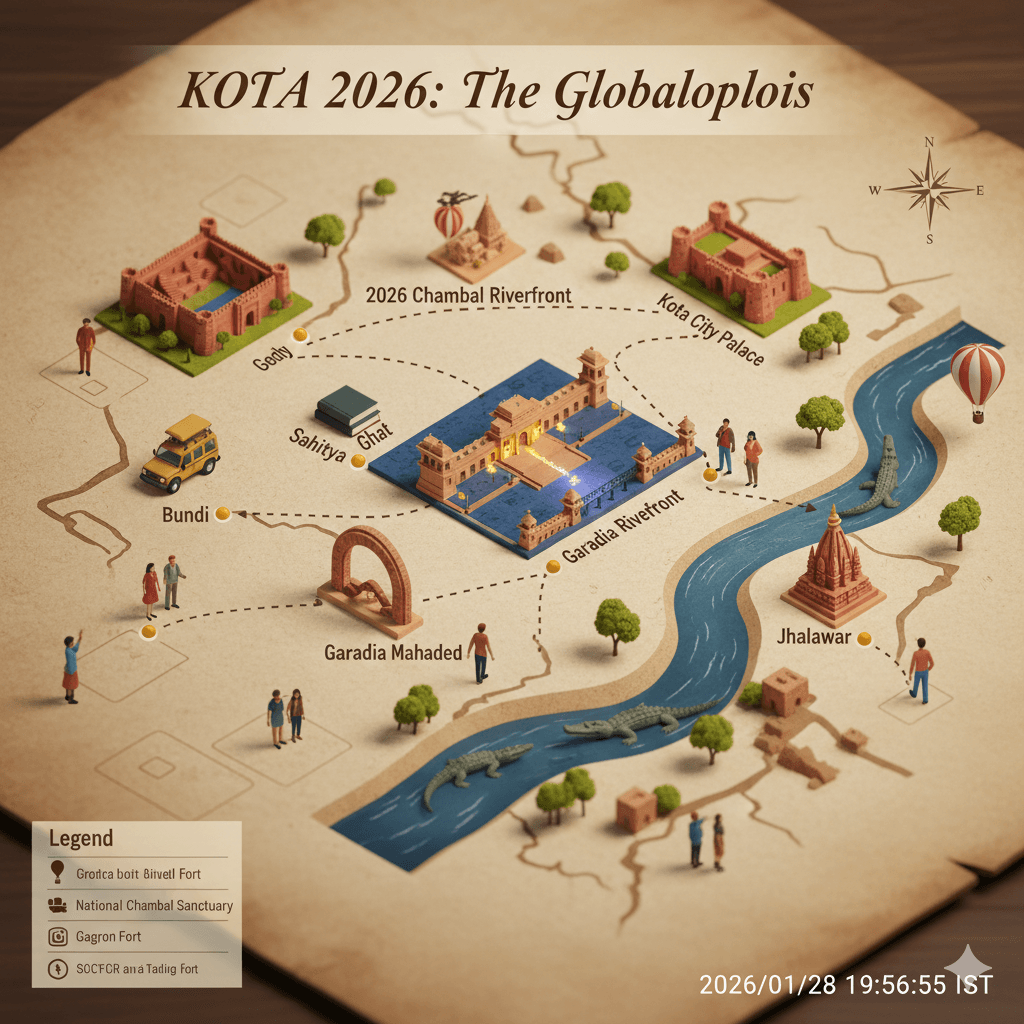
Day 1: The Heritage & World Tour Expansion
Focus: Historical ROI and the “Global” landscape.
- 09:00 AM – The Command Center: Start at the Kota Garh (City Palace). Spend 2 hours evaluating the miniature paintings and the mirror-work Durbar Hall.
- 11:30 AM – Spiritual Audit: Visit the Khade Ganesh Temple. It’s nearby and offers a unique “Standing Ganesha” USP you won’t find anywhere else in India.
- 01:00 PM – Luncheon: Head to the Gumanpura area for a traditional Rajasthani Thali.
- 03:00 PM – The Academic Pivot: Drive through the OxyZone City Park. It’s a great example of 2026 urban greening—very relaxing for a mid-day walk.
- 05:30 PM – The Global Speedrun: Reach Seven Wonders Park exactly at sunset. Watch the replicas light up against the backdrop of Kishore Sagar Lake.
- 07:30 PM – Nightcap: A late-evening boat ride around the illuminated Jagmandir Palace.
Day 2: The “Dang” Expedition & Riverfront Revolution
Focus: Adrenaline, Nature, and Kota’s multi-billion rupee 2026 asset.
- 07:00 AM – The Grand Canyon: Drive 25km to Garadia Mahadev. Early morning offers the best lighting for the horseshoe bend and avoids the “Manager Monkeys” at their peak activity.
- 10:30 AM – The Hidden Waterfall: On the way back, stop at Gaipernath. Do the “Leg Day” descent to the Shiva temple and waterfall.
- 01:30 PM – Refuel: Grab a quick “Kota Kachori” lunch to keep your energy high.
- 04:00 PM – The Main Event: Head to the Chambal Riverfront. Start at the Sahitya Ghat and use the battery-operated shuttles to explore the 6km stretch.
- 06:30 PM – The Sound of Om: Be at the Brahmaghat to see the World’s Largest Bell and witness the evening Chambal Aarti.
- 08:30 PM – Rooftop Evaluation: Dinner at Splash Rooftop to see the city lights reflected on the water.
Day 3: The Artisan Economy & Satellite Network
Focus: Regional expansion and tangible asset acquisition (Shopping).
- 08:30 AM – The Satellite Run: Drive 40 minutes to Bundi. Spend the morning at Taragarh Fort and the Chitrashala (the turquoise murals are a “must-buy” for your eyes).
- 11:30 AM – Subterranean Architecture: Visit Raniji ki Baori (The Queen’s Stepwell). It’s the highest-rated stepwell in the Hadoti region.
- 02:00 PM – The Weaver’s Circle: On the way back to Kota, stop at Kaithoon Village. Witness the live “manufacturing” of Kota Doria sarees and buy directly from the weavers.
- 04:30 PM – The Eco-Diversification: Spend your final evening at the Abheda Biological Park and Abheda Mahal. It’s a peaceful way to end the trip.
- 07:00 PM – Final Acquisition: Last-minute shopping at Main Market (Chawani) for lac bangles and stone crafts.

1 thought on “Kota Rajasthan Travel Guide: A 2026 Strategic Evaluation”
Comments are closed.