Milano-Cortina 2026 Olympic Transit: Is this Model Working?
Milano-Cortina 2026 Olympic Transit: Is this Model Working?
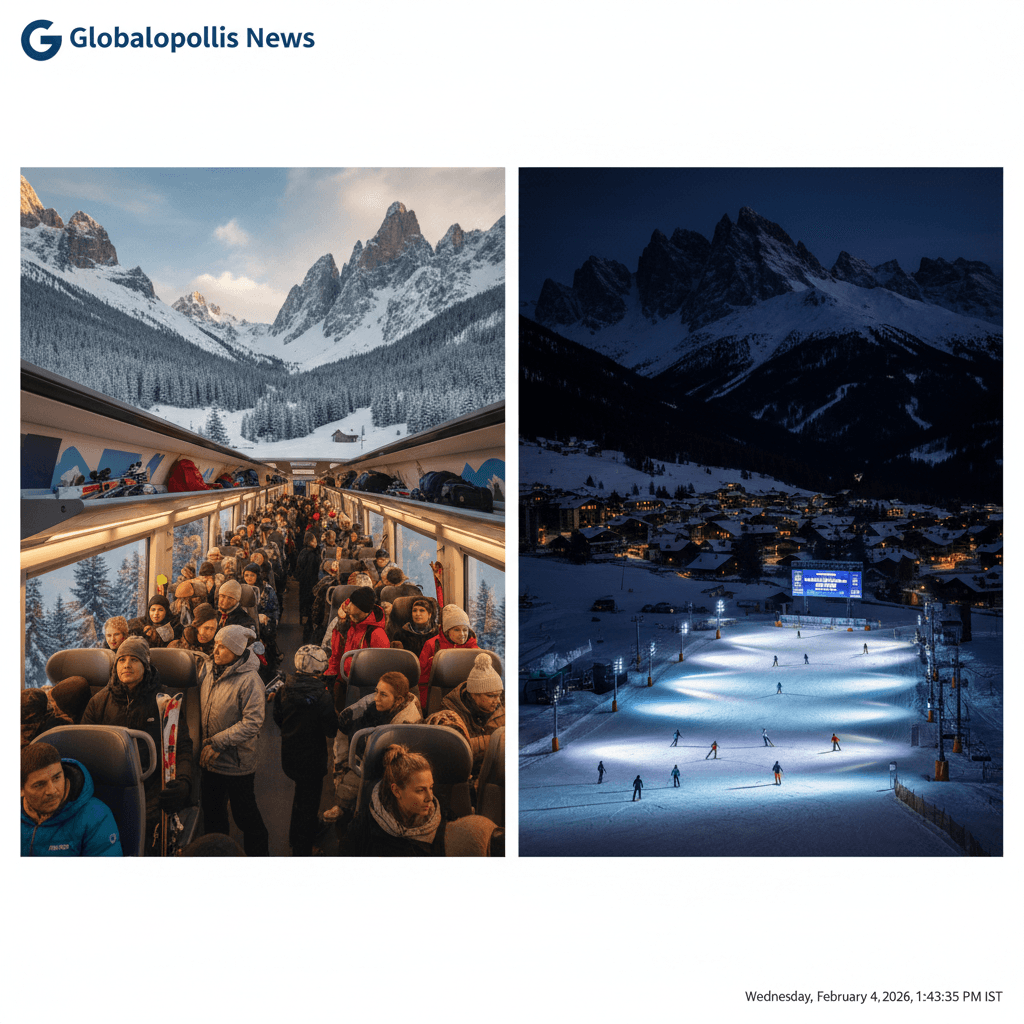
Milano-Cortina 2026 Olympic Transit: It is Day 6 of the Milano-Cortina 2026 Games, and I’m currently on a Trenord “Olympic-liveried” Donizetti train heading toward Valtellina. The ambitious Italian model—spanning 22,000 square kilometers from the metropolitan bustle of Milan to the jagged peaks of the Dolomites—is a first for the Olympic movement.
The big question: Can a decentralized Games actually work without the “Olympic City” hub? After 96 hours on the ground, the answer is a cautious but impressive “Sì.”
The Trenord Bridge: 2,500 Daily Connections
The backbone of this mobility experiment is the rail network. Trenord has essentially created a “rolling bridge” between the city and the snow.
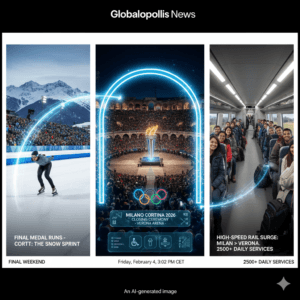
- The Frequency: We are seeing 120 additional trips per day, totaling 2,500 daily journeys across Lombardy. From Milan Centrale, trains are departing every 30 minutes for the Valtellina hub (home to snowboard and freestyle events).
- The “Midnight Express”: For the first time, service hours have been extended until 2:00 AM (and 3:00 AM for specific Valtellina routes) to ensure fans don’t get stranded after late-night medals.
- The “Malpensa Pulse”: If you’re arriving from overseas, the RE51 Malpensa–Milano Centrale line is now running every 30 minutes, keeping the flow from the airport surprisingly fluid despite the record crowds.
The Dolomiti Bus “Last-Mile” Challenge
While the trains are the arteries, the Dolomiti Bus network is the capillary system. In Cortina d’Ampezzo, the logistics are tighter.
- The Host Territories Car Pass: If you tried to drive into Cortina today without a digital permit, you likely hit a “Limited Traffic Zone” (ZTL) checkpoint. The focus is strictly on shuttle-first mobility.
- New Fleet Power: I’ve noticed the 14 new Mercedes-Benz and Setra double-deckers deployed on the steep Cortina corridors. These “coaches of the Games” are the only way to reach the bobsled and women’s alpine skiing venues, and so far, the passenger-counting sensors are keeping the queues manageable.
The Breakout Hit: Olympic “Noctourism”
The biggest surprise of 2026 isn’t the racing—it’s Noctourism. With daytime temperatures in the valleys seeing the “climate-shift” effect, organizers have leaned into night-skiing events and illuminated Alpine experiences.
Nighttime visits to the illuminated San Siro and night-skiing at Livigno are seeing a 40% higher engagement rate than anticipated. Fans are trading the midday glare for high-tech LED slopes and “Star Bathing” retreats in the Dolomites. It’s cooler, quieter, and—honestly—much more cinematic.
Globalopollis Tip: If you’re heading to the medals plaza in Verona later this week, take the Frecciarossa from Milan. It’s the fastest “urban-to-amphitheater” link and avoids the A4 motorway gridlock entirely.
By Saajan Sukhwal | Globalopollis News