Pali Rajasthan Travel Guide: 2026 Hidden Gems You Can’t Miss
1. Introduction: The Land of the Bandi River
If you’ve spent any time scrolling through “Desert Aesthetic” Pinterest boards, you probably think the state is limited to just blue houses and pink palaces. But if you’re looking for a truly offbeat Pali Rajasthan Travel Guide Itinerary: Jodhpur to Ranakpur is where the real magic happens. This is a place where the Aravalli hills whisper ancient secrets to the desert sands, and Jawai’s famous leopards literally hang out on the granite rocks like they own the place, offering a raw perspective of the Marwar region that most tourists completely overlook.
Welcome to my Pali Rajasthan Travel Guide.
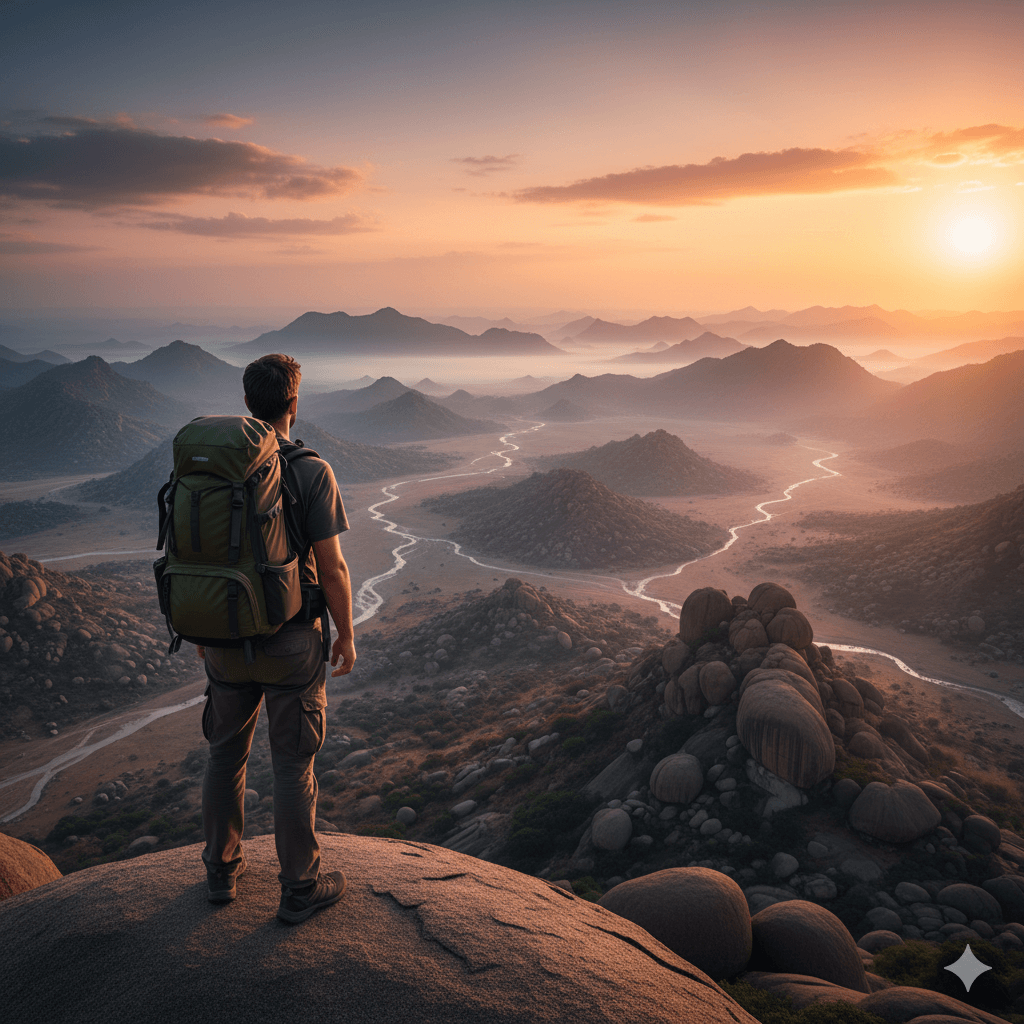
As a traveler who has spent more time on dusty Rajasthani backroads than in my own living room, I can tell you that Pali is the state’s “middle child”—often overlooked between its famous siblings, Jodhpur and Udaipur, but secretly the most interesting one. Historically, this region emerged from the prehistoric Tethys Sea (yes, you’re walking on an ancient seabed!), and today, it sits proudly on the banks of the Bandi River.
Pali is a glorious contradiction. One minute you’re in a bustling “Textile City” famous for cotton prints, and the next, you’re standing in a silent 15th-century marble temple that makes modern architecture look like a LEGO project gone wrong.
Why Pali Needs to Be on Your 2026 Bucket List
Before we dive into the nitty-gritty of this Pali Rajasthan Travel Guide, here’s a quick “vibe check” of what makes this district so unique:
- The Leopard Capital: It’s one of the few places on Earth where leopards and humans live in total harmony. No fences, just vibes.
- The Spiritual Weirdness: Where else can you worship a 350cc Royal Enfield motorcycle? (I’m serious, and we’ll get to that).
- The “Mehendi” Monopoly: If you’ve ever seen a beautiful henna design, the dye likely came from Sojat in Pali.
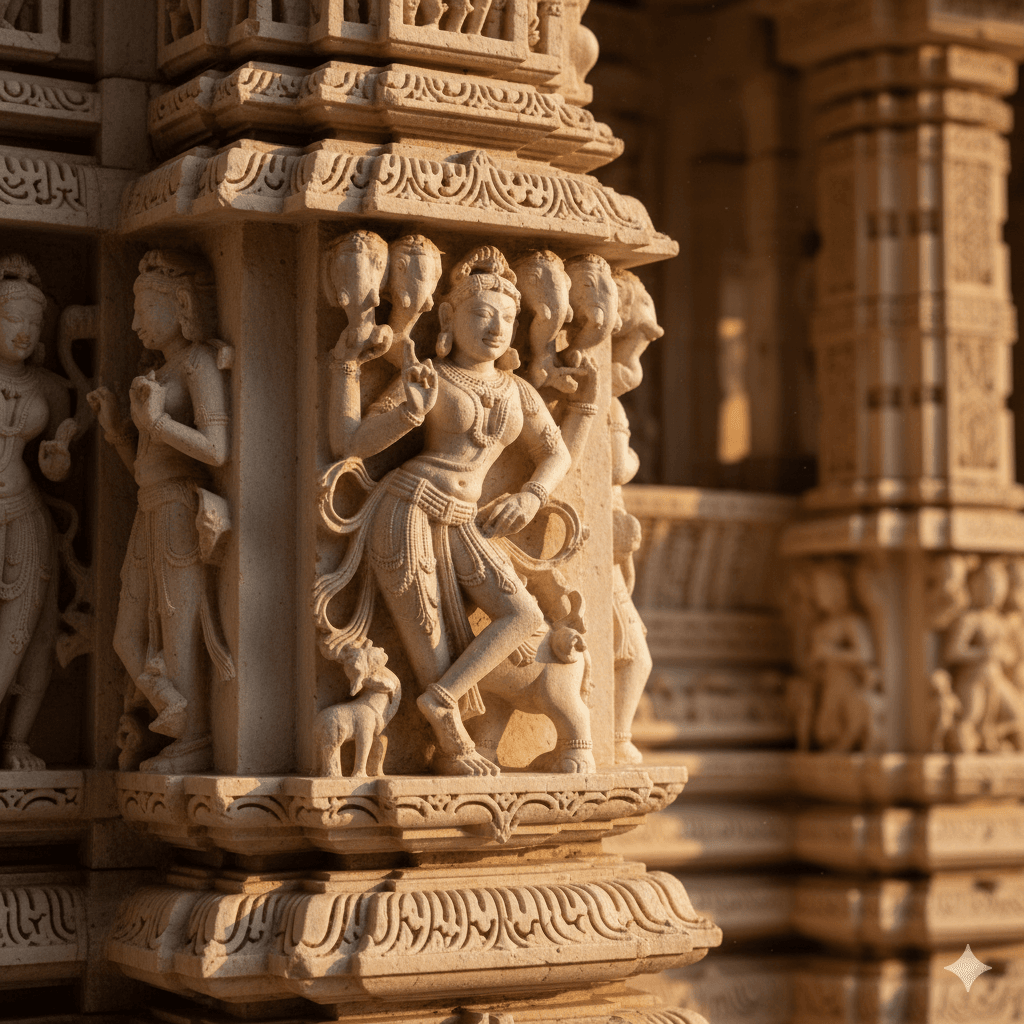
- The Architecture: Ranakpur isn’t just a temple; it’s a marble-carved fever dream.
Pali at a Glance: The Cheat Sheet
To help you strategize your trip, I’ve broken down the essentials into this handy table:
| Feature | Details |
| Claim to Fame | Industrial Textile Hub & Spiritual Gateway |
| Primary River | The Bandi River (seasonal but iconic) |
| Best For | Wildlife photographers, temple-hoppers, and road-trippers |
| Local Hero | “Bullet Baba” (The deity of safe travels) |
| The “Must-Taste” | Gulab Halwa (Warning: Highly mesmerising) |
My Expert Take: If you’re looking for a generic tourist trap, Pali isn’t it. But if you want a story to tell that starts with, “So I was in this cave temple in the Aravallis…” then you’ve come to the right place. It’s raw, it’s authentic, and it’s surprisingly chic in its own rugged way.
2. Top Sightseeing Destinations (The “Big Three”)
If Pali were a movie, these three spots would be the lead actors, the plot twist, and the high-octane action sequence all rolled into one. When you are following a Pali Rajasthan Travel Guide, you simply cannot skip these. They represent the three pillars of the district: divine artistry, mysterious folklore, and raw wilderness.
1. Ranakpur Jain Temple: The Poetry in Marble
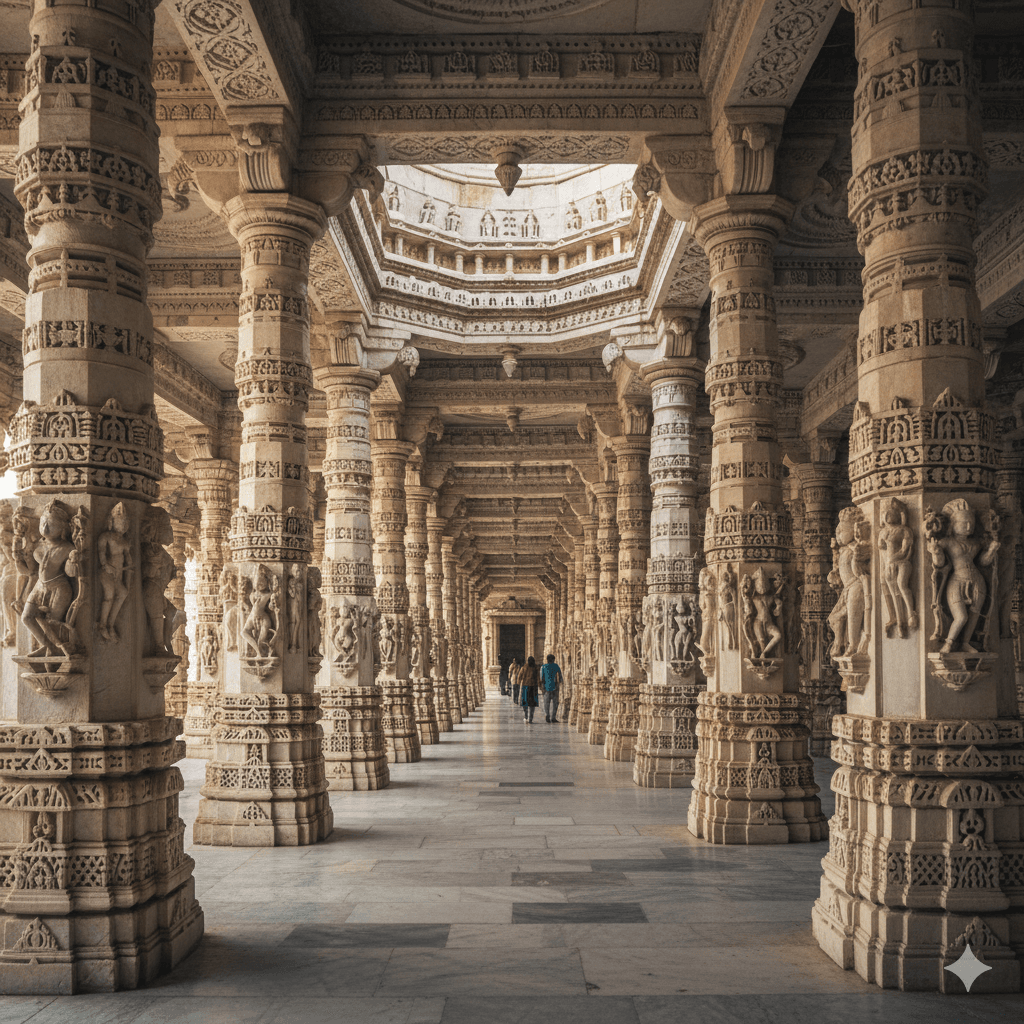
Imagine 1,444 marble pillars, each carved with such unbelievable detail that you’ll feel bad for ever complaining about your IKEA furniture assembly. Built in the 15th century, this temple is dedicated to Lord Adinath.
- The “Pillar” Mystery: Legend has it that it’s impossible to count all 1,444 pillars. I tried. I failed. I got distracted by a carving of a marble elephant that looked more real than my actual pet.
- The Light Play: The architect, Depa, designed the temple so that the pillars change color from golden to pale blue as the sun moves. It’s like a natural Instagram filter from 1446 CE.
- Pro-Tip: Look for the one “crooked” pillar. The builders supposedly left it imperfect on purpose to ward off the “evil eye.”
2. Om Banna Dham: The “Bullet Baba” Shrine
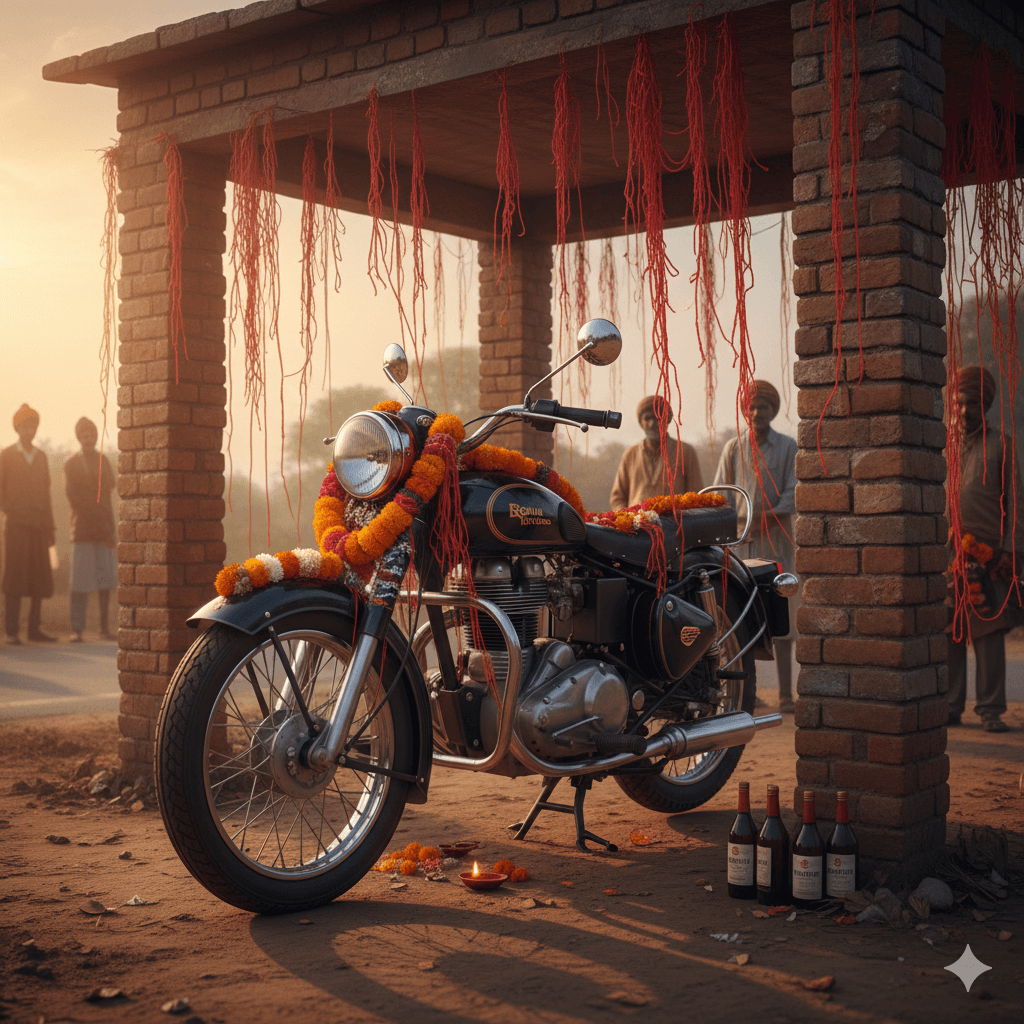
This is where Pali gets delightfully weird. Located on the Jodhpur-Pali highway, this temple isn’t dedicated to a traditional deity, but to a 350cc Royal Enfield Bullet.
- The Ghost Rider Story: After a tragic accident in 1988 involving Om Singh Rathore (Om Banna), the police impounded his bike. Every night, the bike mysteriously returned to the accident site—even after police emptied the fuel tank and chained it up.
- The Ritual: Travelers stop here to pray for safe journeys. Instead of just incense, people sometimes offer liquor to the bike. It’s the only place where “don’t drink and drive” meets “give the bike a drink for good luck.”
3. Jawai Dam: The Leopard Hills
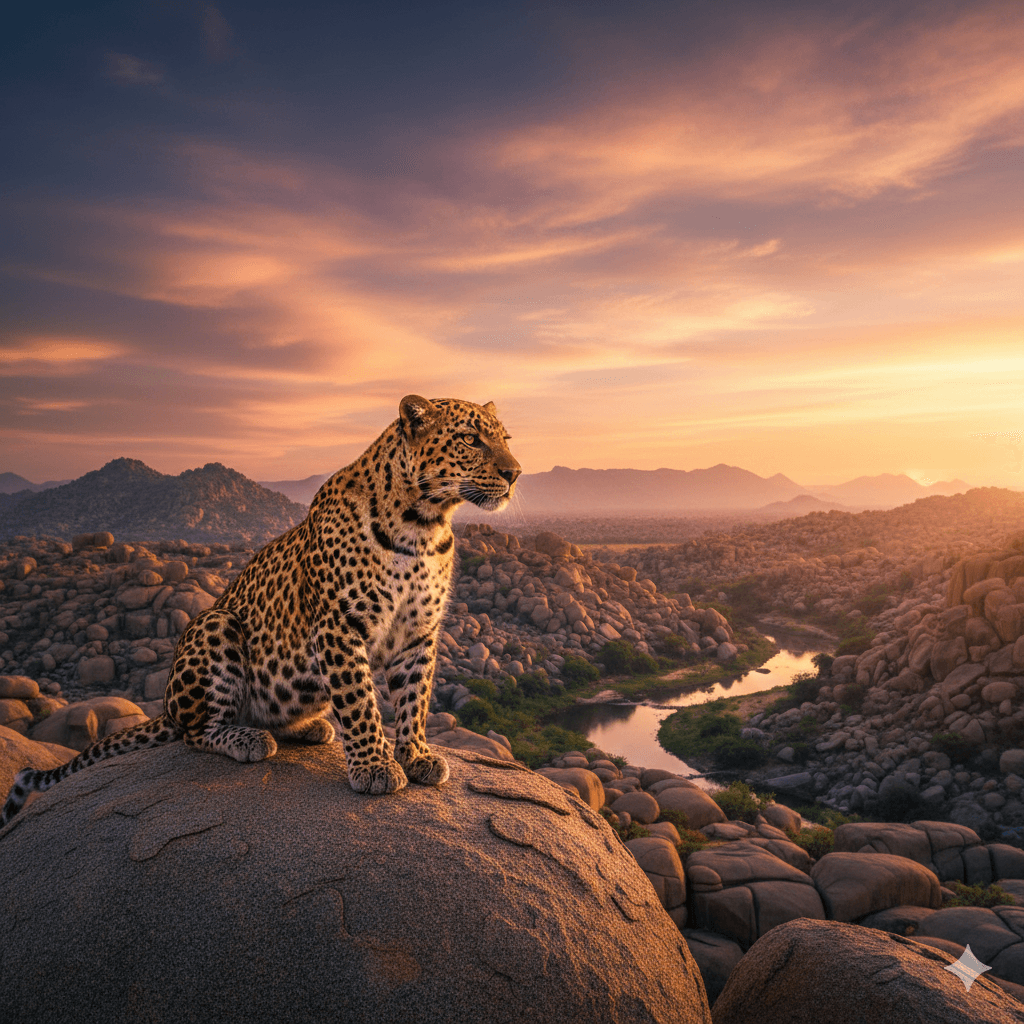
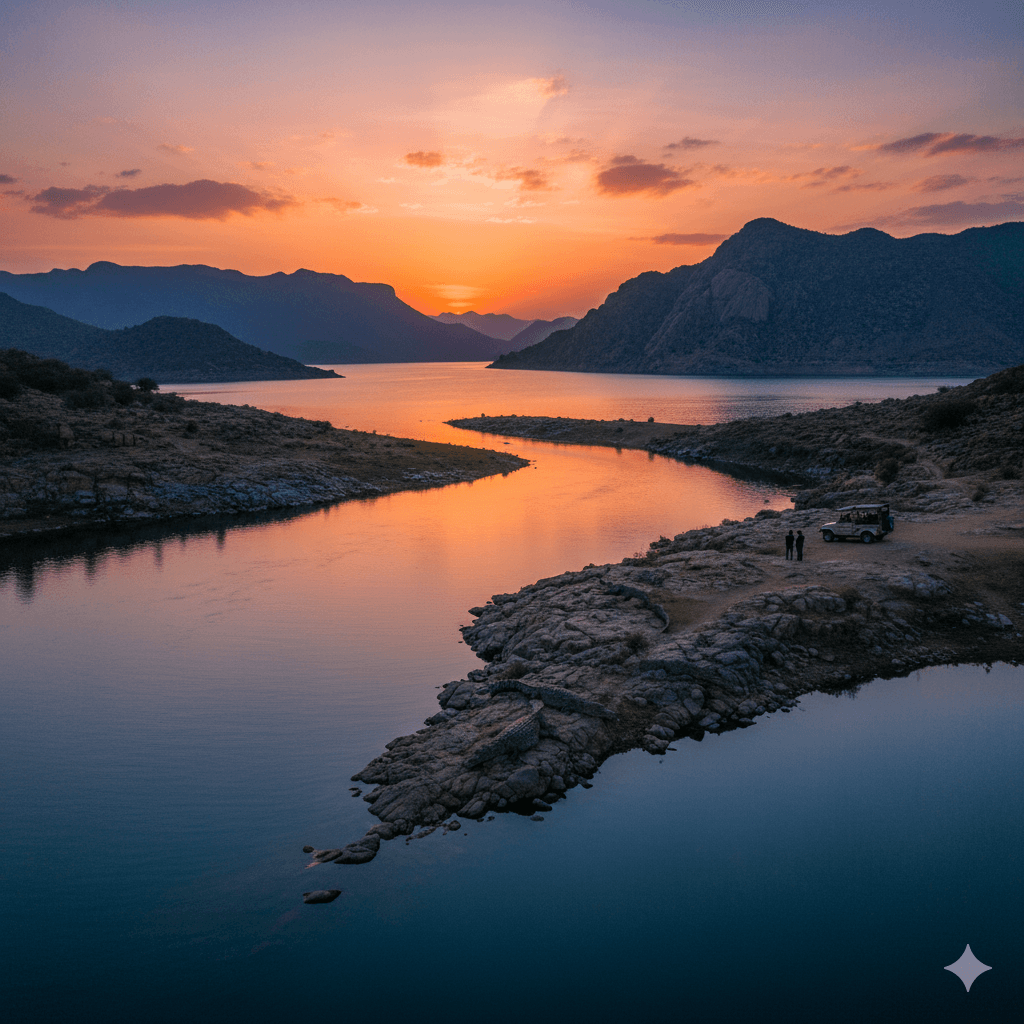
If you think you need to go to Africa for a world-class safari, think again. Jawai is the only place I’ve been where you can see a leopard sunbathing on a granite rock while a local shepherd walks his goats just 50 meters away.
- Human-Cat Harmony: The local Rabari Tribal people believes the leopards are guardians of their temples. There hasn’t been a human-leopard conflict here in nearly a century.
- The View: The Jawai Bandh (dam) is the largest in Western Rajasthan, offering a stunning backdrop of turquoise water against jagged red hills.
The “Big Three” Comparison Table
To help you manage your time, here is a quick logistical breakdown for your Pali Rajasthan Travel Guide checklist:
| Destination | Vibe | Best Time to Visit | Expert Tip |
| Ranakpur Temple | Zen & Artistic | 12:00 PM – 5:00 PM | Wear socks; the marble floor gets hot/cold! |
| Om Banna Dham | Quirky & Soulful | Anytime (it’s on the highway) | Buy a “Bullet Baba” keychain for your car. |
| Jawai Leopard Hills | Wild & Rugged | Sunrise or Sunset | Book a private 4×4 Jeep for the best views. |
My Strategy Note: If you only have one day in Pali, start with a sunrise safari in Jawai, hit Om Banna on your way north, and end with the quiet majesty of Ranakpur. It’s a long day, but your camera (and your soul) will thank you.
3. Famous Historical Places & Architecture
If you thought Pali was only about leopards and a legendary motorcycle, get ready for a history lesson that is actually fun. In this part of my Pali Rajasthan Travel Guide, we are stepping away from the highway and into the echoes of the Rajputana past.
Pali’s history is like a well-layered Paratha—every time you think you’ve reached the center, there’s another layer of legend to uncover. From a fort that smells like fresh Henna to a cave temple that feels like an Indiana Jones movie set, the architecture here tells stories of resilience, devotion, and a very serious commitment to carving stone.
1. Sojat Fort: The Henna Fortress
Perched on a hill like a royal sentry, Sojat Fort is the crown jewel of Sojat City. But here is the kicker: while most forts were built to store gunpowder, this one is surrounded by the world’s best Mehendi (Henna) plantations.
- The Vibe: It’s a bit rugged and less “polished” than the forts in Jaipur, which is exactly why I love it. You get to explore without a thousand selfie sticks in your face.
- The “Mehendi” Monopoly: Sojat produces about 90% of India’s henna. If you’ve ever had a tattoo at an Indian wedding, you’ve basically touched a piece of Pali.
- Must-See: The Sejal Mata Temple and the massive water reservoir inside the fort walls.
2. Parshuram Mahadev Temple: The Cave of 500 Steps
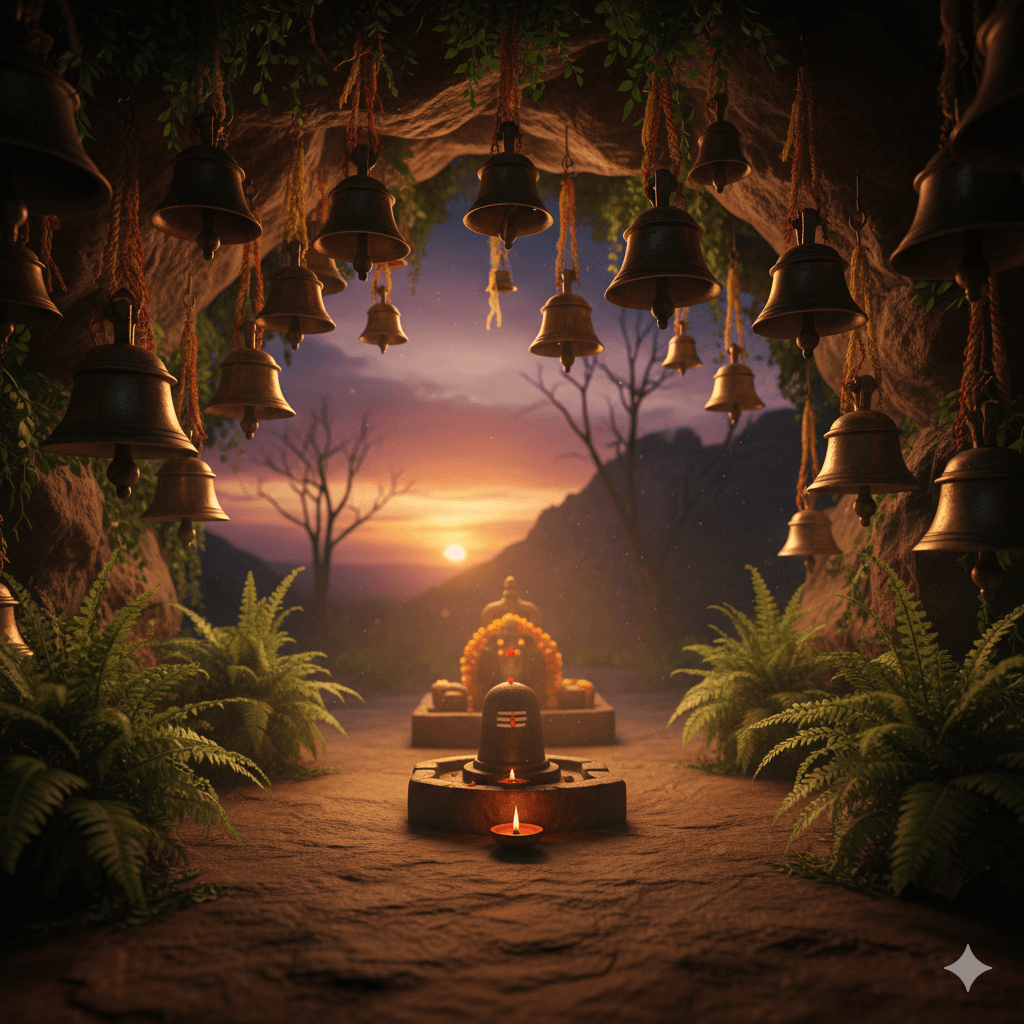
This isn’t your typical “walk-in-and-pray” temple. Located 3,990 feet above sea level in the Aravalli ranges, this is a natural cave where Lord Parshuram (an avatar of Vishnu) supposedly meditated.
- The Trek: You have to descend (and later climb back up) about 500 steps. It’s the perfect way to burn off all that Rajasthani Ghee.
- The Architecture: Mother Nature is the architect here. The cave houses a natural Shivling and self-formed idols of Ganesha. It’s cool, damp, and deeply spiritual.
- Expert Tip: Visit during the monsoon. The Aravallis turn a lush green that makes the climb feel like a walk through a misty mountain forest.
3. Bangur Museum: The Time Capsule
Located right near the old bus stand in Pali city, this museum is named after Bangur Juar, a local legend. If you are an “Info-Maniac” like me, this is your happy place.
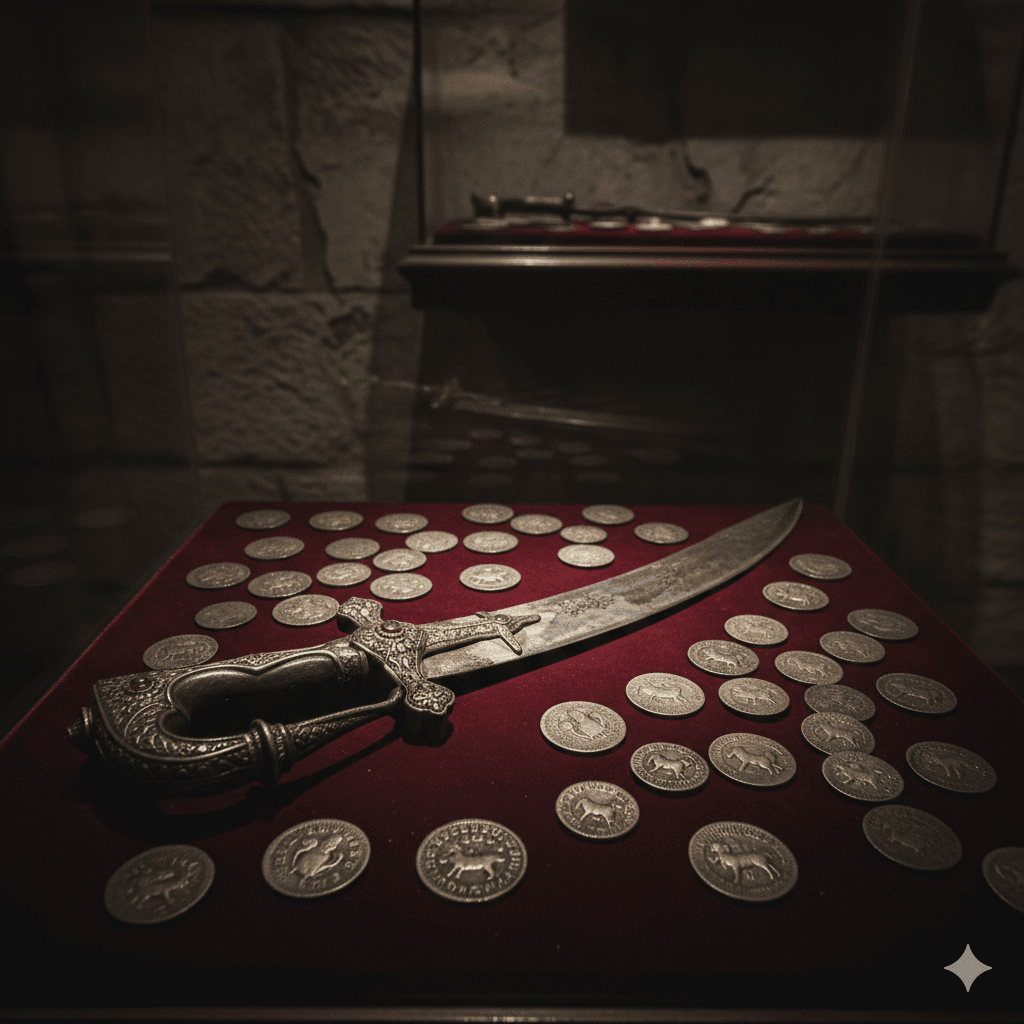
- What’s Inside: A rare collection of copper coins from the Tughlaq and Khilji eras, ancient tribal handicrafts, and armor that makes you wonder how people in the 15th century were so strong (and yet so short).
- The “Sukali Mata” Idol: Don’t miss the famous idol of Sukali Mata brought from Auwa village—it’s a masterpiece of sculptural art.
Historical Hotspots: Quick Comparison
To help you decide which era to travel back to, check out this table from our Pali Rajasthan Travel Guide:
| Site | Era/Origin | Why You Should Go | Accessibility |
| Sojat Fort | 15th Century | Panoramic views & Henna history | Easy (drive up the hill) |
| Nimbo Ka Nath | Mahabharata Legend | Connection to the Pandavas & Kunti | Moderate (near Falna) |
| Bangur Museum | 1991 (Established) | To see coins, arms, and tribal life | Very Easy (City Center) |
| Sun Temple | 13th Century | Incredible Nagara-style carvings | Easy (near Ranakpur) |
4. Nimbo Ka Nath: The Mahabharata Connection
Located between Falna and Sanderao, this temple is dedicated to Lord Shiva. Local folklore says that Kunti, the mother of the Pandavas, worshipped Shiva here during their exile.
- The Legend: It is believed the Pandavas established a Navdurga here.
- The Vibe: It’s incredibly serene. If you need a break from the “Textile City” hustle, this is where you go to recharge your spiritual batteries.
My Strategy Note: If you’re a photographer, hit Sojat Fort at sunset for the golden glow over the arid plains. If you’re a fitness buff, Parshuram Mahadev is your morning workout. Either way, you’re winning.
4. Best Places for Every Interest Group
One size fits all? Not in Pali. This district is like a giant Rajasthani thali—there is a little something for everyone, whether you want to find your zen, get your heart racing, or just take photos that make your ex jealous.
In this section of our Pali Rajasthan Travel Guide, I’ve curated the “sweet spots” based on who you’re traveling with (or if you’re brave enough to go it alone).
1. For the Spiritual Seekers (The Zen Den)
If your soul needs a spa day, head straight to Muchhal Mahavir Temple.
- The Twist: This Jain temple is dedicated to Lord Mahavir, but with a unique feature: a moustache!
- The Vibe: Located inside the Kumbhalgarh Sanctuary, it’s quiet, green, and perfect for meditation. Plus, the two life-sized elephant statues at the gate make for a grand welcome.
2. For the Wildlife Enthusiasts (The Leopard Lads)
You already know about Jawai, but for a truly immersive experience, look for Bera.
- The Sightings: This is arguably the best spot in India for leopard sightings.
- The Experience: It’s not just about the big cats; the birdwatching here is elite, with flamingos and cranes making frequent guest appearances at the reservoir.
3. For the Romantic Couples (The Sunset Squad)
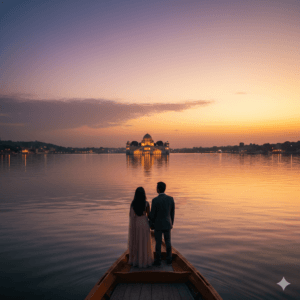
If you want to win “Partner of the Year,” take your significant other to Sardar Samand Lake.
- The Scene: An art-deco palace overlooking a shimmering lake.
- The Activity: Watching the sunset here is like watching a live painting. It’s quiet, regal, and devoid of the usual tourist crowds you’d find in Jodhpur.
4. For Families (The “Are We There Yet?” Group)
Lakhotia Garden is the city’s favorite hangout for a reason.
- The Layout: It’s a massive garden surrounded by a city tank (pond) with a beautiful Shiva temple at the center.
- Why it works: There’s plenty of space for kids to run around while the adults soak in the spiritual vibes of the Somnath Temple nearby.
Pali Interest Group Matchmaker
Still can’t decide? Check this table from our Pali Rajasthan Travel Guide to find your perfect match:
| Interest Group | Your “Go-To” Spot | Vibe in One Word | Why? |
| Solo Travelers | Haripur Village Market | Authentic | Walk the narrow alleys, talk to gunsmiths, and eat what locals eat. |
| History Nerds | Auwa Fort | Heroic | The site of the 1857 mutiny; heavy on “Rebellion” vibes. |
| Adventure Junkies | Parshuram Mahadev | Exhilarating | 500 steps of pure cardio with a cave temple reward. |
| Photography Fans | Jawai Bandh | Cinematic | Red granite hills against turquoise water. |
5. For the Solo Adventurer (The Rural Wanderer)
If you’re traveling solo, I highly recommend a day in Haripur.
- The Interaction: Unlike the big cities, the locals here aren’t “unruffled” by tourists. You can chat with a local sweet-shop owner or watch the rural women cook without feeling like a walking dollar sign.
- The Hidden Fort: There’s a rundown white fort at the end of the market where the royal lineage still lives. If you’re lucky, you might even get a quick history lesson over chai!
Expert Strategic Tip: If you’re traveling with a mixed group, base yourself in Sadri. It’s the “Gate of Mewar” and sits right in the middle of the Ranakpur temples and the Parshuram cave, making it the perfect compromise for both the lazy and the hyperactive.
5. Nightlife & Adventure Activities
Let’s be real for a second: if your idea of “nightlife” involves neon lights, thumping bass, and 2:00 AM avocado toast, Pali might give you a bit of a culture shock. In this part of my Pali Rajasthan Travel Guide, we are trading the dance floor for the desert floor.
Nightlife in Pali is less about “clubbing” and more about “stargazing and spotting predators.” It’s raw, it’s quiet, and it’s arguably more exhilarating than any rooftop bar in Mumbai. And as for adventure? Well, between the vertical rock climbs and the high-speed sand bashing, your fitness tracker is going to think you’ve joined a commando unit.
1. Nightlife: The “Wild” Side of the Moon
Forget the disco ball; we’ve got the Milky Way. Here is how we party in Pali after dark:
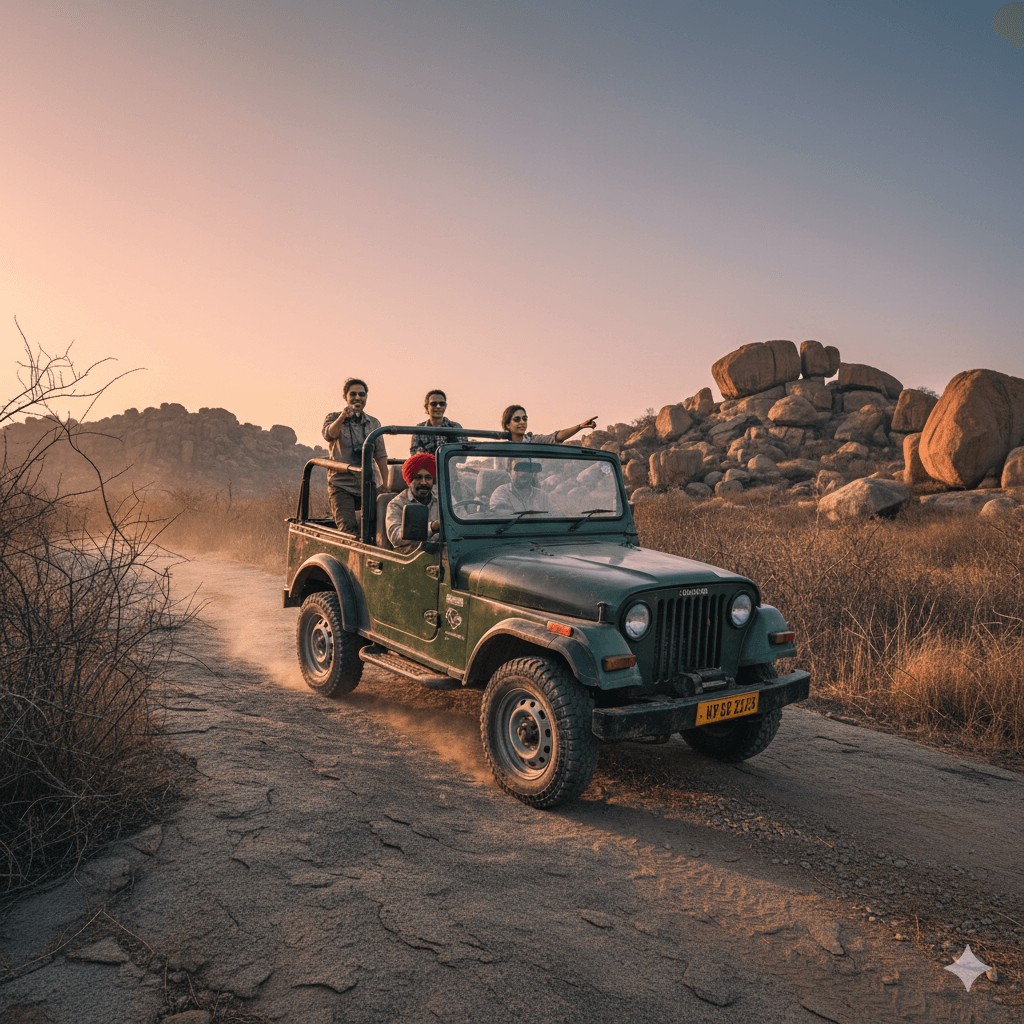
- Night Safaris in Jawai: This is the ultimate “Pali After Dark” experience. You hop into an open-top 4×4 with a powerful searchlight and scan the ancient granite hills. Seeing the golden eyes of a leopard reflected in the dark is a rush no cocktail can provide.
- Starry Campfires: Many boutique stays around the Jawai and Ranakpur areas offer fireside storytelling. You sit under a sky so clear you can practically see the satellites, listening to local Rabari legends.
- Highway Tea Crawls: The Jodhpur-Pali highway stays alive with truck drivers and travelers. Stopping at a local dhaba at midnight for a “kadak” masala chai and some spicy pakoras is the most authentic Pali nightlife experience you can have.
2. Adventure Activities: Get Your Adrenaline Fixed
If you aren’t sweating, are you even adventuring? As a Pali Rajasthan Travel Guide specialist, I recommend these high-octane picks:
- The “500-Step” Cardio: Trekking to Parshuram Mahadev isn’t just a pilgrimage; it’s a leg-day workout with a spiritual reward. The views of the Aravalli range from the top are worth every drop of sweat.
- Rock Bashing & Bouldering: The granite formations in Jawai are a playground for 4×4 enthusiasts. Watching a Jeep climb a 60-degree rock incline is terrifyingly fun. If you’re into bouldering, these rocks offer some of the most unique grips in India.
- Cycling the Aravalli Foothills: Rent a mountain bike in Ranakpur and pedal through the forest trails. You might spot deer, monkeys, or if you’re lucky (or unlucky, depending on your speed), a leopard.
Pali Adventure & Nightlife Summary
To help you plan your thrills, I’ve mapped out the intensity levels below:
| Activity | Adrenaline Level | Best Time | What to Wear |
| Night Leopard Safari | ⭐⭐⭐⭐⭐ | 8:00 PM – 10:00 PM | Neutral colors & a light jacket |
| Aravalli Trekking | ⭐⭐⭐⭐ | Early Morning | Sturdy hiking boots |
| Jawai Dam Boating | ⭐⭐ | Sunset | Life jacket & sunglasses |
| Highway Dhaba Hopping | ⭐ | Late Night | Your most comfortable pajamas |
3. Birdwatching at Hemawas Dam
For a “softer” adventure, head to Hemawas Dam during the winter.
- The Action: Thousands of migratory birds make a pitstop here.
- The Gear: Bring a pair of high-quality binoculars. It’s a peaceful way to spend a morning before the heat kicks in.
Expert Strategic Tip: If you’re doing a night safari, don’t use flash photography. Not only is it bad for the animals’ eyes, but it also ruins the “stealth” vibe of the hunt. Let your eyes adjust to the dark; that’s where the magic happens.
6. Nearby & Surrounding Attractions (Day Trips)
If you’ve already ticked off the “Big Three” and are still itching for more, you’re in luck. Pali is perfectly positioned like the center of a spiderweb, with some of Rajasthan’s most iconic destinations just a short drive away.
In this Pali Rajasthan Travel Guide, I’m highlighting the best day trips that let you explore beyond the district lines without needing to pack a suitcase. Whether you want to see the “Great Wall of India” or get lost in a blue-painted city, Pali is your perfect base camp.
1. Kumbhalgarh Fort: The Wall That Doesn’t End
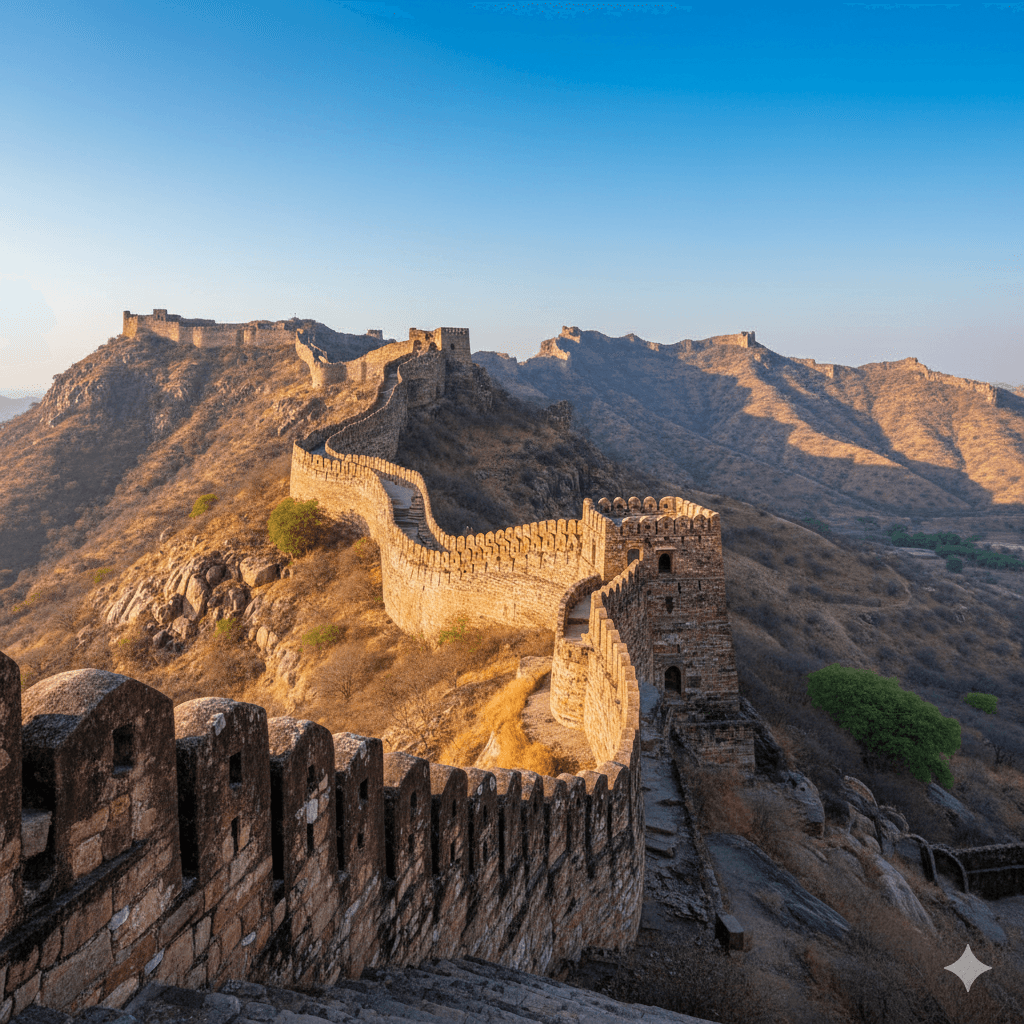
Just about 100 km from Pali city (and even closer if you’re staying in Ranakpur), Kumbhalgarh is a UNESCO World Heritage site and the birthplace of the legendary Maharana Pratap.
- The Claim to Fame: It has the second-longest continuous wall in the world—36 kilometers long! Take that, Great Wall of China.
- The View: On a clear day, you can see all the way across the Aravallis to the sand dunes of the Thar Desert.
- Travel Time: Roughly 2.5 to 3 hours from Pali.
2. Jodhpur: The Blue City
Only 70 km away, Jodhpur is the “big brother” to Pali. If you’re craving a bit of city energy, a day trip here is a no-brainer.
- Mehrangarh Fort: One of the largest forts in India. It looks like it grew straight out of the cliffside.
- Blue Alleys: Wander through the old city for those iconic blue-walled photos. Just be prepared to share the road with cows, motorbikes, and the occasional confused tourist.
- Travel Time: 1.5 hours via the well-maintained NH 62.
3. Osian: The Gateway to the Desert
About 130 km away, Osian is often called the “Khajuraho of Rajasthan” due to its stunningly carved temples from the 8th to 12th centuries.
- The Temples: The Sachiya Mata Temple is an architectural masterpiece.
- Desert Vibe: If you didn’t get enough sand in Nagaur, Osian offers great camel safaris and dunes without the heavy crowds of Jaisalmer.
Day Trip Planner: Where to Go?
Not sure which direction to point your Jeep? Here is a quick logistical breakdown for your Pali Rajasthan Travel Guide itinerary:
| Destination | Distance from Pali | Best For | Must-Do Activity |
| Kumbhalgarh | ~100 km | History Buffs | Walking a section of the 36km wall |
| Jodhpur | ~70 km | Photographers | Sunset dinner overlooking the fort |
| Khichan | ~150 km | Birdwatchers | Seeing thousands of Demoiselle Cranes |
| Narlai | ~90 km | Luxury Seekers | Step-well dinner (Rawla Narlai) |
4. Khichan Village: The Crane Capital
For the wildlife enthusiasts, a trip to Khichan (approx. 3 hours away) in the winter is mandatory.
- The Spectacle: Every year, thousands of Demoiselle Cranes migrate here from Eurasia.
- The Experience: The locals feed them daily, creating a swirling vortex of wings and “kraw-kraw” sounds that is absolutely hypnotic.
Expert Strategic Tip: If you’re heading to Kumbhalgarh, try to time your visit for the evening. The “Sound and Light Show” at the fort is spectacular, though it might mean a late drive back to Pali. Alternatively, visit Jodhpur on your way in or out of the district to save travel time!
7. Comprehensive Top List (The “Quick Check”)
If you are the kind of traveler who starts packing five minutes before the taxi arrives (no judgment, I’ve been there), this section is your best friend. Consider this the “TL;DR” of my Pali Rajasthan Travel Guide.
I’ve boiled down the entire district into a high-speed checklist. If you don’t tick at least half of these off, did you even visit Pali? From the adrenaline of the hills to the sugar rush of local sweets, here is your ultimate Pali “Cheat Sheet.”
The “Pali Power 10” Checklist
- Count the Pillars: Attempt to count all 1,444 pillars at Ranakpur (and fail gracefully).
- Salute the Bike: Bow your head at the Om Banna Bullet Temple for safe road-tripping vibes.
- Spot the Spots: Take a sunset jeep safari in Jawai to see a leopard on a granite throne.
- Climb for Shiva: Brave the 500 steps to the Parshuram Mahadev cave temple.
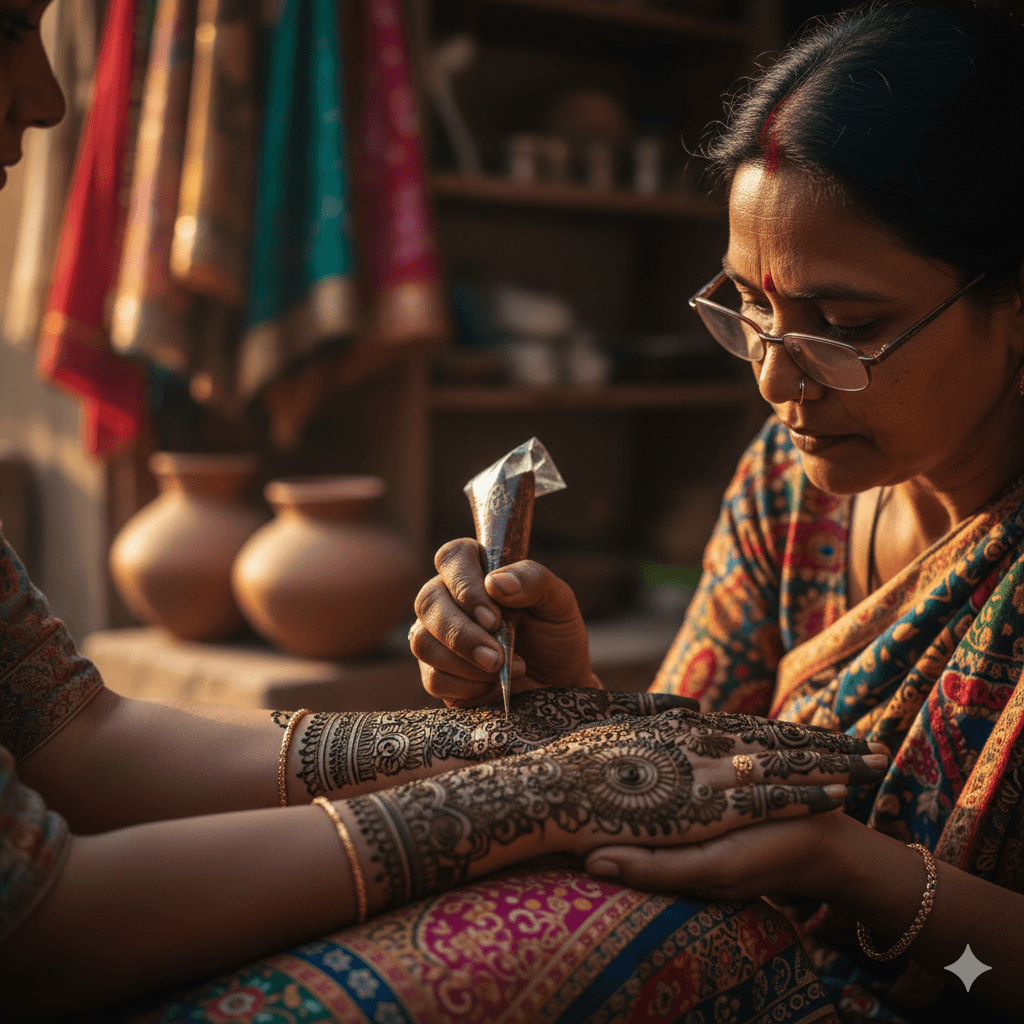
- Get Inked (with Henna): Visit Sojat and get a traditional Mehendi design on your palm.
- Go Birding: Watch the flamingos and cranes at Jawai Dam or Hemawas Dam.
- Eat the Legend: Buy a box of the famous Gulab Halwa in Pali city.
- Museum Crawl: Check out the ancient armor and coins at the Bangur Museum.
- Walk the Wall: Take a detour to Kumbhalgarh to see the “Great Wall of India.”
- Picnic by the Lake: Spend a quiet afternoon at Lakhotia Garden or Sardar Samand Lake.
Pali Strategy: The “Quick Pick” Table
As a business strategist, I know you value efficiency. Use this table to prioritize your trip based on your “Travel Personality”:
| If you are… | You Must Visit | Time Needed | Why? |
| Short on Time | Om Banna & Pali City | 3-4 Hours | High impact, low travel time. |
| An Art Fanatic | Ranakpur & Sun Temple | Full Day | The most detailed marble work in India. |
| A Wildlife Nut | Jawai/Bera | 1-2 Days | High probability of leopard sightings. |
| A History Buff | Sojat Fort & Auwa | 5-6 Hours | Stories of rebellion and royalty. |
The “Secret” Top Spot: Narlai
While everyone talks about Ranakpur, let me give you a “pro-expert” tip for this Pali Rajasthan Travel Guide.
- The Experience: Narlai is a 15th-century village tucked in the Aravallis.
- The Highlight: A “Stepwell Dinner.” You dine by the light of a thousand lamps inside an ancient stepwell (Baori). It is, without a doubt, the most romantic and “stratospheric” dining experience in the state.
Expert Strategic Tip: Most travelers treat Pali as a transit point between Jodhpur and Udaipur. Don’t. Spend at least two nights here. The magic of Pali happens when the day-trippers leave and the leopards come out to play.
8. Things to Buy: The Shopping Guide
If your suitcase isn’t groaning under the weight of “essential souvenirs” by the time you leave, did you even visit Rajasthan? As a business strategist, I look at shopping as an investment in local craftsmanship. As a traveler, I look at it as a very valid excuse to buy another bag.
In this section of our Pali Rajasthan Travel Guide, we’re skipping the generic fridge magnets. We’re going for the stuff that Pali is world-famous for. From the “Henna Capital” to the “Industrial Textile City,” here is what you need to hunt down in the local bazaars.
1. Sojat Mehendi: The “Green Gold”
You’re in the land that supplies henna to the world. If you’ve ever seen a celebrity’s dark, rich wedding mehendi, it probably came from right here in Sojat.
- Why it’s special: The soil here has a high copper content, which gives the henna a deep, reddish-brown stain that lasts forever.
- What to buy: Look for triple-filtered henna powder or pre-made cones. It’s 100% natural and way better than the chemical stuff you find in big-city malls.
- Pro-Tip: Buy it in bulk at the Sojat market—it’s significantly cheaper and fresher than anywhere else.
2. Gulab Halwa: The Sugar Rush
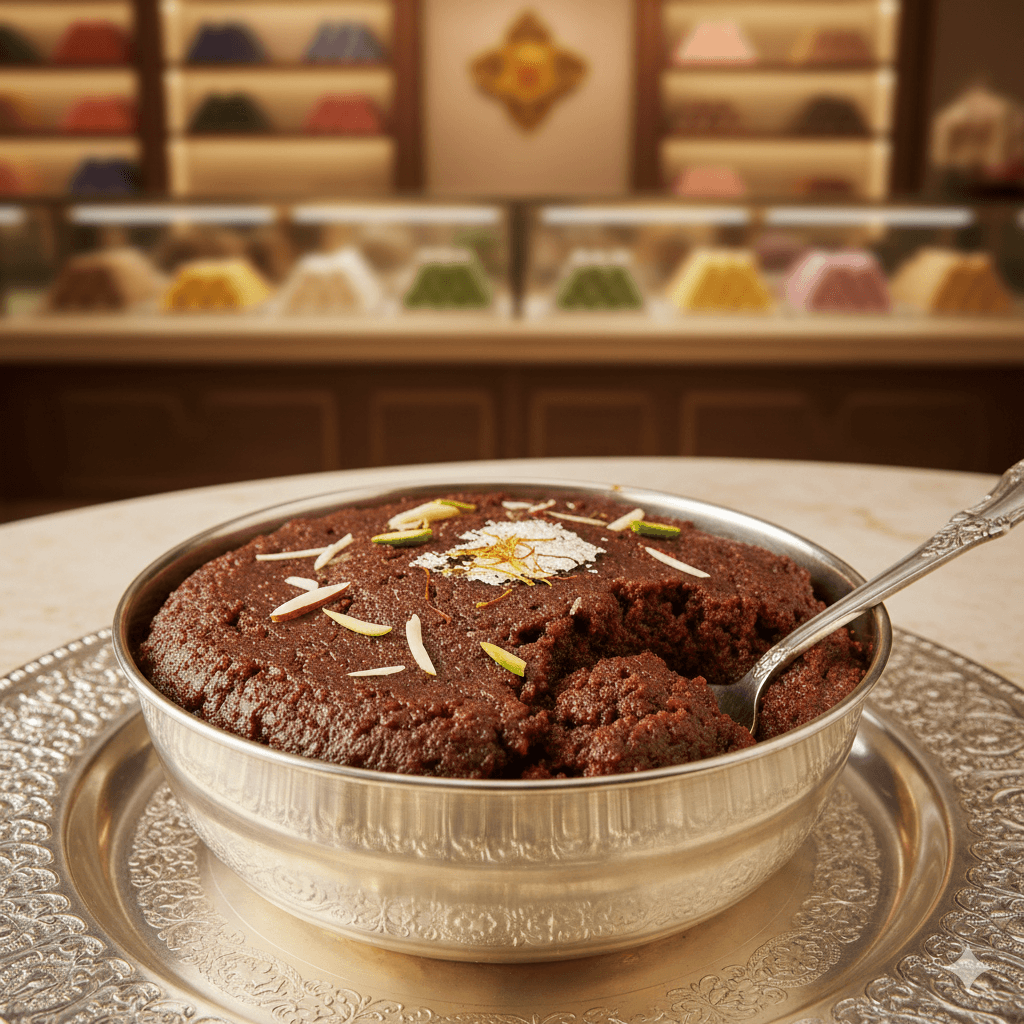
You cannot claim to have followed this Pali Rajasthan Travel Guide if you haven’t tasted Gulab Halwa. No, it’s not made of roses (the name comes from the legendary Halwai, Gulab Singh Ji).
- The Secret: It’s made using only milk and sugar, slow-cooked for hours until it turns a deep, caramelized brown.
- The Legend: The original shop is Gulab Ji Halwa Wala near Vyas Circle. They sell thousands of kilos a day, and for good reason—it’s like a hug in dessert form.
3. Textiles & “Bandhani”
Pali is a massive textile hub. If you’re into fabrics, you’re basically in Disneyland.
- Cotton Prints: Look for hand-printed cotton fabrics and “Lungi” cloth. The quality is top-tier and the prices are “factory-direct.”
- Bandhani (Tie-Dye): While Jodhpur gets the fame, Pali produces a huge amount of the state’s Bandhani. Look for vibrant Odhnis (veils) and sarees.
The Pali Shopping Cheat Sheet
| Category | What to Buy | Where to Find It | Fun Fact |
| Beauty | Sojat Mehendi Powder | Sojat City Market | Used by Bollywood stars for their weddings. |
| Sweets | Gulab Halwa | Vyas Circle, Pali | It’s so popular, people wait in line for hours. |
| Fashion | Cotton Fabrics / Sarees | Naya Gaon / Sarafa Bazar | Pali is known as the “Industrial City” for its textiles. |
| Footwear | Leather Mojaris | Local Cobblers (Pali Marwar) | Hand-stitched and surprisingly durable. |
4. Leather Mojaris & Handicrafts
Don’t leave without a pair of traditional Mojaris (leather shoes).
- The Comfort: They might feel stiff at first, but once they “break in,” they fit like a second skin.
- The Detail: Look for the ones with intricate thread work or “Ghilla” (embroidery). They are the perfect way to add a bit of Rajasthani flair to your wardrobe back home.
My Expert Take: When shopping for textiles in Pali, don’t be afraid to bargain—it’s part of the culture! Start at about 60-70% of the quoted price and meet in the middle. And always, always try a sample of the Halwa before you buy a whole kilo. (Though you’ll definitely end up buying the kilo anyway).
9. Conclusion: Why Pali Belongs on Your Map
If you’ve reached this far in my Pali Rajasthan Travel Guide, you’ve probably realized one thing: Pali is the “hidden track” on your favorite album. It’s the part of the journey you didn’t see coming, but it’s the one you’ll be talking about at dinner parties for years.
As a Travel enthusiast, I see Pali as a “blue ocean” destination. While the crowds are fighting for a square inch of space in Udaipur, you’ll be sitting on a granite rock in Jawai, watching a leopard reclaim its kingdom. Pali doesn’t try to be a polished tourist museum; it’s a living, breathing, high-octane mix of ancient soul and industrial grit.
Why Pali is the Ultimate “Plot Twist”
Why bother leaving the comfort of the “Golden Triangle”? Because Pali offers experiences that money can’t usually buy:
- Authentic Harmony: Where else do humans and leopards share a backyard without a single fence between them?
- Architectural Overload: Ranakpur will ruin other temples for you. Sorry, not sorry.
- The “Vibe” Factor: It’s one of the few places in Rajasthan where the “Old World” isn’t just a marketing slogan—it’s the actual lifestyle.
Final Verdict: Is Pali for You?
| Your Travel Vibe | Should You Go? | Why? |
| The “Instagram” Explorer | Yes! | Ranakpur’s pillars and Jawai’s hills are pure grid-gold. |
| The “Zen” Seeker | Absolutely. | The silence in the Aravalli cave temples is literal magic. |
| The “Luxury” Traveler | Definitely. | Glamping in Jawai is the new “Palace Stay.” |
| The “Budget” Backpacker | Yes. | Pali city and the local dhabas are incredibly wallet-friendly. |
In short, Pali is for the curious. It’s for the traveler who wants to see the real Rajasthan—the one that smells like fresh mehendi and woodsmoke, and sounds like a 350cc Royal Enfield echoing through the hills.
So, pack your sturdiest boots, bring a spare memory card for your camera, and keep an open mind. This Pali Rajasthan Travel Guide is just the beginning; the real adventure starts when you cross the Bandi River and see those Aravalli peaks for yourself.
My Parting Strategy: Don’t just “visit” Pali. Experience it. Stay for the sunrise, talk to the Rabari shepherds, and definitely, definitely eat more Gulab Halwa than you probably should.
10. Important Information
Alright, let’s get down to business. You’re sold on the leopards, the legendary bike, and the mountain of Gulab Halwa. But how do you actually get there without ending up halfway to Gujarat? As your strategist, I’ve mapped out the “Boring but Important” stuff to ensure your trip is smoother than a Ranakpur marble carving.
In this final section of our Pali Rajasthan Travel Guide, we’ll cover the “How,” “When,” and “What to Pack.” Think of this as your mission briefing before you head into the heart of Marwar.
1. How to Reach: Your Entry Strategy
Pali is incredibly well-connected, but it doesn’t have its own airport. It plays hard to get like that.
- By Air: The nearest airport is Jodhpur (JDH), about 75 km away. From there, it’s a breezy 90-minute taxi ride. Alternatively, Udaipur (UDR) is about 140 km away—perfect if you want to start your trip with the lakes and end with the leopards.
- By Train: Pali Marwar (PMY) is a major railway station. You’ve got direct trains from Delhi, Mumbai, Ahmedabad, and Jaipur. If you’re coming from Jodhpur, the train takes barely an hour—it’s basically a local commute.
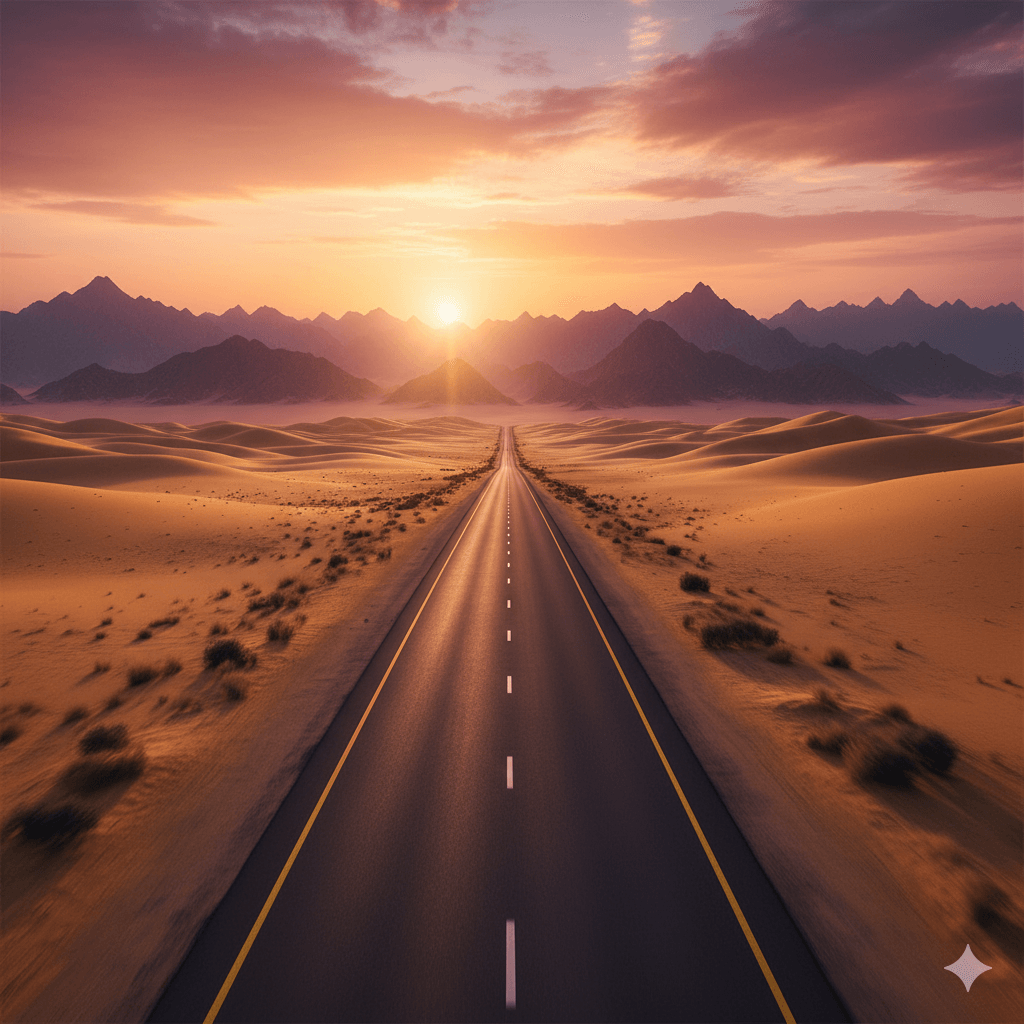
- By Road: Pali sits on NH 62, which is basically the “Highway of Dreams” in Rajasthan. It’s smooth, wide, and perfect for a road trip. Buses (RSRTC and private) run every hour from Jodhpur, Jaipur, and Udaipur.
2. Best Time to Visit: Timing Your Success
If you show up in May, the only “wildlife” you’ll see is me hiding in a walk-in freezer.
- Peak Season (October to March): This is the “Goldilocks” zone. The days are sunny and pleasant (20°C to 25°C), and the nights are chilly enough to justify a fancy Rajasthani shawl. This is the best time for safaris and temple hopping.
- Monsoon (July to September): The Aravallis turn a lush, emerald green. It’s stunning, but some rural roads might get a bit “adventurous.”
- Summer (April to June): Avoid unless you’re a lizard. Temperatures can hit 45°C. The leopards will be hiding, and you will be melting.
The Logistic Cheat Sheet
Use this table from our Pali Rajasthan Travel Guide to prep your suitcase:
| Category | Advice | Pro-Tip |
| Connectivity | 4G/5G is good in the city; patchy in Jawai hills. | Download offline maps before your safari. |
| Transport | Hire a private taxi for the day. | Auto-rickshaws are fine for city hops. |
| ATM/Cash | Plenty in Pali City and Sumerpur. | Carry cash for rural temple donations & dhabas. |
| Language | Hindi & Marwari. English in hotels. | Learn “Ram Ram Sa” (Local greeting)—it’s a magic door-opener. |
3. Packing Essentials: Don’t Forget the Socks!
- Layer Up: Even in winter, the afternoon sun is strong, but the early morning safaris are freezing. Bring a light jacket and a scarf.
- Temple Etiquette: Wear clothes that cover your shoulders and knees. In Jain temples (like Ranakpur), leather items (belts, wallets, bags) are strictly forbidden inside. Plan your outfit accordingly!
- Footwear: You’ll be walking on uneven stones and climbing steps. Leave the heels at home; bring sturdy walking shoes or sneakers.
- Sun Protection: A hat and high-SPF sunscreen are non-negotiable. The Rajasthani sun is no joke.
Expert Strategy Tip: If you’re planning a trip in 2026, book your Jawai Leopard Safari at least 2 months in advance. The secret is out, and the best camps fill up faster than a plate of hot samosas!
11. FAQ Section
You’ve got the itinerary, you’ve got the shopping list, and you’ve probably already started looking for your old Royal Enfield keys. But before you disappear into the Aravalli hills, let’s tackle the “burning questions” that usually pop up at 2:00 AM when you’re finalizing your trip.
As your strategist and teacher, I’ve rounded up the most common queries I get about this region. This is the “Safety Net” of our Pali Rajasthan Travel Guide, designed to make sure you don’t get stuck at a temple gate because you’re wearing shorts or carrying a leather wallet.
1. Is Pali safe for solo travelers?
The Verdict: Absolutely. Pali is a small-town district where the “Guest is God” philosophy is taken very seriously.
- Solo Women: You’ll find locals incredibly respectful. In fact, in places like Jawai, the Rabari Tribal People members are known for being exceptionally helpful guides.
- Pro-Tip: As with anywhere in the world, avoid wandering into isolated rural trails after dark unless you’re with a licensed guide (mostly because of the four-legged locals—yes, the leopards).
2. Can I actually see leopards in Jawai?
The Reality Check: While nature doesn’t work on a schedule, Jawai has one of the highest leopard densities in the world.
- The Odds: Most travelers spot a leopard within their first two safaris. Unlike Tiger reserves where you might wait days, the “docile” leopards of Jawai are quite comfortable on their rocky thrones.
- Expert Strategy: Always book a morning safari for the best light and an evening safari for that dramatic “leopard against the sunset” shot.
3. What is the dress code for Ranakpur and other temples?
The Rules: Jain temples are quite strict about decorum.
- Clothing: No shorts, sleeveless tops, or revealing clothes. Think “Shoulders to Shins.”
- The “Leather” Ban: You cannot take leather belts, wallets, or bags inside. Most temples provide lockers for a nominal fee (usually ₹10–20).
- Photography: You can take photos of the architecture (usually for a small fee), but taking photos of the main idol is a big “No-No.”
Quick-Fire FAQ Table
To save you a Google search, here’s the lightning round of our Pali Rajasthan Travel Guide:
| Question | Answer |
| Is there an entry fee for Ranakpur? | Free for Indians; ~₹200 for Foreigners (plus camera fees). |
| What are the Om Banna temple timings? | Technically open 24/7, but 9:00 AM to 10:00 PM is best. |
| Can I visit Pali in the summer? | Only if you enjoy being a human tandoori (it hits 45°C). |
| Nearest Railway Station? | Pali Marwar (PMY) or Falna (FA) for Ranakpur. |
4. Do I need a guide for the temples?
- My Take: For Ranakpur, yes! The audio guides are great, but a human guide will show you the “hidden” carvings—like the one where 1,000 snakes are carved from a single stone—that you’d definitely miss on your own.
- For Safaris: A guide is mandatory. Don’t try to “self-drive” into the leopard hills; you’ll get lost, and the rocks are surprisingly tricky to navigate.
5. What’s the deal with the alcohol at the Bullet Baba temple?
- The Scoop: It’s a local tradition. People offer small bottles of “English Wine” (as locals call it) to the spirit of Om Banna to ensure he stays happy and keeps the roads safe. You don’t have to do it, but witnessing it is part of the “only in Pali” experience.
Final Strategist Note: If you’re traveling in 2026, keep an eye on local festivals! The Jawai Festival is a fantastic way to see the tribal culture and wildlife all in one go.
12. The “Taste of Pali” Section (Food Guide)
If you travel to Rajasthan and don’t gain at least two kilos in “happy weight,” were you even trying? In this part of our Pali Rajasthan Travel Guide, we are diving face-first into the local flavors.
Pali’s culinary scene is a beautiful byproduct of its geography. When you live in a desert, you get very creative with beans, berries, and a whole lot of Ghee. As a business strategist, I appreciate the efficiency of these dishes—they are high-energy, long-lasting, and absolutely delicious. As your teacher, I’m here to tell you: forget the diet, the Gulab Halwa is calling.
1. The Sweet King: Gulab Halwa
You’ve heard me mention it before, but it deserves its own throne.
- The Legend: Made only from milk and sugar, slow-cooked for hours until it reaches a dark, fudge-like consistency.
- Where to get it: The “Original” spot is Gulab Ji Halwa Wala near Vyas Circle.
- Pro-Tip: Don’t just eat it there; buy a sealed box to take home. It has a surprisingly long shelf-life, though in my experience, it rarely survives the car ride back to the hotel.
2. The Desert Delicacy: Ker Sangri
This is the quintessential Marwari dish.
- The Ingredients: Ker (a wild berry) and Sangri (a desert bean).
- The Flavor: It’s tangy, spicy, and slightly earthy. It was originally “famine food” because these plants can survive the harshest droughts, but today, it’s a royal staple.
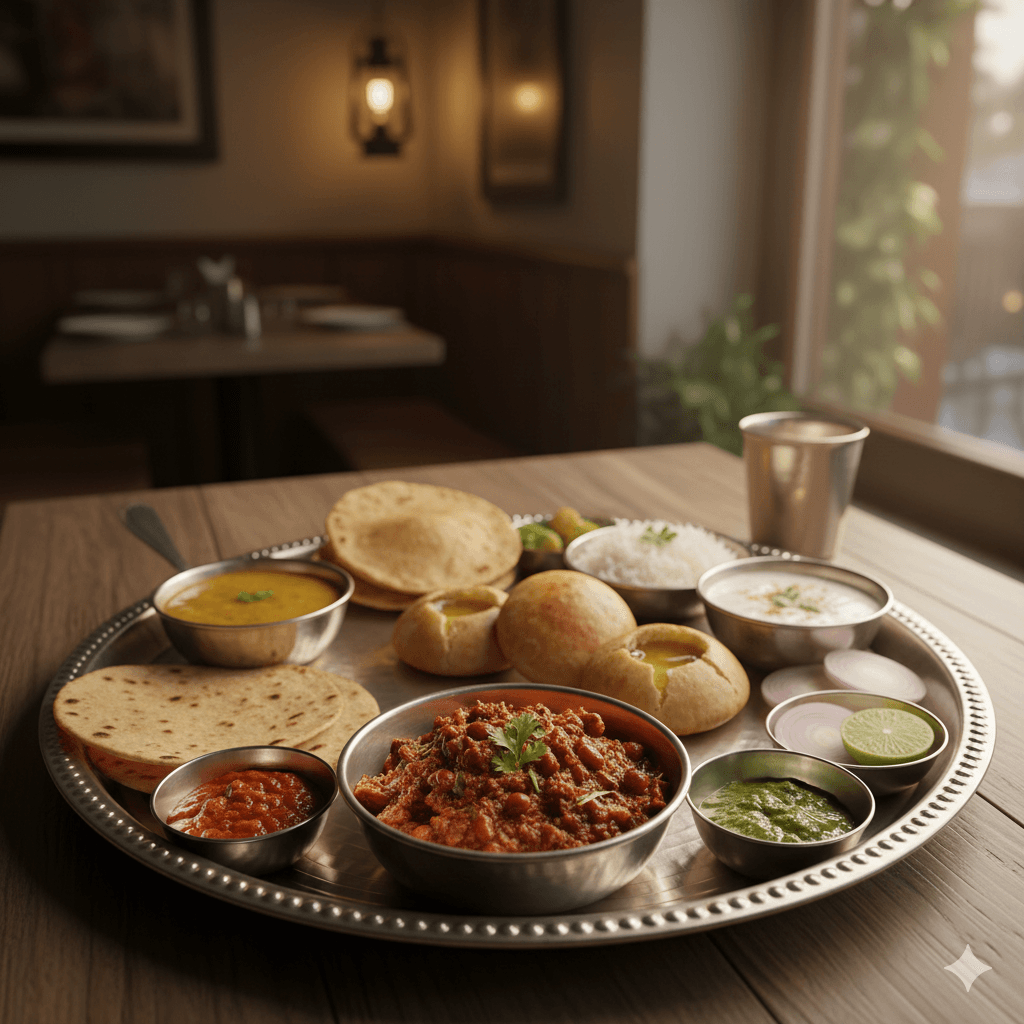
- Best Paired With: A thick, smoky Bajra Roti (pearl millet flatbread) slathered in white butter.
3. The “Morning Kick”: Mirchi Bada & Pyaaz Kachori
If you see a crowd gathered around a steaming cauldron of oil at 8:00 AM, join them.
- Mirchi Bada: A large green chili stuffed with spicy potato mash, dipped in gram flour batter, and deep-fried. It’s the breakfast of champions in Pali.
- Pyaaz Kachori: Flaky pastry stuffed with a caramelized onion filling. It’s crunchy, spicy, and the perfect fuel for a day of temple hopping.
Pali Foodie’s “Must-Hit” List
To help you navigate the menus, I’ve put together this quick reference for your Pali Rajasthan Travel Guide:
| Dish Name | Type | Vibe | Why you’ll love it |
| Gulab Halwa | Dessert | Legendary | It’s basically the “caramel fudge” of India. |
| Dal Baati Churma | Main Course | Wholesome | The ultimate Rajasthani comfort meal. |
| Raab | Drink | Soothing | A warm, fermented buttermilk and millet soup. |
| Gatte ki Sabzi | Main Course | Tangy | Gram flour dumplings in a spicy yogurt gravy. |
4. Where to Eat: My Top Recommendations
- For Authentic Thali: Head to Mahaveer Bhojnalaya near the bus stand. It’s no-frills, high-flavor, and you’ll leave feeling like royalty for a fraction of the price.
- For a Fine Dining Twist: If you’re in Ranakpur, Mana Hotels or King’s Abode offer great Rajasthani platters in a more “proper”.
- The Dhaba Experience: Any roadside dhaba on the Pali-Jodhpur Highway will serve you a “Lehsun (Garlic) Chutney” that will change your life—and possibly clear your sinuses for a week.
Expert Tip: In Rajasthan, Ghee is not an ingredient; it’s a love language. If you find your Baati (bread) swimming in a pool of yellow gold, don’t panic. It’s supposed to be there. Just embrace it and walk an extra 500 steps at the temple tomorrow.
13. Interactive “Cultural Etiquette” & Local Secrets
If you want to move from being a “tourist” to a “traveler,” you need to know the secret handshake. No, there isn’t an actual handshake, but there is a rhythm to life here that isn’t found in your average Pali Rajasthan Travel Guide.
Pali is a place where tradition is thicker than the gravy in your Gatte ki Sabzi. As a business strategist, I call this “Cultural Capital”—if you respect the local norms, doors (and hearts) open for you. As a writer, I just want to make sure you don’t accidentally offend a 15th-century tradition because you forgot to take your shoes off.
1. The “Ram Ram Sa” Magic
In most of India, it’s “Namaste.” In Pali, it’s “Ram Ram Sa.”
- The Secret: Saying “Ram Ram Sa” with a slight nod of the head is like having a universal VIP pass. It signals that you aren’t just passing through; you’ve taken the time to learn the local tongue.
- The Result: Expect wider smiles, better service, and maybe an extra piece of halwa on your plate.
2. The Rabari Code: Leopard Etiquette
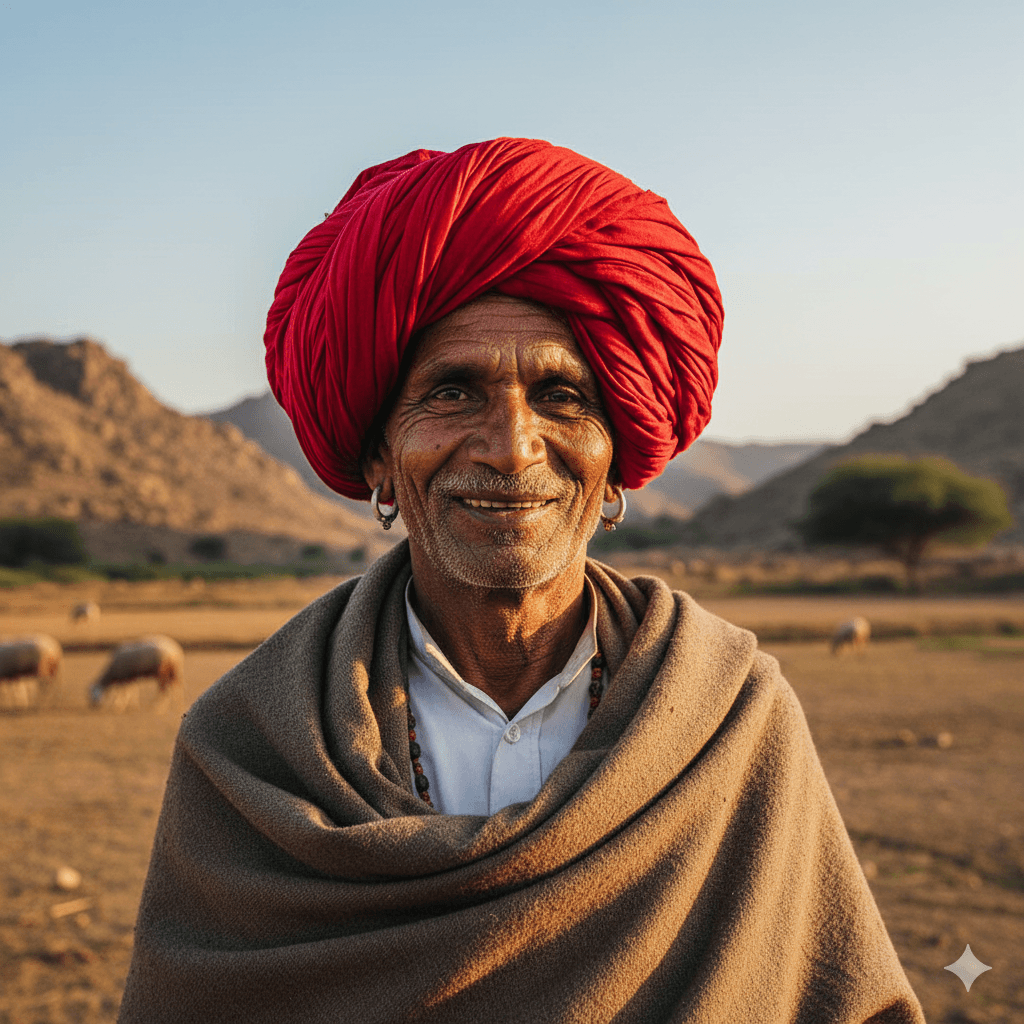
The Rabari shepherds are the soul of the Jawai region. They’ve lived with leopards for centuries, and there’s a reason they don’t have fences.
- The Secret: They believe the leopards are the property of the local deity, Khetlaji. To them, if a leopard takes a goat, it’s an offering, not a loss.
- The Etiquette: Never point directly at a leopard or make loud noises during a safari. It’s seen as disrespectful to the “guardian” of the hills. Also, always ask for permission before photographing a Rabari shepherd in his iconic red turban.
3. Temple “No-Go’s” (Don’t Be That Person)
We touched on this, but let’s get specific so you don’t get a polite (but firm) talking-to by a temple priest.
- Leather is the Enemy: In Jain temples like Ranakpur, even a leather watch strap can be a problem. Go “Vegan” for the day with your accessories.
- The Menstruation Taboo: Many traditional temples still have signs asking women not to enter during their periods. It’s a sensitive local tradition—while controversial to some, being aware of it helps you navigate the space respectfully.
The “Pro vs. Amateur” Etiquette Table
Keep this checklist handy from our Pali Rajasthan Travel Guide to ensure you blend in like a local:
| Situation | The “Amateur” Move | The “Pro” Move |
| Greeting | A loud “Hey!” | A gentle “Ram Ram Sa.” |
| Photography | Snapping photos of people without asking. | Asking “Photo, Sa?” and showing them the result. |
| Dining | Using your left hand to pass food. | Always using your right hand for eating/passing. |
| Safari | Wearing bright neon orange or pink. | Wearing earth tones (Khaki, Olive, Grey). |
4. Local Secret: The “Post-Opium” Culture
Wait, what? Yes, historically, some elder Marwari communities had a tradition involving opium water (Amal) during social gatherings.
- The Secret: While largely regulated and fading now, you might still see elders in villages sitting in a circle for a ceremonial “sip.”
- The Etiquette: If you stumble upon a traditional village gathering, don’t gawk or take photos. It’s a private social ritual, not a performance for tourists.
5. Shopping Secret: The “Pali Afternoon”
Pali runs on “Siesta Time.”
- The Secret: Between 2:00 PM and 5:00 PM, the smaller shops in the bazaar might just… close. The owners are having a nap or tea.
- The Strategist’s Advice: Plan your heavy shopping for the morning or late evening. The “Golden Hour” for shopping is actually 7:00 PM, when the markets are buzzing and the street food is fresh.
My Expert Take: Respect in Pali is a two-way street. If you show interest in their history—especially the stories of the 1857 mutiny or the local deities—you’ll find that the people of Pali are some of the most hospitable on the planet.
14. A Sample 3-Day Itinerary
As a business strategist, I know that even the best plans fail without a solid roadmap. And as a traveler, I know that staring at a map of Rajasthan for too long can make your brain feel like it’s been deep-fried like a Mirchi Bada.
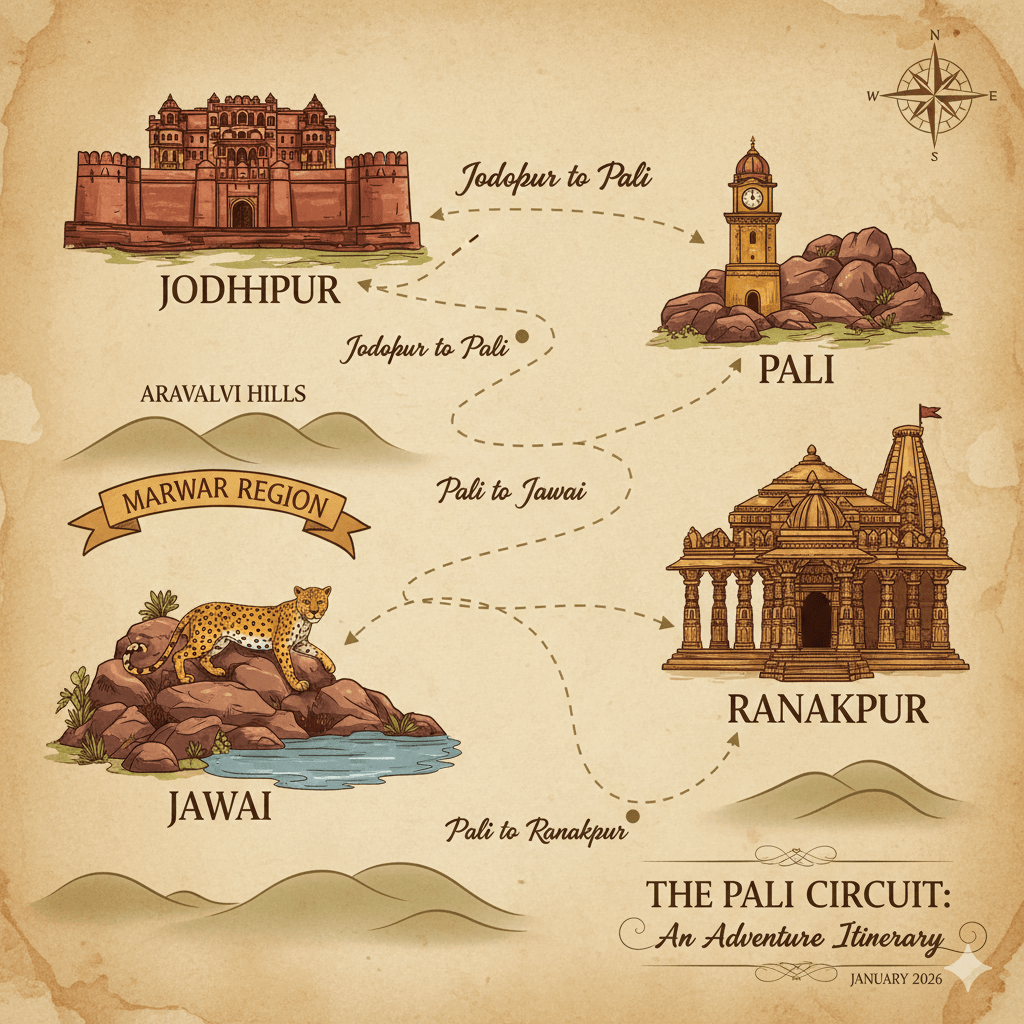
That’s why I’ve designed this high-efficiency Pali Rajasthan Travel Guide itinerary. It’s balanced to give you history in the morning, adrenaline in the afternoon, and a food coma in the evening. This 3-day loop starts and ends with Jodhpur/Pali city, making it perfectly logical for your logistics.
1: The Spiritual & Supernatural Circuit
- Morning (9:00 AM): Start at Om Banna (Bullet Baba). It’s early, it’s iconic, and you need those safe-travel blessings for the road ahead.
- Afternoon (1:00 PM): Head to Pali City. Grab a quick lunch of Pyaaz Kachori and hit the Bangur Museum to see the ancient armor. It’s a great way to cool off during the heat of the day.
- Late Afternoon (4:00 PM): Stroll through Lakhotia Garden and visit the Neelkanth Mahadev Temple. The reflection of the temple in the water as the sun sets is pure magic.
- Evening: Buy your weight in Gulab Halwa at Vyas Circle and check into your hotel.
2: The Wild Heart of Jawai
- Morning (6:00 AM): Head south to the Jawai Bandh region. Wake up with a morning birdwatching session at the dam—spot the flamingos and the massive crocodiles.
- Afternoon (1:00 PM): Relax at a local safari camp. Most luxury tents in Jawai are built into the rocks—very “Flintstones meets Five-Star.”
- Late Afternoon (4:30 PM): The Leopard Safari. This is the peak of our Pali Rajasthan Travel Guide. Hop in a 4×4 and head into the granite hills.
- Evening: Enjoy a Rabari tribal walk at dusk or a campfire dinner under the brightest stars you’ve ever seen.
3: Marble Marvels & Mountain Caves
- Morning (9:30 AM): Drive to Ranakpur. Spend at least two hours inside the Jain Temple. Remember to look up—the ceilings are even more intricate than the pillars.
- Lunch: Have a traditional thali near the temple.
- Afternoon (2:00 PM): If your legs are feeling brave, head to Parshuram Mahadev Temple. It’s a bit of a trek, but the cave temple is one of the most serene spots in the state.
- Evening: Head back toward Jodhpur or proceed to Udaipur to catch your flight/train home.
The “Pali at a Glance” 3-Day Planner
| Day | Theme | Key Stop | Meal Focus |
| Day 1 | Culture & Legend | Om Banna / Pali City | Mirchi Bada & Gulab Halwa |
| Day 2 | Wildlife & Nature | Jawai Leopard Safari | Authentic Ker Sangri |
| Day 3 | Art & Adventure | Ranakpur / Parshuram | Traditional Jain Thali |
Pro-Strategist Logistics Tips:
- Hire a Driver: The roads between Pali, Jawai, and Ranakpur are beautiful but winding. Having a local driver who knows the shortcuts (and the best tea stalls) is a massive strategic advantage.
- Booking Safari: Don’t just show up in Jawai and expect a Rom People to be waiting. Book your leopard safari at least 4-6 weeks in advance, especially for 2026 peak season.
- Clock-Wise vs. Counter-Clockwise: If you are coming from Udaipur, flip this itinerary! Start with Ranakpur and end with the Bullet Baba.
My Expert Take: Day 2 is usually the favorite for most travelers. There is something profoundly humbling about being ten feet away from a wild leopard while sitting in an open-top Jeep. It’s the kind of “meeting” that doesn’t need a PowerPoint.
15. 2026 Specific Events & Festivals
If you want to see Pali at its most vibrant, you have to time your visit with its festival calendar. In 2026, the district is pulling out all the stops. As a business strategist, I see these events as “Peak Demand” periods—they are when the local economy booms, the colors get brighter, and the photo opportunities become legendary.
As your guide, I’m telling you: being in Pali during a major fair is like moving from a black-and-white movie to 4K IMAX. Here are the “can’t-miss” dates for your Pali Rajasthan Travel Guide calendar.
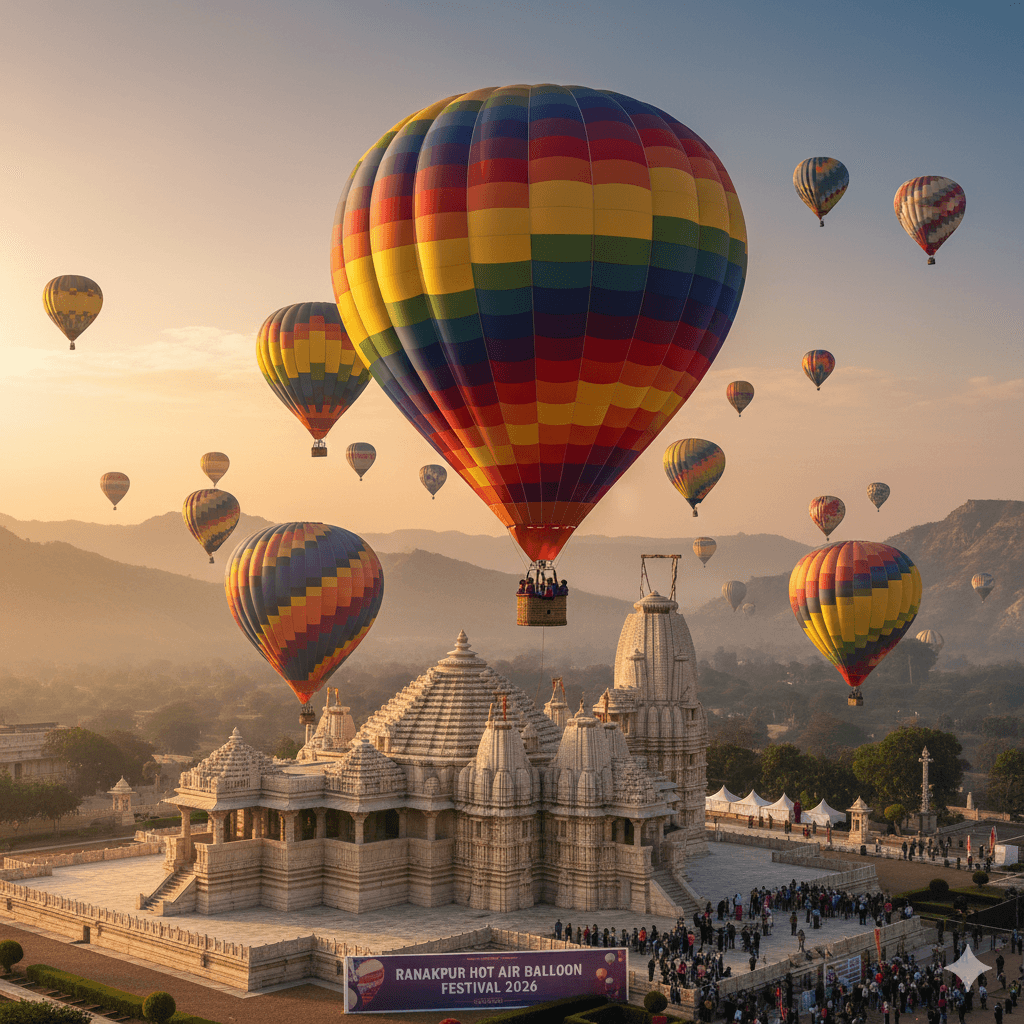
1. Ranakpur Jawai Bandh Festival (December 21–22, 2026)
This is the big one. Organized by the Rajasthan Tourism Department, this festival is a beautiful mashup of spirituality and safari.
- The Vibe: Imagine hot air balloons floating over 15th-century temples and folk dancers performing under the stars near the Jawai reservoir.
- The Activities: You’ve got turban-tying competitions, tug-of-war (tourists vs. locals—prepare to lose!), and specialized night safaris.
- Pro-Tip: Accommodations in Ranakpur and Jawai sell out months in advance for these dates. Book your 2026 stay by July if you want a room with a view.
2. Sheetla Saptami (March 10, 2026)
This is where you get a deep dive into local culture. Dedicated to Goddess Sheetla (the protector against diseases), this festival has a very quirky culinary tradition.
- The “Basoda” Tradition: No one lights a fire or cooks fresh food on this day. Families eat “Basoda”—delicious meals prepared the night before.
- The Scene: Visit the Sheetla Mata temples in Pali or Sojat. You’ll see women dressed in their most colorful “Poshaks,” singing traditional folk songs that haven’t changed in centuries.
3. Nimbo Ka Nath Mela (August/September 2026)
During the auspicious month of Shravan, this temple (located between Falna and Sanderao) hosts a massive fair.
- The Legend: It is believed the Pandavas spent time here. The fair attracts thousands of devotees and rural artisans.
- Why Go: It’s the best place to buy authentic, handmade rural crafts that never make it to the big city showrooms.
Pali 2026 Festival Calendar
Keep this table handy for your Pali Rajasthan Travel Guide planning:
| Event Name | Date (2026) | Location | Highlights |
| Sheetla Saptami | March 10 | Sojat & Pali City | Colorful processions & “Basoda” food. |
| Nimbo Ka Nath Fair | August/September | Near Falna | Rural market & spiritual gatherings. |
| Marwar Festival | October 24–25 | Nearby Jodhpur | Folk music & “Moustache” competitions. |
| Ranakpur Festival | December 21–22 | Ranakpur/Jawai | Hot air balloons, folk dance & safaris. |
4. New Year’s Eve in the Wild (December 31, 2026)
While not a traditional “mela,” Jawai has become one of the most exclusive places in India to ring in the New Year.
- The Experience: Think “Bush Dinners” with lanterns, live Langa music, and the chance to start 2027 with a leopard sighting.
- The Strategist’s Note: Many heritage hotels like Mana Ranakpur or the Jawai Camps host special 2026 gala dinners. Since December 31, 2026, falls on a Thursday, it’s the perfect excuse for a long weekend.
Expert Strategic Tip: During the Ranakpur Festival, the Sun Temple is illuminated with thousands of lamps. It is arguably the most beautiful architectural sight in all of Rajasthan. If you only pick one event for 2026, make it this one.
16. “Sustainable & Ethical” Travel Tips
In 2026, being a “conscious traveler” isn’t just a trend; it’s a responsibility. As a business strategist, I look at sustainability as preserving our most valuable assets—in this case, the culture and wildlife of Pali. As your friend and guide, I want to make sure your Pali Rajasthan Travel Guide experience doesn’t leave a footprint larger than a leopard’s paw.
Pali is a delicate ecosystem. We have 15th-century marble that breathes and wild cats that live alongside shepherds. If we treat this place like a theme park, we lose the magic. Here is how to be an “Elite Traveler” who gives back more than they take.
1. The Jawai Leopard Protocol
Jawai is famous because the leopards and humans live in harmony. Let’s keep it that way.
- No Flash, No Trash: Flash photography can startle the leopards and interfere with their night vision (making it harder for them to hunt). And please, keep your snack wrappers in the Jeep.
- Keep Your Distance: Don’t pressure your driver to get “closer.” A good zoom lens is your best friend. If the leopard feels crowded, it will leave, and the next group gets nothing.
- Support Local Trackers: Many trackers are from the Rabari Tribal Group. By hiring local guides, you ensure the community benefits from conservation, which keeps the leopards safe from poaching.
2. Support the “Real” Artisans
When you are following your Pali Rajasthan Travel Guide shopping list, where you spend your money matters.
- Buy Direct: Skip the high-end boutique in the city and buy your Mehendi in Sojat or your pottery in the villages.
- Fair Trade: If a craftsman spent three days carving a wooden bowl, don’t haggle over 50 rupees. In the world of business, we call this “fair value exchange.”
The Ethical Traveler’s Cheat Sheet
| Action | Why It Matters | The “Pro” Move |
| Water Consumption | Pali is a water-scarce desert region. | Carry a reusable copper bottle; most heritage hotels have filtered refills. |
| Temple Offerings | Plastic-wrapped sweets create massive waste. | Offer fresh flowers or make a small cash donation to the temple fund. |
| Village Visits | Privacy is a human right. | Always ask “Can I?” before entering a home or taking a portrait. |
| Animal Rides | Camel/Elephant welfare is a hot topic in 2026. | Choose walking tours or Jeep safaris over rides that look exploitative. |
3. Respect the Marble (Ranakpur Etiquette)
The Ranakpur Jain Temple is an active place of worship, not just a photo op.
- The “Quiet” Rule: Sound carries in those marble halls. Keep your voice at a “library level.”
- Don’t Touch: The oils from our skin can actually damage the ancient carvings over time. Look with your eyes, not your hands!
4. Say “No” to Single-Use Plastic
The wind in the Aravallis is beautiful, but it shouldn’t be carrying plastic bags.
- The Strategy: Bring a small cloth bag for your shopping. Pali’s local markets are moving toward plastic-free zones in 2026, so be ahead of the curve!
My Expert Take: Ethical travel isn’t about being perfect; it’s about being mindful. When you buy a locally made shawl or respect the silence of a temple, you aren’t just a tourist—you’re a patron of Rajasthani culture.
🧭 Pali Circuit: Trip Essentials at a Glance
| Category | Details for 2026 Travelers |
| Best Time to Visit | October to March (Pleasant days, cool nights). |
| Ideal Trip Duration | 3–4 Days (Covers Jodhpur, Jawai, Ranakpur & Kumbhalgarh). |
| Getting There | Fly to Jodhpur (JDH). Then drive 3 hours (160km) to Jawai/Ranakpur. |
| Top Wildlife | Leopards, Crocodiles, Flamingoes, and Sloth Bears. |
| Must-See Landmark | Ranakpur Jain Temple (1,444 unique marble pillars). |
| Signature Dish | Ker Sangri (Desert beans) and Gulab Halwa (Pali specialty). |
| Local Culture | Rabari Tribal People (Traditional shepherds known for red turbans). |
| Nearest Railhead | Jawai Bandh or Falna (Connected to Delhi, Mumbai, Ahmedabad). |
Final FAQ’s
Answer: The ideal time is from October to March. During these months, the weather is perfect for leopard safaris in Jawai and trekking the Aravalli hills near Kumbhalgarh. If you’re a birdwatcher, the migratory birds are most active around the Jawai dam in January and February.
Answer: Jawai is located approximately 160 km from Jodhpur. The most convenient way to travel is by hiring a private taxi or driving via the NH62, which takes about 3.5 hours. Alternatively, you can take a train to Jawai Bandh or Falna station, which are the nearest railheads.
Answer: Yes, they are roughly 50 km apart and are often visited together. While Ranakpur is famous for its intricate marble Jain Temple, Kumbhalgarh is known for its massive fort walls. The drive between them takes about 1.5 hours through a scenic, winding mountain pass in the Aravalli Range.
Answer: Pack layers! The desert and hills can be chilly in the early morning (perfect for safaris) and warm during the day. Don’t forget sturdy walking shoes for the rocky terrain of Jawai and modest clothing for visiting the Ranakpur temples.